
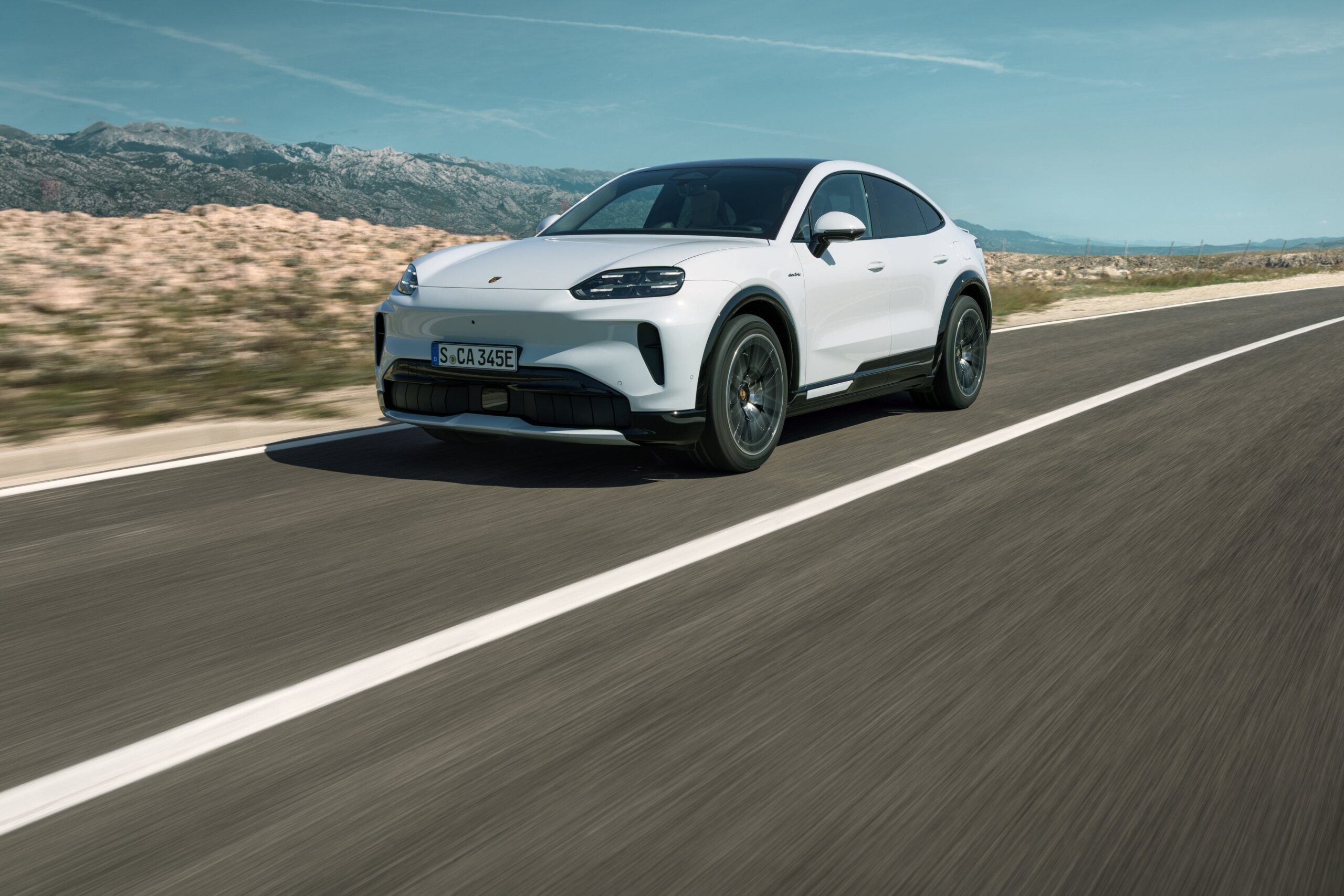


Porsche will charge you five grand more for a roofline inspired by the 911, and it won’t even tell you if the sleeker shape adds a single mile of range. The 2027 Cayenne Coupe Electric is now open for orders, arriving at U.S. dealers this summer with prices starting at $116,150 and climbing to $170,350 for the Turbo.
The Coupe completes a rapid-fire rollout that began last November with the standard Cayenne Electric and Cayenne Turbo Electric, followed by the mid-tier S Electric in March. Four variants in six months. Stuttgart is flooding the zone.
Mechanically, the Coupe changes nothing. Same 113-kWh battery, same 800-volt architecture, same 400-kW peak charging that can hammer from 10 to 80 percent in under 16 minutes. The powertrain ladder is unchanged: 435 horsepower in the base, 657 in the S, and a ridiculous 1,139 hp in the Turbo, which Porsche says hits 60 mph in 2.4 seconds.
What you’re paying the premium for is sheet metal and air.
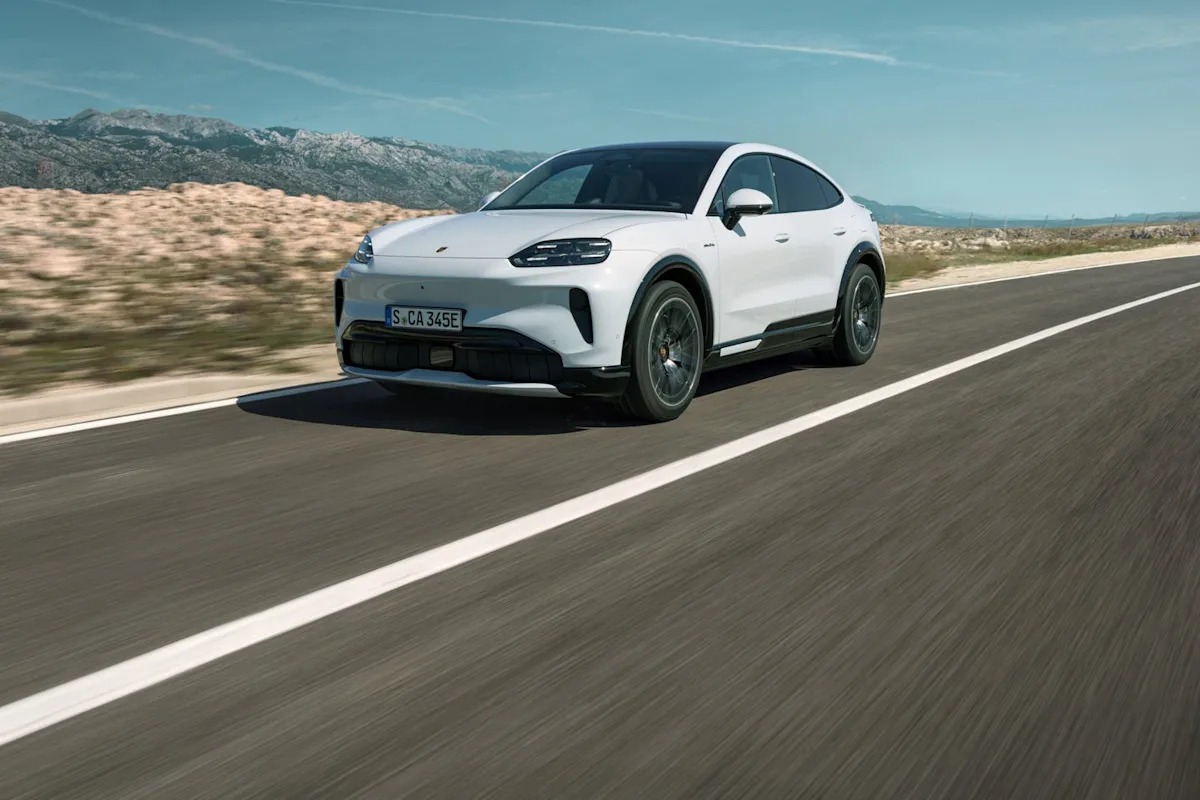
Porsche resculpted the rear windscreen to achieve what it calls a “flyline” borrowed from the 911. The roofline drops 24 millimeters compared to the standard SUV, and an adaptive rear spoiler tucks flush into the bodywork at low speeds. The result is a drag coefficient of 0.23, down from the SUV’s 0.25.
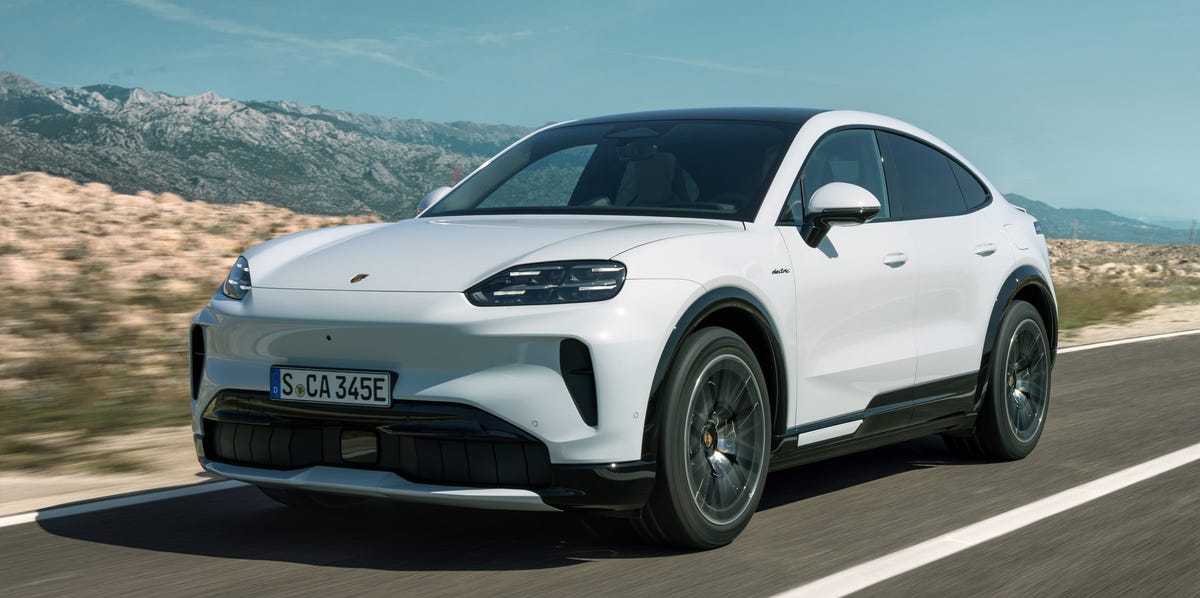
Two hundredths of a Cd sounds marginal, but at this price point and in this competitive set, marginal improvements are the entire game. And yet Porsche conspicuously declined to say whether the improved aero translates into additional range. That silence is loud. If the numbers were flattering, they’d be in the press release.
The Coupe body has been a growing slice of Cayenne sales. Porsche says the coupe shape accounted for 40 percent of U.S. Cayenne volume in 2025. That’s not a niche anymore — it’s nearly half the franchise, and it explains why Stuttgart wasn’t about to leave the electric Cayenne without one.
Inside, rear seating defaults to a two-person layout, with a 2+1 option available for those who insist on calling it a five-seater. Cargo space expands via button-folding rear seats, and there’s a frunk. Porsche quotes a 7,716-pound maximum towing capacity, and an off-road package ups the approach angle — a curious option for what Porsche explicitly markets as the sportiest Cayenne in the lineup.
That sporty billing is reinforced by an available Lightweight Sport Package that bundles a carbon roof, carbon interior inserts, 22-inch wheels, and performance tires. The weight savings: 39 pounds. On a vehicle that likely tips the scales well north of 5,500 pounds, calling that a “lightweight” package takes some nerve.
The broader context here is that Porsche is running two Cayennes simultaneously. Gas-powered and plug-in hybrid Coupe variants remain in the catalog alongside the full-electric models. Porsche positioned the electric Coupe as an addition, not a replacement. The company isn’t ready to kill the combustion Cayenne, and its customers apparently aren’t ready to let it go.
Still, the pace of the electric Cayenne’s expansion tells you where the corporate bet is being placed. Four trims in half a year, with the coupe body covering the segment’s most popular silhouette. Porsche is building the runway for an all-electric Cayenne future even as it hedges with hybrid.
Whether the slipperier shape actually extends your drive between charging stops remains, for now, a question Porsche would rather you not ask.

Share this Story