


President Trump is wheels-up for Beijing this week, and the American auto industry is holding its breath. The White House insists cars aren’t on the agenda. Nobody in Detroit believes it.
U.S. Trade Representative Jamieson Greer said in April that autos wouldn’t be discussed at the summit. Commerce Secretary Howard Lutnick ruled out Chinese investment in the U.S. auto sector. But Trump has repeatedly talked up the idea of Chinese automakers building assembly plants on American soil, and that loose talk has the domestic industry on edge.
He’s left wiggle room in dealing with the auto sector,” said Scott Paul, president of the Alliance for American Manufacturing. Any plant green-lit now would take two to three years to launch production, meaning the fallout would land squarely on the next president’s desk.
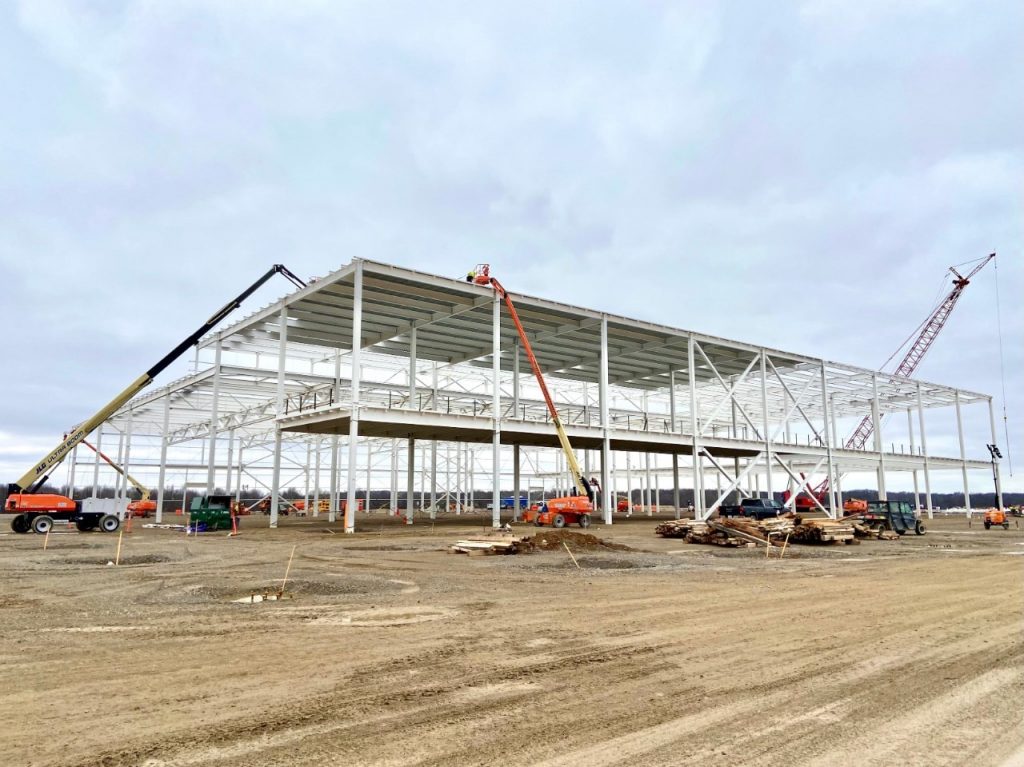
The timing couldn’t be more loaded. Ford’s BlueOval Battery Park Michigan in Marshall is finally ready to produce batteries using lithium iron phosphate chemistry licensed from CATL, the world’s largest battery maker. Ford owns the plant, the land, the equipment, and hires the workers.
CATL holds no equity. But the technology is Chinese, and a Ford executive admitted it would have taken a decade to develop comparable capability without it.
That plant exists because of Biden-era industrial policy. It’s structured like the TikTok deal — American ownership wrapped around Chinese intellectual property. CATL CEO Robin Zeng has joked his battery cells are “dumb as bricks,” incapable of espionage. The batteries will feed Ford’s upcoming $30,000 electric truck and its new energy storage business, Ford Energy.
So the contradiction is already baked in. American automakers need Chinese battery technology to compete. They just don’t want Chinese competitors using American factories to eat their lunch.
China, meanwhile, isn’t sweating the trade war the way it once did. The U.S. now accounts for just 10 percent of China’s total exports, down from 18.4 percent in 2016. Beijing has spent eight years diversifying supply chains through Vietnam, Indonesia, and India.
A nationalistic think tank affiliated with Renmin University published a report earlier this year titled “Thank Trump,” arguing his tariffs and isolationism have accidentally strengthened China’s global position. The report carries obvious bias, but the underlying trade data doesn’t.
Back home, uncertainty is compounding. The USMCA — Trump’s own trade agreement from his first term — is under review, and automakers who’ve survived the tariff regime largely because of its protections are nervous about what comes next. Car manufacturers plan production five to seven years out.
Only five models have shifted production because of tariffs, and those moves are still in progress. Supply chains built over decades across North America don’t relocate on a tweet’s notice.
“It’s hard for them to upend whatever plans they have,” said Jennifer Safavian, CEO of Autos Drive America. “That’s why more certainty is important for the auto industry.”
And then there’s the optics. Stellantis employees at the company’s North American headquarters in Auburn Hills can’t come to work because a massive water main break in Orion Township knocked out the water supply. Workers ordered back to the office five days a week in January have since dealt with parking citation chaos and mysterious illnesses from the aging building. Now they can’t even flush the toilets.
A superpower negotiating with China over the future of advanced manufacturing while its largest multinational automaker can’t keep the water running at headquarters. The irony writes itself.
The real fear in Detroit isn’t that Trump will come home empty-handed from Beijing. It’s that he’ll come home with a deal nobody asked for — one that trades long-term industrial competitiveness for a short-term headline. Chinese brands like BYD have been aggressively courting American buyers.
The only Chinese-owned automotive facility in the U.S. today is a small BYD bus plant in California. Another is nearly finished.
Five years ago, that would have been a curiosity. Today, it looks like a beachhead.
Share this Story