
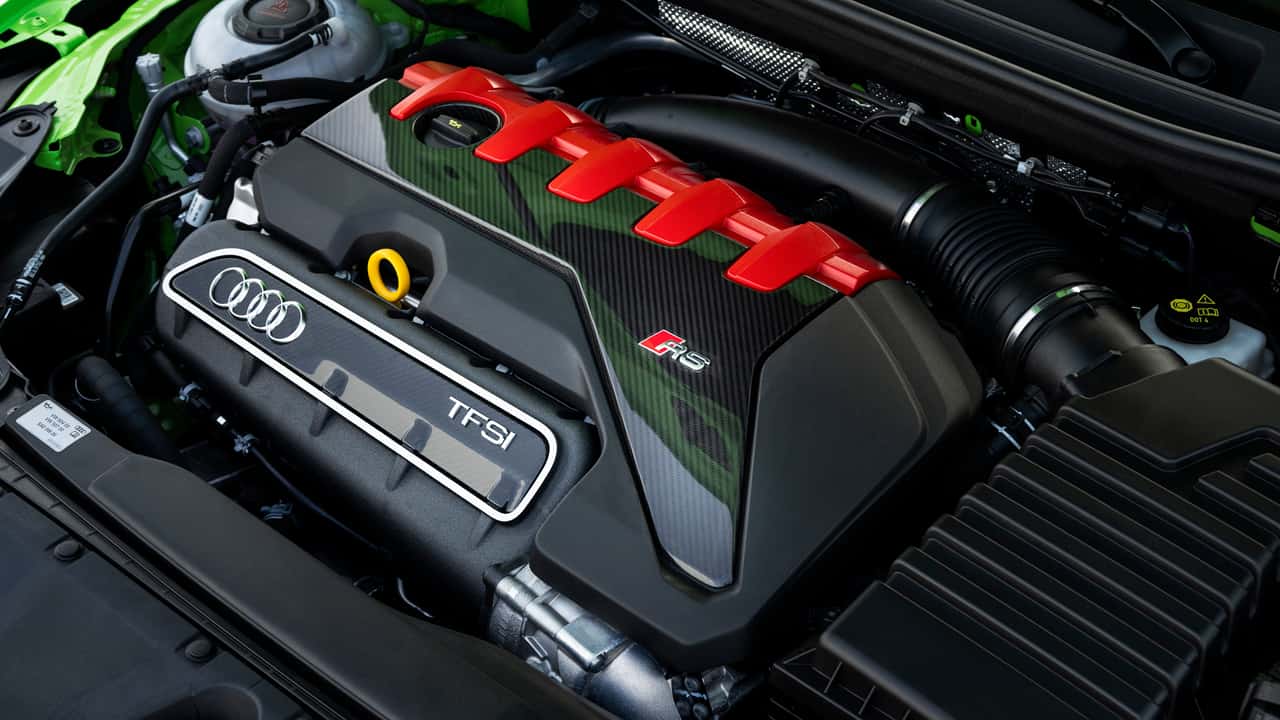


The Audi RS3 is already off sale in Europe. Gone from showroom configurators, pulled ahead of Euro 7 emissions regulations taking effect this November, and currently without a clear path back. The 2.5-liter turbocharged inline-five that gave the RS3 its raspy, off-kilter soul simply cannot meet the new standards as-is.
Now Audi Sport boss Rolf Michl is publicly floating hybridization as a possible lifeline. “We are open to every possibility,” Michl told Autocar. “I can tell you we are still thinking in different technological possibilities.” That’s executive-speak for: we haven’t figured this out yet, but we’re not ready to kill it.
The engineering bill to make the EA855 five-cylinder Euro 7 compliant would be enormous. Sources cited by Autocar lay out the shopping list — new particulate filter, NOx sensors, higher cell-density catalysts, reworked ignition mapping. All of that for an engine that lives in exactly two vehicles worldwide: the RS3 and the Cupra Formentor VZ5. The math doesn’t pencil easily.
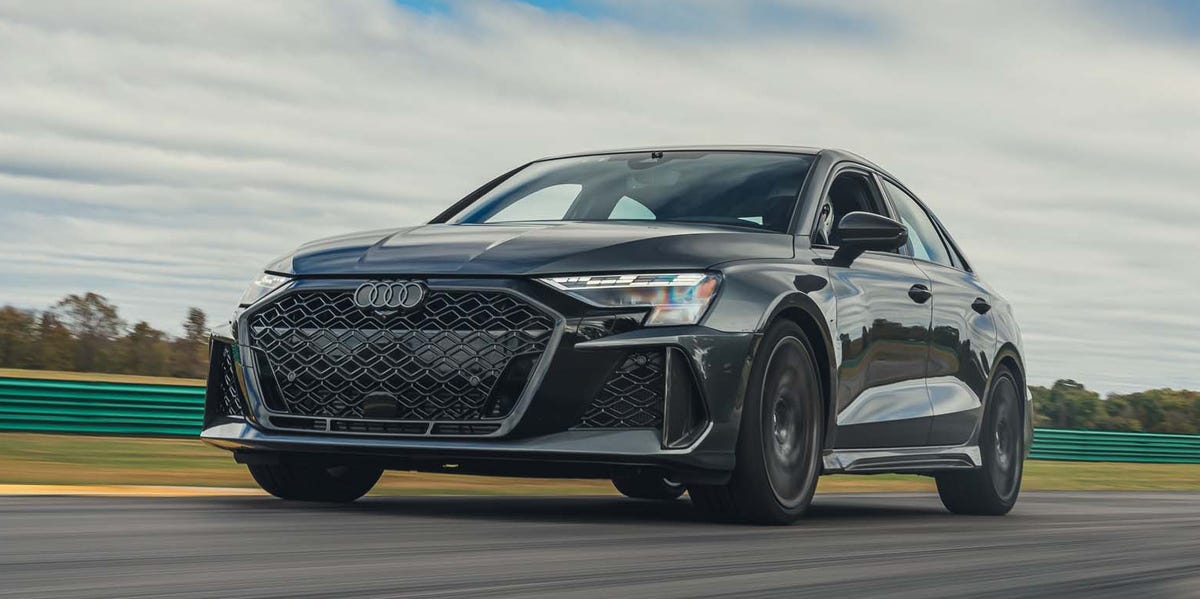
Bolting an electric motor onto the drivetrain might clean up the emissions profile enough to duck under Euro 7 thresholds without gutting the engine itself. Audi has already walked this road with the 2027 RS5, which pairs a twin-turbo 2.9-liter V-6 with an electric motor for a combined 630 horsepower. The RS3 would be a different animal — smaller, lighter, cheaper — but the institutional knowledge now exists within Audi Sport.
The five-cylinder is an oddball in the best possible way. While every other compact performance sedan has settled for turbocharged fours, the RS3’s 394-horsepower inline-five delivers a sound and character that no amount of exhaust-note piping through speakers can replicate. It traces its lineage back to the original Sport Quattro. Letting it die because of a particulate filter shortage would be an inglorious end.
In the U.S., the picture is less dire. Euro 7 has no jurisdiction here, and Autocar reports Audi plans to keep selling the five-cylinder in markets with friendlier emissions laws. But the RS3 is a niche product even in America — the entire A3 lineup moved just 8,315 units stateside in 2025. Audi doesn’t break out RS3 numbers separately, which tells you how thin that slice really is.
Still, if a hybridized RS3 emerges in Europe, it would almost certainly come to the U.S. as well. Audi isn’t going to engineer two parallel powertrains for a car that sells in the low thousands globally. Whatever the European RS3 becomes, that’s what everyone gets.
The tension here is one the entire industry is living through. Regulations are forcing automakers to choose between heritage and compliance, between the engines that built their reputations and the electrified drivetrains that keep the regulators at bay. The five-cylinder is a particularly acute case — an engine so distinctive it defines its car, yet so low-volume it’s hard to justify the investment to save it.
Michl’s comments suggest Audi hasn’t committed to anything. “The thoughts will continue at our end” is not a product announcement. It’s a signal that the five-cylinder’s future in Europe hangs on whether someone inside Ingolstadt can build a business case that works. Passion alone won’t get the RS3 back into European showrooms. A battery and a motor just might.
The clock is ticking. Euro 7 arrives in November, and every month the RS3 stays off sale in its home market is a month its competitors — the AMG CLA 45, the BMW M2 — own the segment unchallenged. Audi built its compact performance credibility on that warbling five-cylinder.
Walking away from it would be easy. Saving it will cost real money and real ingenuity. Michl’s words suggest Audi knows which option it prefers. Whether the spreadsheets agree is another matter entirely.
Share this Story