
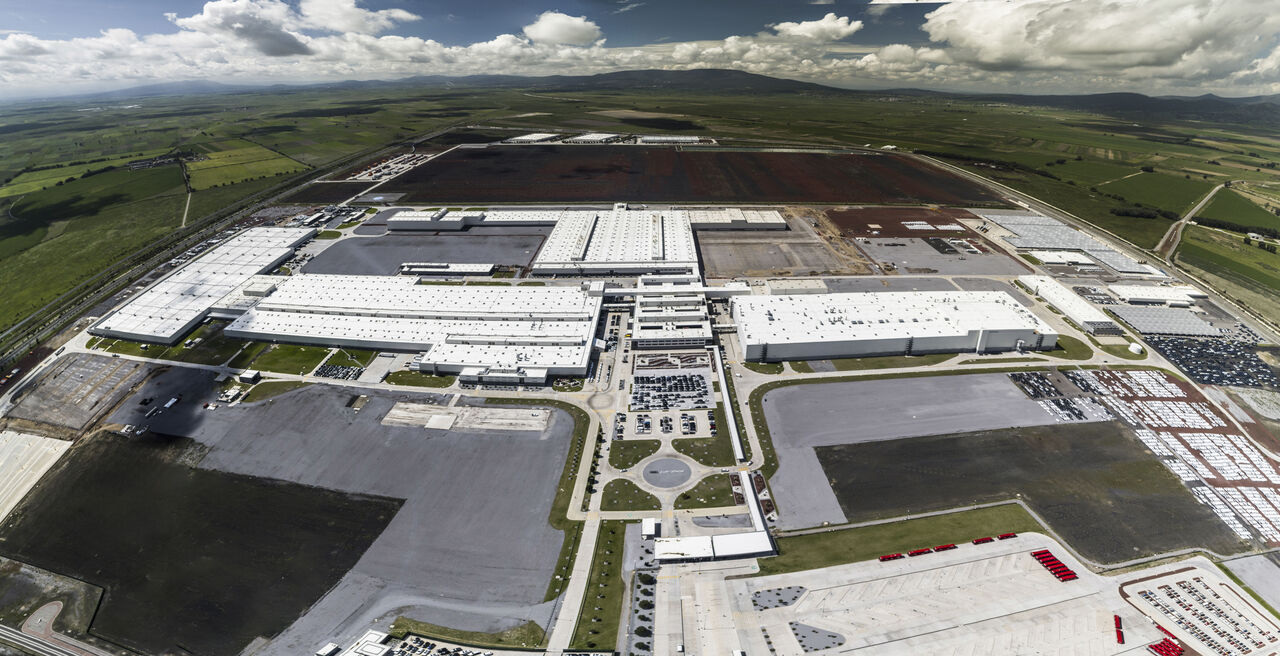


Two of the top executives at Audi’s San José Chiapa plant in Puebla are out, replaced by a pair of internationally seasoned leaders who signal just how seriously Wolfsburg is taking its Mexican factory’s role in the electrification era.
Tarek Mashhour, who ran Audi México for more than five years and helped design the plant over a decade ago, is leaving. So is Jacobo Issa, the first Mexican ever to sit on the facility’s board of management. Both departures take effect April 1.
Their replacements tell the story. André Richter, who holds a doctorate in engineering, returns to Mexico after a decade away. He was a planning director during San José Chiapa’s original construction, then decamped to China, where he ran the FAW-VW Tianjin branch — one of the Volkswagen Group’s most strategically important production hubs.
Selene Nascimento Soares, a Brazilian coming from SEAT and CUPRA in Barcelona, becomes the first woman on Audi México’s board, taking the HR and organization vice presidency. This is not a lateral shuffle. This is Volkswagen Group reaching deep into its global bench and planting transformation-tested operators in Puebla.
Richter’s China tenure is the detail that matters most. At FAW-VW Tianjin, he led efficiency and transformation programs inside a joint venture navigating China’s brutally competitive EV market. That kind of pressure-forged experience doesn’t get deployed to a plant that’s simply maintaining course.
San José Chiapa just launched the third-generation Audi Q5, and the talk from Ingolstadt is all about technological modernization and the next phase of growth.
Gerd Walker, Audi’s board member for production and logistics, was unusually specific in his praise for Richter’s skill set: supplier integration, production planning, structural optimization, and — notably — “his flair for people.” The diplomatic language barely conceals the mandate. This plant needs to evolve fast, and the new boss has done it before under harder conditions.
Soares arrives with her own battle scars. At SEAT and CUPRA, she led collective bargaining negotiations during the wrenching shift to electric vehicle production — the kind of labor talks where jobs, production lines, and union trust are all on the table simultaneously. Mexico’s auto sector, with its own complex labor dynamics reshaped by USMCA provisions, presents a different but no less demanding environment.
Issa’s departure is bittersweet for the plant. His tenure saw Audi México positioned as a competitive employer with flexible work models and a people-first culture. That he’s moving to other Volkswagen Group responsibilities rather than leaving entirely suggests the company values what he built — but needs a different profile for the next chapter.
Mashhour’s exit follows the same pattern. He guided the plant through the Q5 launch and aligned it with Audi’s global electrification strategy. The praise from Walker was genuine and generous. But five years is a full tour, and the factory’s next act requires someone who has already lived through the kind of industrial upheaval that electrification demands.
The bigger picture here stretches well beyond Puebla. Audi’s Mexican plant is a critical node in the brand’s global production network, and the executives Wolfsburg chooses to run it reveal its priorities. Sending a China-hardened engineer and a labor-relations specialist who has navigated EV transitions in Europe is a statement about velocity.
The German automaker is not easing into Mexico’s next chapter. It is staffing for a sprint. Both Richter and Soares take their posts on April 1, and the plant won’t wait long to find out whether their international playbooks translate to the high desert of Puebla.




Share this Story