
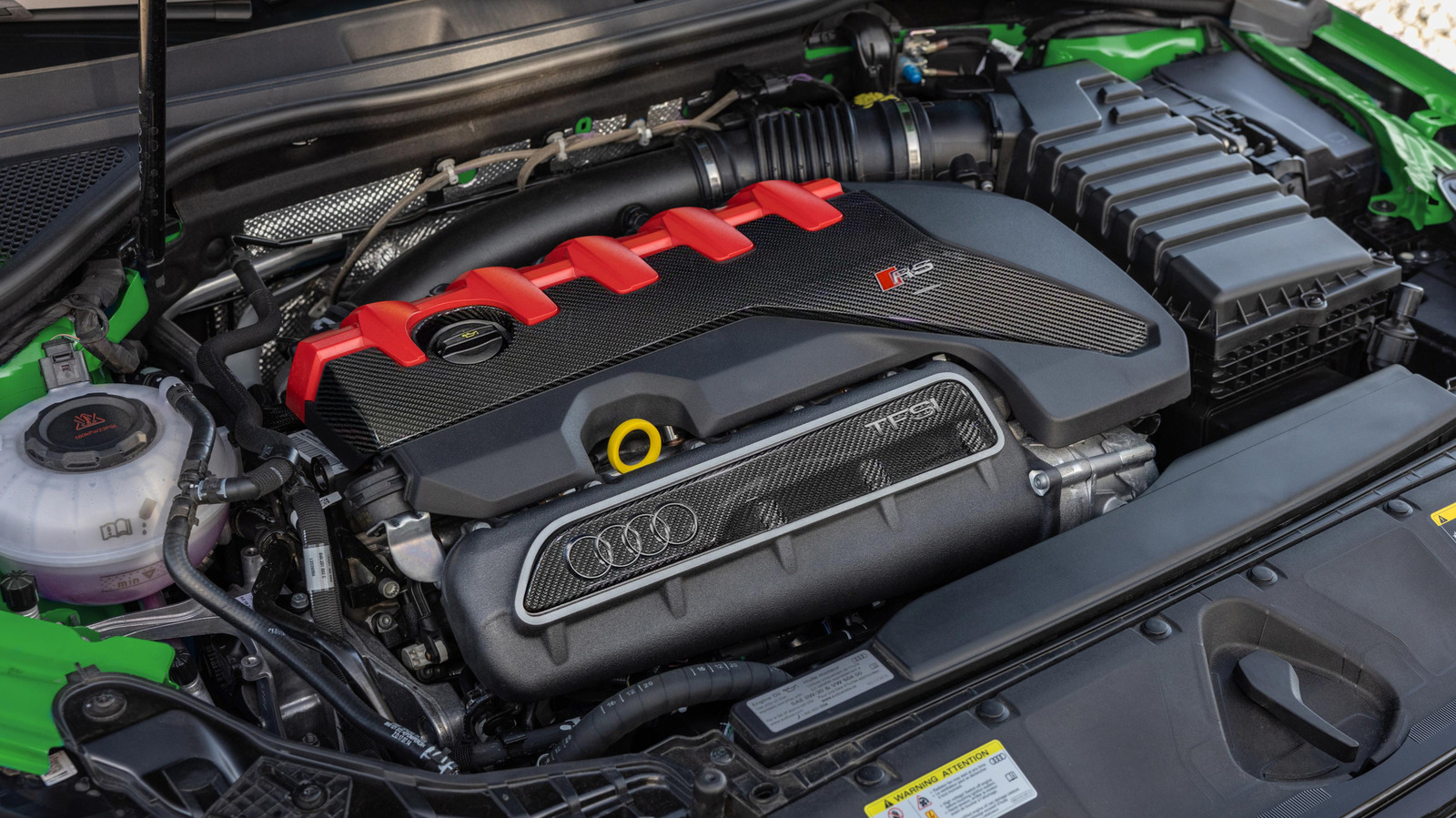


Audi’s turbocharged 2.5-liter inline-five — the last five-cylinder engine in production anywhere on Earth — will die in Europe by mid-2027 but keep breathing in the United States a while longer, thanks to America’s comparatively lax emissions standards. The reprieve is real, but it’s narrow, and nobody at Audi is pretending otherwise.
The automaker confirmed to German outlet Automobilwoche that the engine cannot survive Europe’s incoming Euro 7 emissions regulations without expensive hardware changes. Audi has decided not to make them. Profit margins slipped from 6.0% to 5.1% in 2025, and every discretionary euro is being funneled toward electrification.
As of today, there are no plans to relaunch the five-cylinder engine,” an Audi spokesperson told Automobilwoche. That’s as definitive a eulogy as you’ll get from a company still selling the thing.
The U.S. market buys itself extra time simply because EPA rules don’t mirror Euro 7’s tighter limits. But the math still has an expiration date. RS3 production at Audi’s plant in Győr, Hungary, is only slated to continue through mid-2027.
Whether Audi plans to stockpile U.S.-spec cars before the line goes dark is unclear, and the company isn’t saying.
What’s disappearing isn’t just a powertrain option — it’s an anomaly. The 394-horsepower, 369 pound-foot inline-five is assembled largely by hand across 21 stations in Győr, without robots. Connecting rods and crankcases are produced in-house.
It’s a throwback manufacturing process that has no place in a company racing to build battery-electric platforms at scale, and everyone involved knows it.
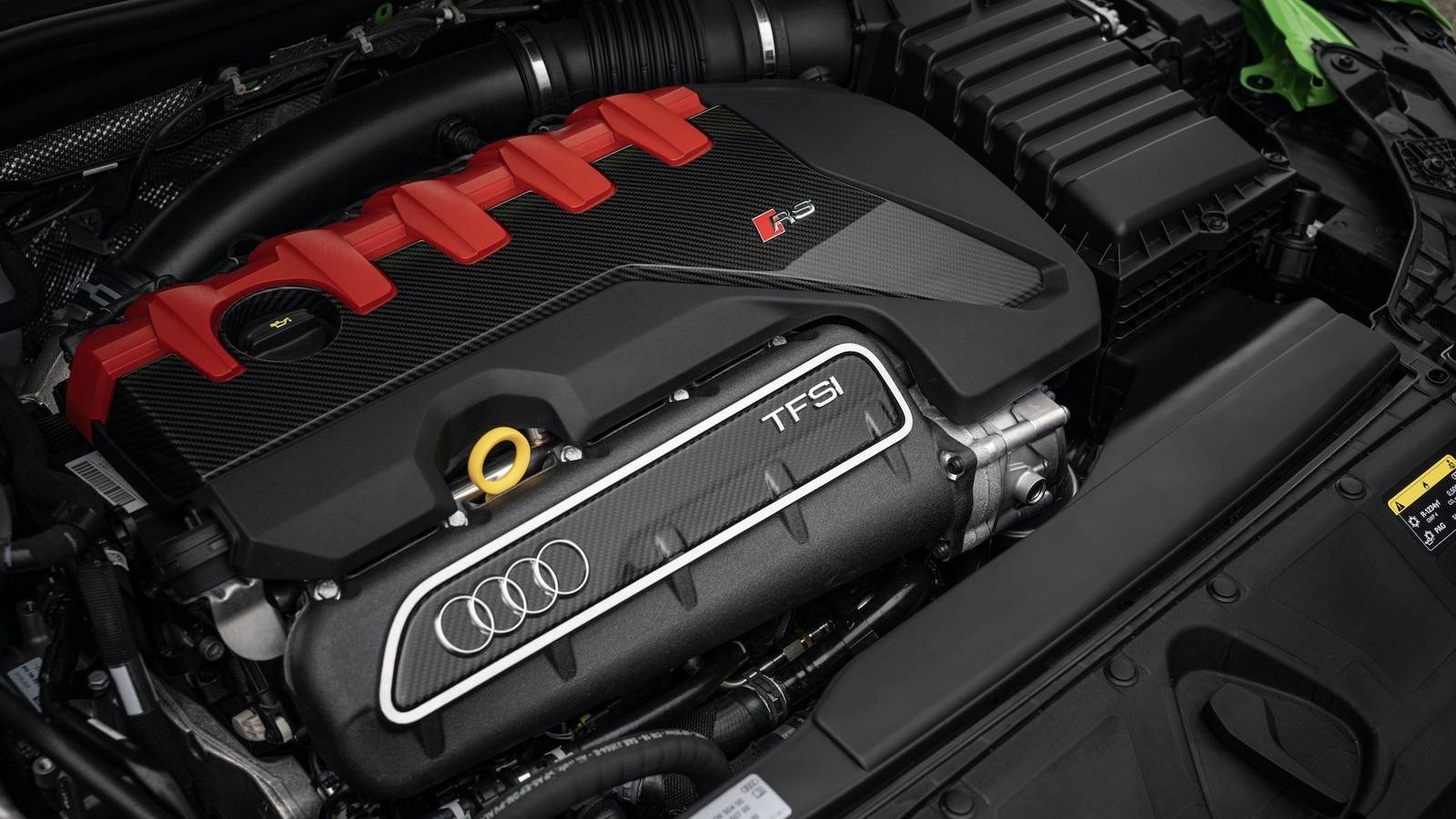
The engine turned 50 last year. It debuted in naturally aspirated form in the 1976 Audi 100, a perfectly unremarkable sedan. It became immortal when a turbocharged version went into the Audi Quattro and proceeded to terrorize Group B rally stages throughout the 1980s. That asymmetrical 1-2-4-5-3 firing order gave the five-cylinder its unmistakable warble — not quite a four, not quite a six, something entirely its own.
Over the decades, the engine powered the TT RS, the RS Q3, and found its way into niche machines from Donkervoort and KTM. One by one, those applications dried up. Today, only the RS3 carries the torch, and it does so brilliantly — 0-60 in 3.6 seconds from a compact sedan that starts at $66,100.
Audi marked the anniversary with the RS3 Competition Limited, a 750-unit special edition wearing bespoke green paint, gold wheels, and a unique suspension tune. It’s the kind of send-off reserved for things people will miss, which is precisely the point.
Five-cylinder engines have always been engineering oddities. They offer more displacement than a four in roughly the same transverse packaging, without the complexity of a V6 or the physical length of an inline-six. Volvo ran them for years. So did Ford and Acura. All moved on.
Audi held out the longest, and now it too is letting go.
The cold logic is hard to argue with. A five-cylinder doesn’t do anything a modern turbo-four or six can’t replicate on a spreadsheet. It just does it with a sound and a character that no spreadsheet captures. That’s always been the problem with engines like this — their value lives in the intangible, and intangibles don’t survive cost-cutting exercises.
American buyers get a few more months with one of the most distinctive powertrains ever bolted into a compact car. Enjoy the asymmetry while it lasts. Nobody is building another one.

Share this Story