
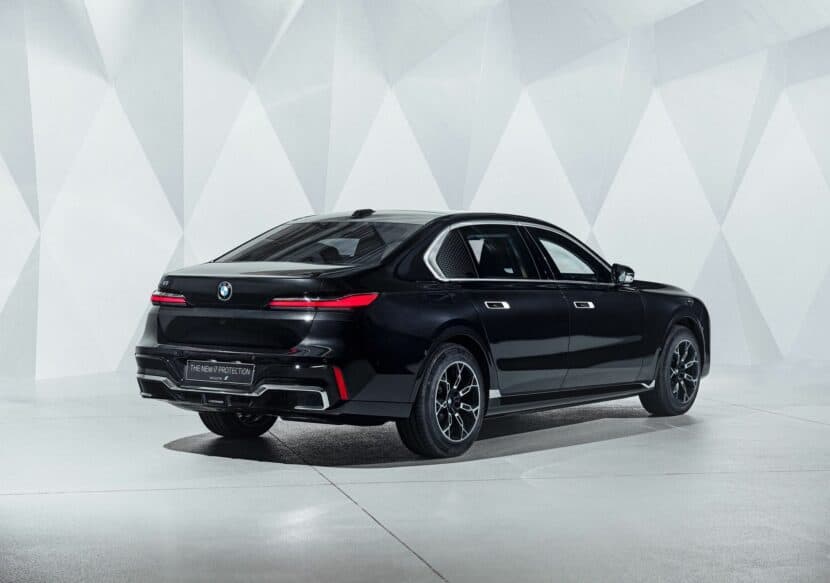


King Charles III rolled through Washington last week in a black BMW 760i xDrive Protection VR9 with European plates, flanked by Secret Service SUVs and diplomatic motorcade vehicles. The same car showed up days later in Bermuda. Armored sedans don’t get rented from Hertz.
They travel with their principals, flown in on military transports, swept by advance teams, and parked in secure garages until the moment they’re needed.
That the British monarch trusts his life to a German sedan and not a British one tells you everything about where the armored vehicle market actually sits.
BMW has been building bulletproof cars since the late 1970s, starting with the E23-generation 733 High Security. Nearly five decades later, the company is deep into development of a facelifted 7 Series Protection based on the updated G70, expected to launch in 2027. The current car already stops 7.62x51mm NATO armor-piercing rounds in the body panels and withstands 7.62x54R sniper rounds in its VPAM 10-rated glass.
The floor and roof survive multiple hand grenade detonations.
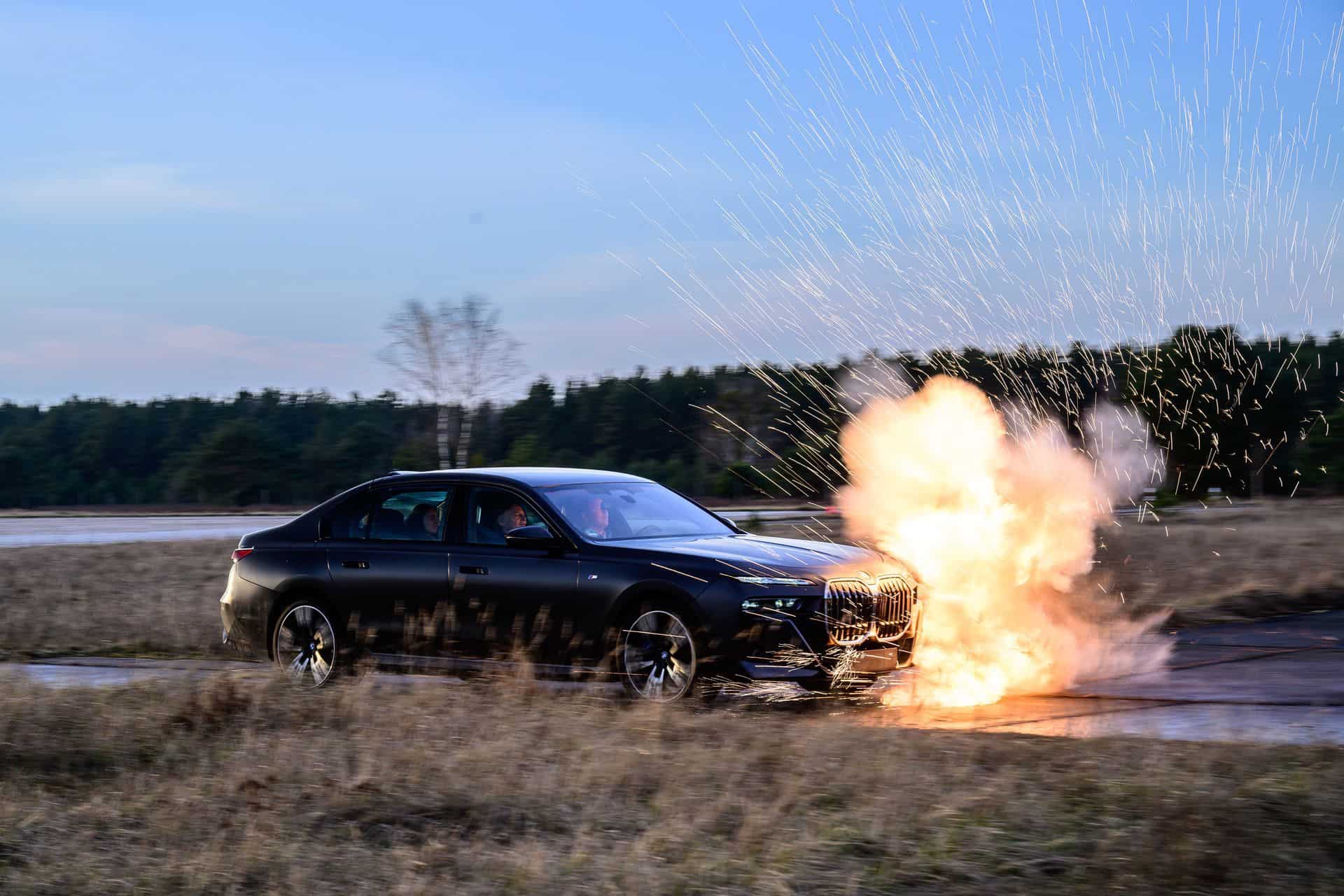
These aren’t aftermarket bolt-on jobs. BMW constructs the Protection models at its Dingolfing plant around what it calls a Protection Core — an armored steel safety cell integrated from the first weld. That’s the critical distinction between a factory-armored vehicle and the sketchy retrofits available on the gray market.
You either build it right from the ground up or you don’t.
The penalty for all that security is staggering weight. The outgoing 760i Protection tips the scales at 3,965 kilograms — nearly 8,740 pounds, roughly double a standard luxury sedan. The electric i7 Protection is even more grotesque: 4,900 kg, or 10,802 pounds. At that mass, you’re not driving a car. You’re piloting a vault.
The facelifted model will carry VR9 certification standard, with optional VPAM 10 for clients who need maximum civilian protection. Features include a self-sealing fuel tank, automatic fire extinguisher, intercom system, fresh-air supply for chemical attacks, and PAX run-flat tires that keep rolling with zero pressure. The doors function as emergency exits because the three-inch-thick armored glass makes them too heavy to pull shut by hand, so they close automatically.
One big change: the outgoing V8 won’t return in its current form. BMW plans to replace the 760i with an M Performance-branded M760 variant, so the gasoline Protection model will likely shift to that powertrain.
The electric version should benefit from BMW’s sixth-generation battery technology, which uses Rimac-assembled round cells offering 20 percent higher energy density. The previous i7 Protection managed only 236 miles of range. That number should climb meaningfully, though it won’t approach the standard i7 M70’s 426-mile WLTP figure. Physics doesn’t care about press releases.
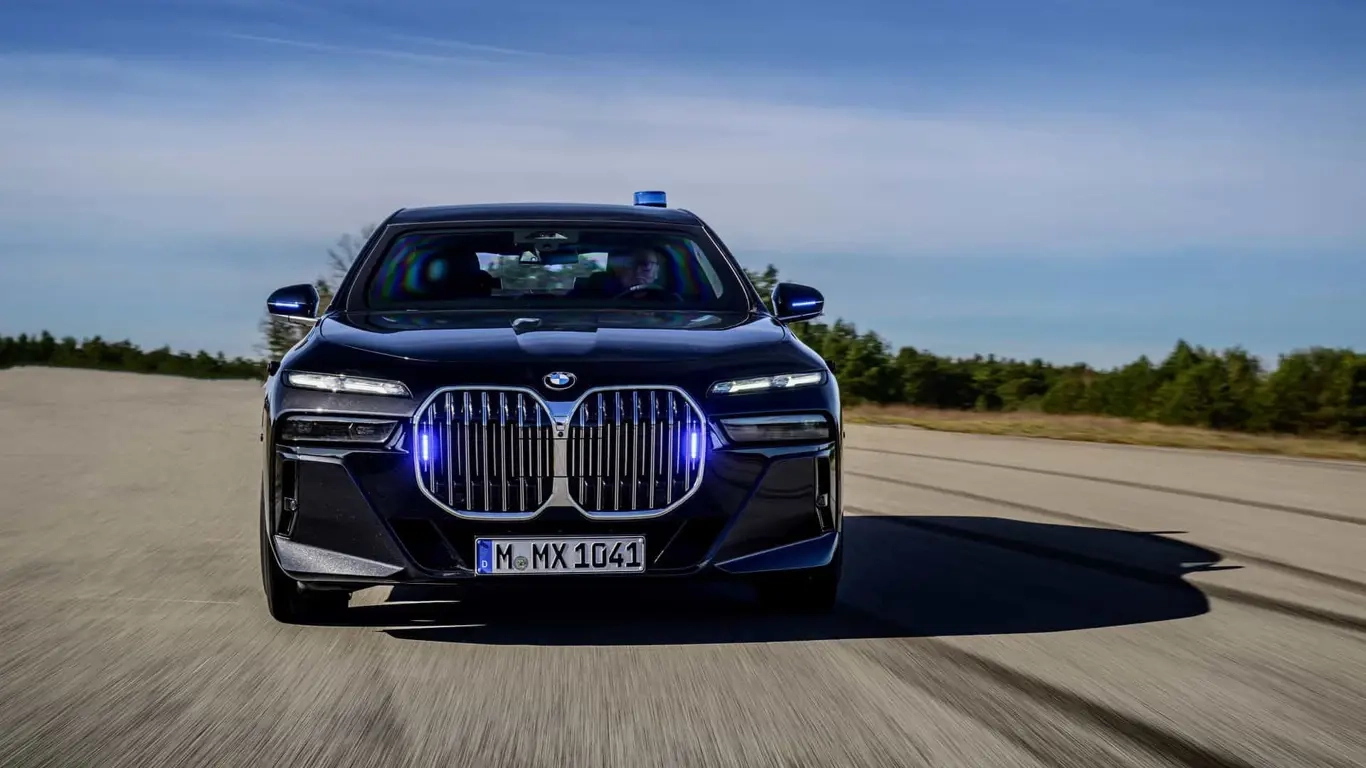
BMW also recently won a major contract to supply Germany’s Federal Criminal Police with 7 Series Protection vehicles, beating both Mercedes-Benz and Audi for the business. That’s not a vanity deal. German federal police run their protection fleets hard and evaluate them ruthlessly.
Winning that bid is the most credible endorsement the car can get — more convincing than any royal motorcade photo.
The armored vehicle segment remains tiny in volume but enormous in strategic importance. It signals engineering credibility at the highest possible stakes. Mercedes has its Guard line, and Audi has competed, but BMW keeps winning the contracts that matter, from Berlin to Buckingham Palace.
When your car has to stop a sniper round and still drive away, marketing doesn’t matter. Only the steel does.
Share this Story