
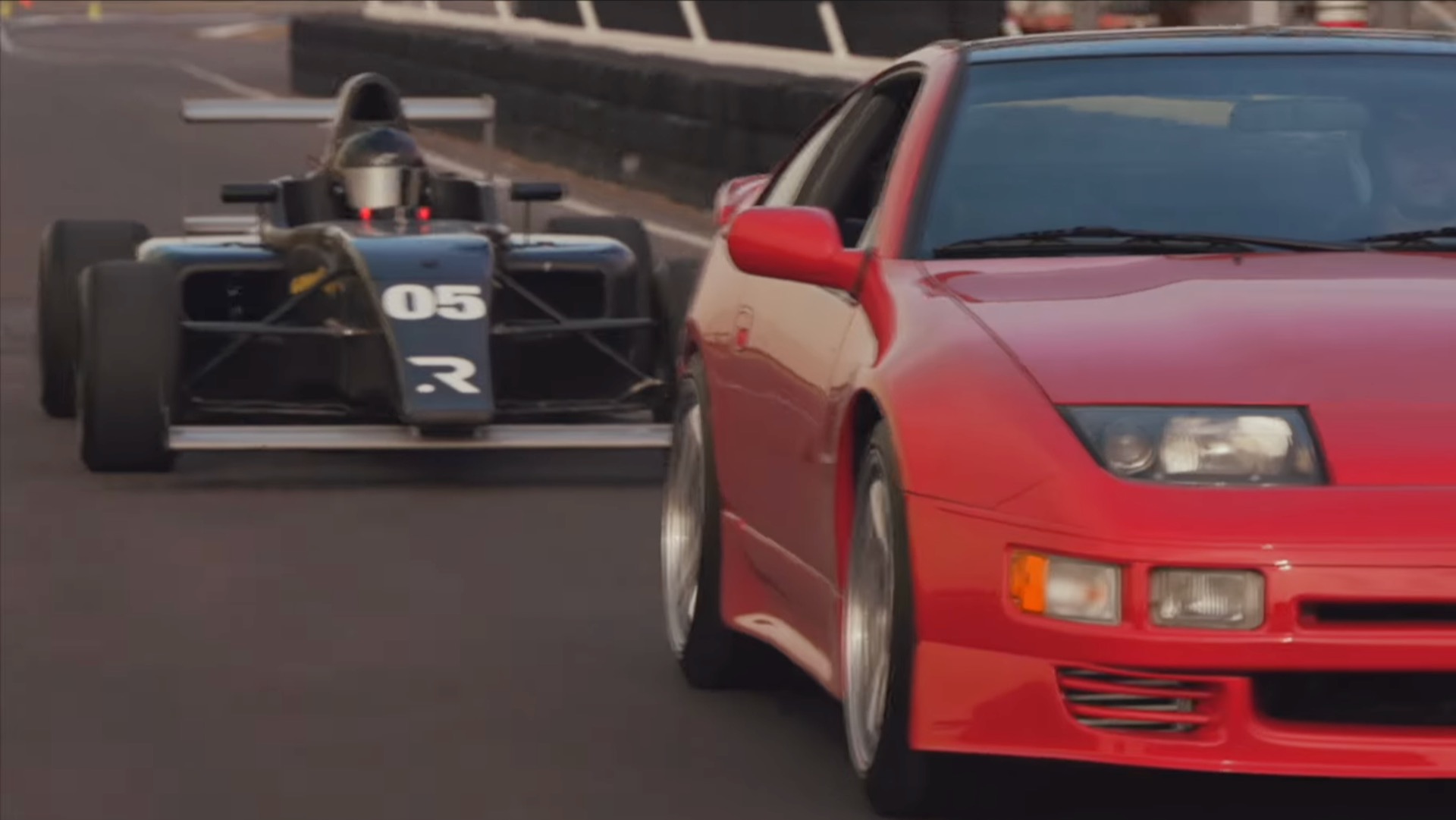


Nissan’s 1990 “Dreamer” Super Bowl commercial showed a twin-turbo Z32 300ZX dusting a motorcycle, an open-wheel racer, and a fighter jet. The narrator talked about the turbos spooling up. There was just one problem: the car was naturally aspirated.
The whole thing was a lie wrapped in a silver paint job.
YouTuber Chef Joni uncovered the deception while tracking down the actual car used in the shoot. What he found was a black, non-turbo 300ZX that Nissan had repainted silver and fitted with twin-turbo bodywork for the commercial. When the famous jump sequence ripped the turbo bumper clean off during filming, the crew simply bolted a standard black bumper back on and called it a day.
The car’s post-Hollywood life reads like a lot of manufacturer press fleet stories. Nissan donated it to California State University Long Beach, where it presumably served some educational purpose before being sold off. An old eBay listing, complete with VIN, traces the chain of custody from the university to a buyer who flipped it, and finally to a California enthusiast who paid $9,000 for it and still owns it today.
That owner knew exactly what he was buying — a piece of advertising history from an era when a single Super Bowl spot could burn itself into the collective memory of an entire generation. The “Dreamer” ad aired once. No YouTube replays. No TikTok loops. Once.
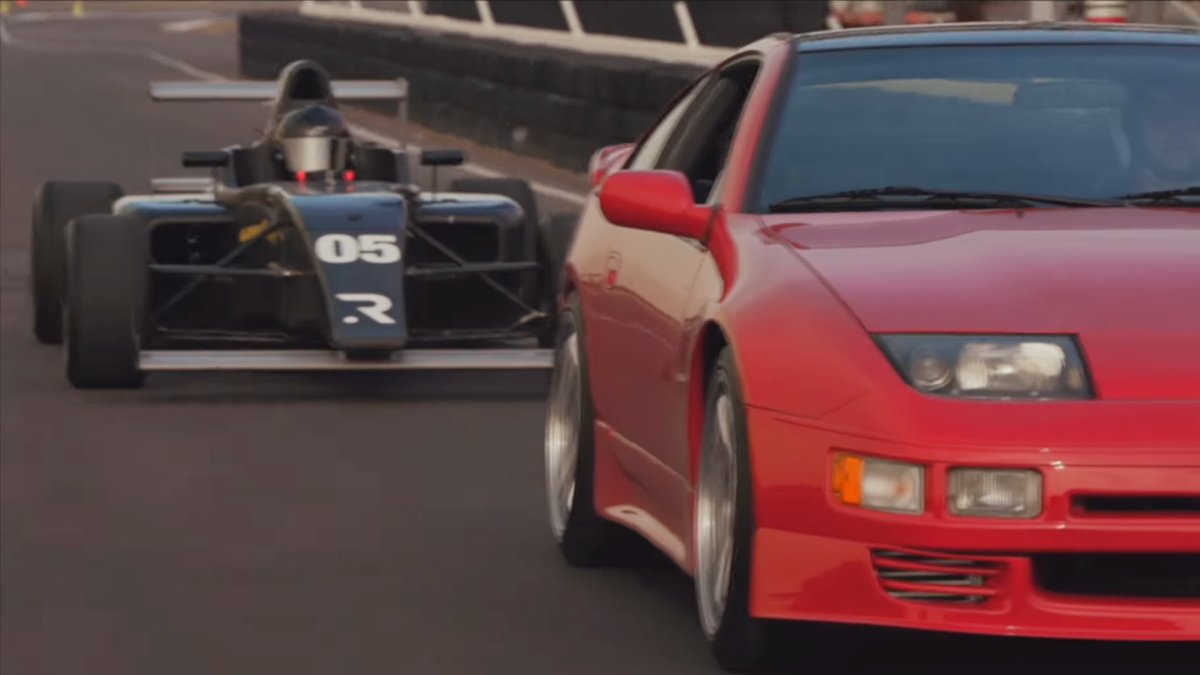
Joni, unable to pry the original car from its current owner, did the next best thing. He took his own freshly restored twin-turbo 300ZX — an actual twin-turbo car, not a dress-up job — and recreated the commercial shot for shot. He booked Radford Racing School, hired one of the school’s F4 open-wheel cars with a professional driver, recruited a motorcycle rider, and even found a remote-control airplane pilot to stand in for the fighter jet.
The result, by Joni’s own admission, was rushed. But it captures the spirit of the original with one crucial difference: this time the Z actually has two turbos under the hood. The recreation is, in a strange twist, more honest than the source material it pays homage to.
This kind of automotive mythmaking used to be standard practice. Manufacturers routinely substituted engines, transmissions, and entire drivetrains for press cars and commercial vehicles. The camera couldn’t tell the difference, and nobody was pulling VINs in 1990.
Nissan needed a silver twin-turbo Z for a commercial. They grabbed what was available and made it look the part.
The “Dreamer” ad still holds up as a piece of pure aspiration, even with its early CGI aging about as gracefully as a milk carton. It sold a feeling, not a spec sheet. Thirty-five years later, someone paid nine grand just to park the prop in their garage.
Automakers still chase that kind of cultural penetration. Cadillac just burned a Super Bowl slot to debut its F1 livery. The budgets are bigger, the production values are sharper, and the cars on screen are probably still not exactly what they claim to be.
The Z32 300ZX remains one of the most beautiful Japanese cars ever penned. That it needed no turbochargers to outrun a jet on camera is, depending on your perspective, either a scandal or a compliment.
Share this Story