
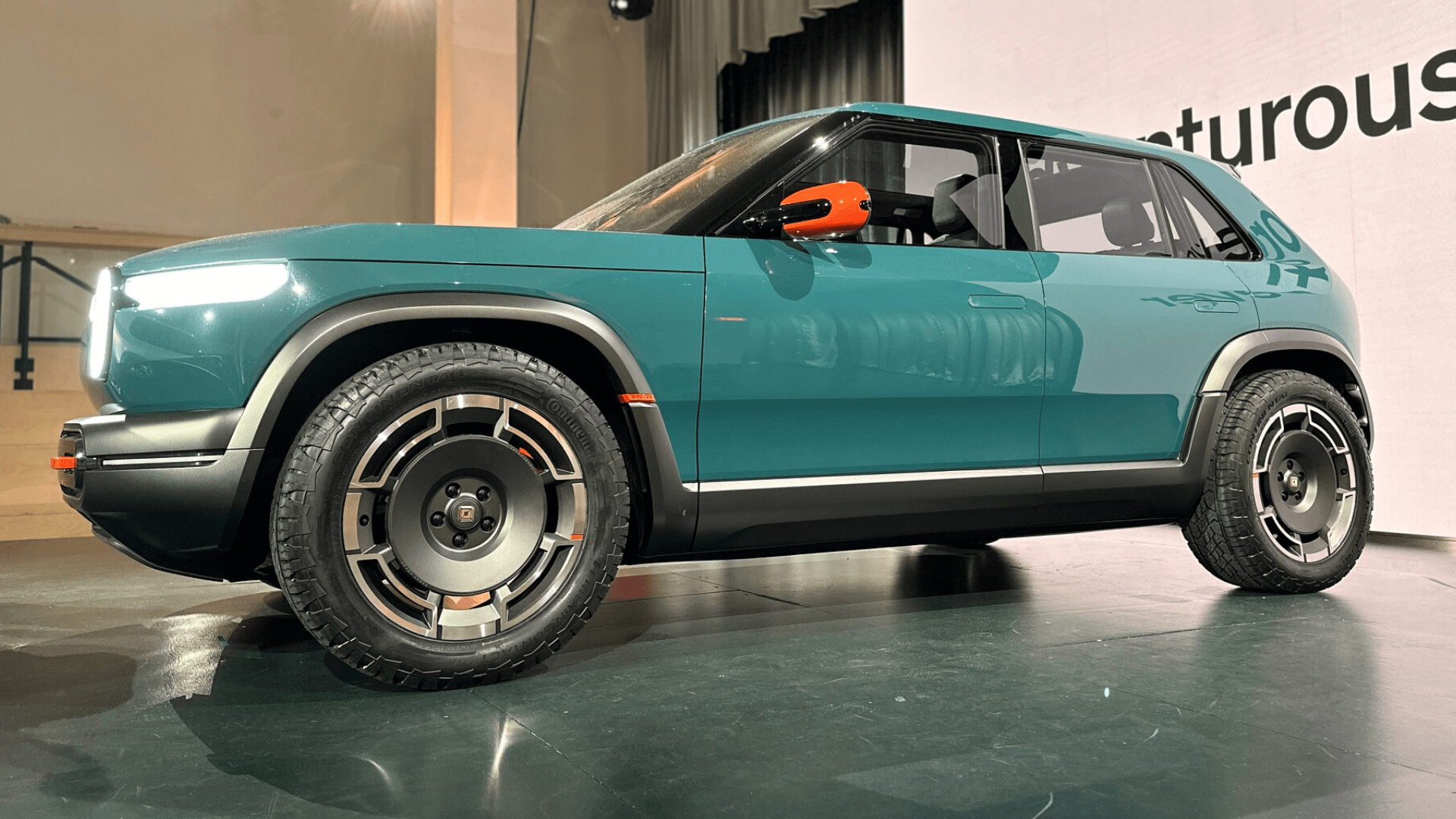


Rivian CEO RJ Scaringe is done with subtlety. His company’s new performance division, the Rivian Adventure Department — RAD — will deliver “fundamentally improved” vehicles with real hardware changes, not the cosmetic dress-up that plagues so many OEM sub-brands. Scaringe laid it out plainly in an exclusive interview with The Drivecast from Park City, Utah.
The pitch is familiar territory: BMW has M, Mercedes has AMG, Porsche has its GT cars. Rivian wants that same halo effect, except tuned for a company that sells electric trucks and SUVs aimed at people who’d rather be on a trail than a track. RAD was formally announced in February, but Scaringe says the spirit of it predates the branding.
Case in point: the R3X concept shown before RAD even had a name. Wider track, bigger wheels, higher ride height, rally-inspired interior with woven bucket seats and a cork dashboard that looked like it fell out of a designer’s hallucination. Scaringe now admits it was a RAD vehicle in everything but title.
The economics are refreshingly transparent. Scaringe explained that building a mass-market vehicle like the R2 requires painful tradeoffs — every dollar spent on chassis tuning is a dollar stripped from the interior or somewhere else. RAD exists to break that equation.
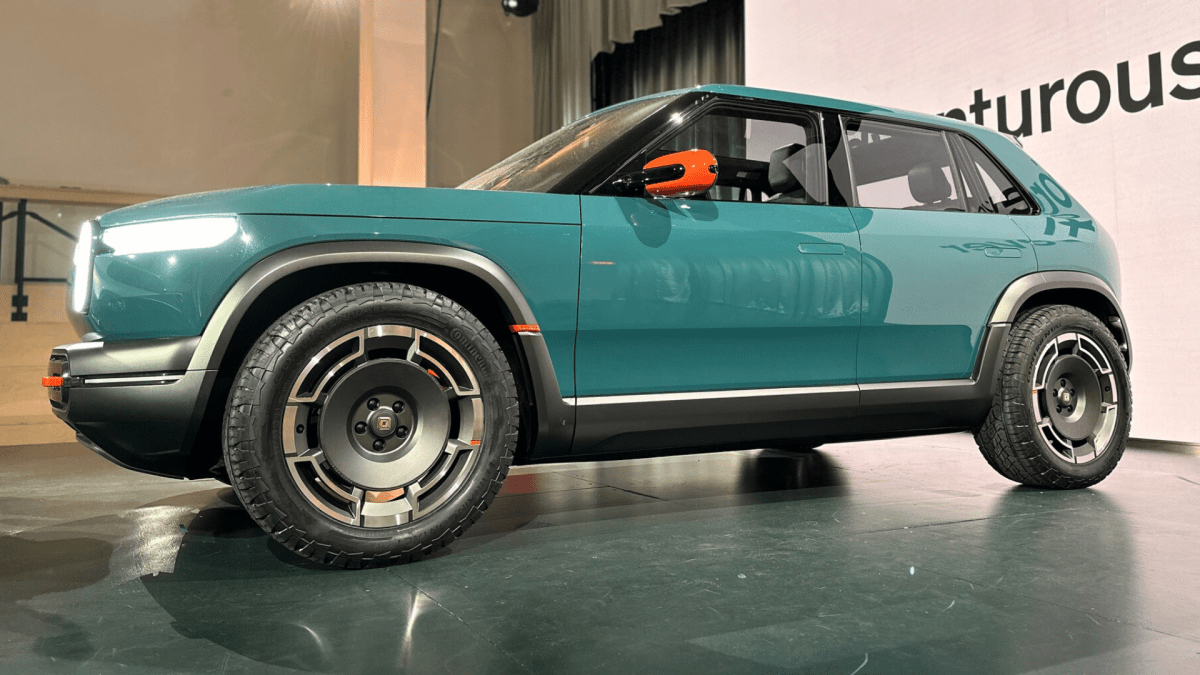
Dial the performance to 11, accept the higher cost, and sell it to buyers who want the extreme version. “It’ll add cost,” Scaringe said. “And so it’s going to make them more expensive, but it’ll make them really, really exciting.”
That honesty about price is notable. Rivian has struggled mightily to reach profitability, burning through cash while scaling production of its R1T pickup and R1S SUV. The R2, priced around $45,000, is supposed to be the volume play that changes the math. RAD vehicles sitting above that price point could deliver fatter margins — if the market bites.
There’s a dedicated skunkworks team being assembled internally, staffed by names Scaringe hinted are already known to close Rivian watchers. The mandate is simple: make the cars more extreme. On-road dynamics, off-road capability, visual presence — everything gets pushed further than the base models allow.
What separates this from the usual performance-brand playbook is the adventure angle. AMG sells lap times. M sells driving purity. RAD is selling the idea that an electric vehicle can be a legitimate tool for exploration, not just a commuter appliance with a green conscience.
The motorsport inspiration Scaringe references leans rally, not circuit. That’s a deliberate choice for a brand whose identity was built on overlanding and outdoor culture.
Whether RAD becomes Rivian’s equivalent of AMG or ends up a footnote depends entirely on execution. The EV startup graveyard is littered with ambitious sub-brands that never shipped. But Scaringe’s specificity — real suspension changes, wider bodies, genuine mechanical upgrades — suggests this isn’t vaporware.
Rivian needs RAD to work on two levels. Emotionally, it has to generate the kind of enthusiasm that turns curious shoppers into deposit holders. Financially, it has to justify the engineering investment with vehicles that command a premium without cannibalizing R2 sales.
The company has a habit of showing concepts that stir genuine excitement — then making people wait years. RAD’s credibility will be measured not in press events but in production vehicles that actually reach driveways. Scaringe has set the bar high. Now he has to clear it.
Share this Story