
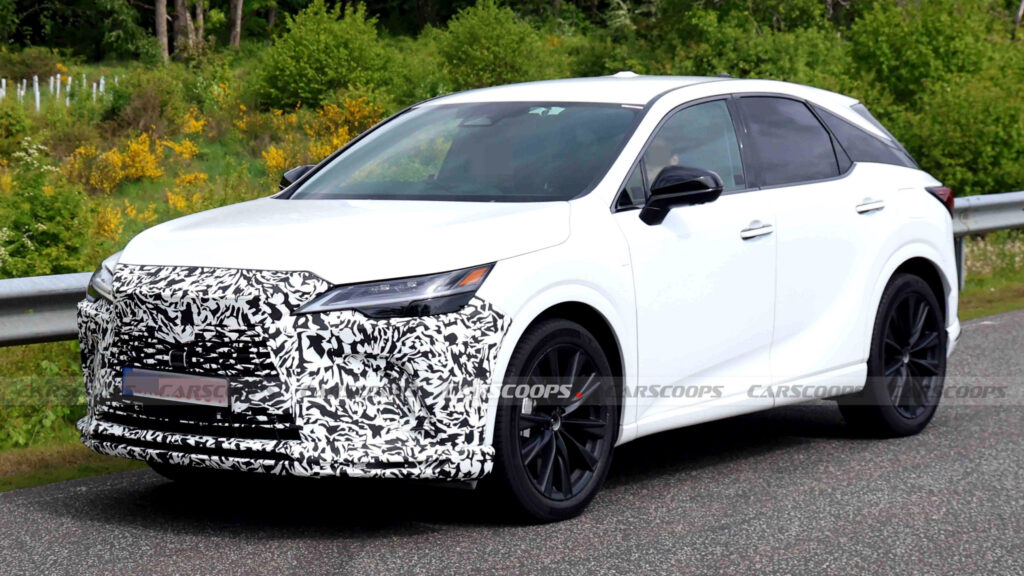


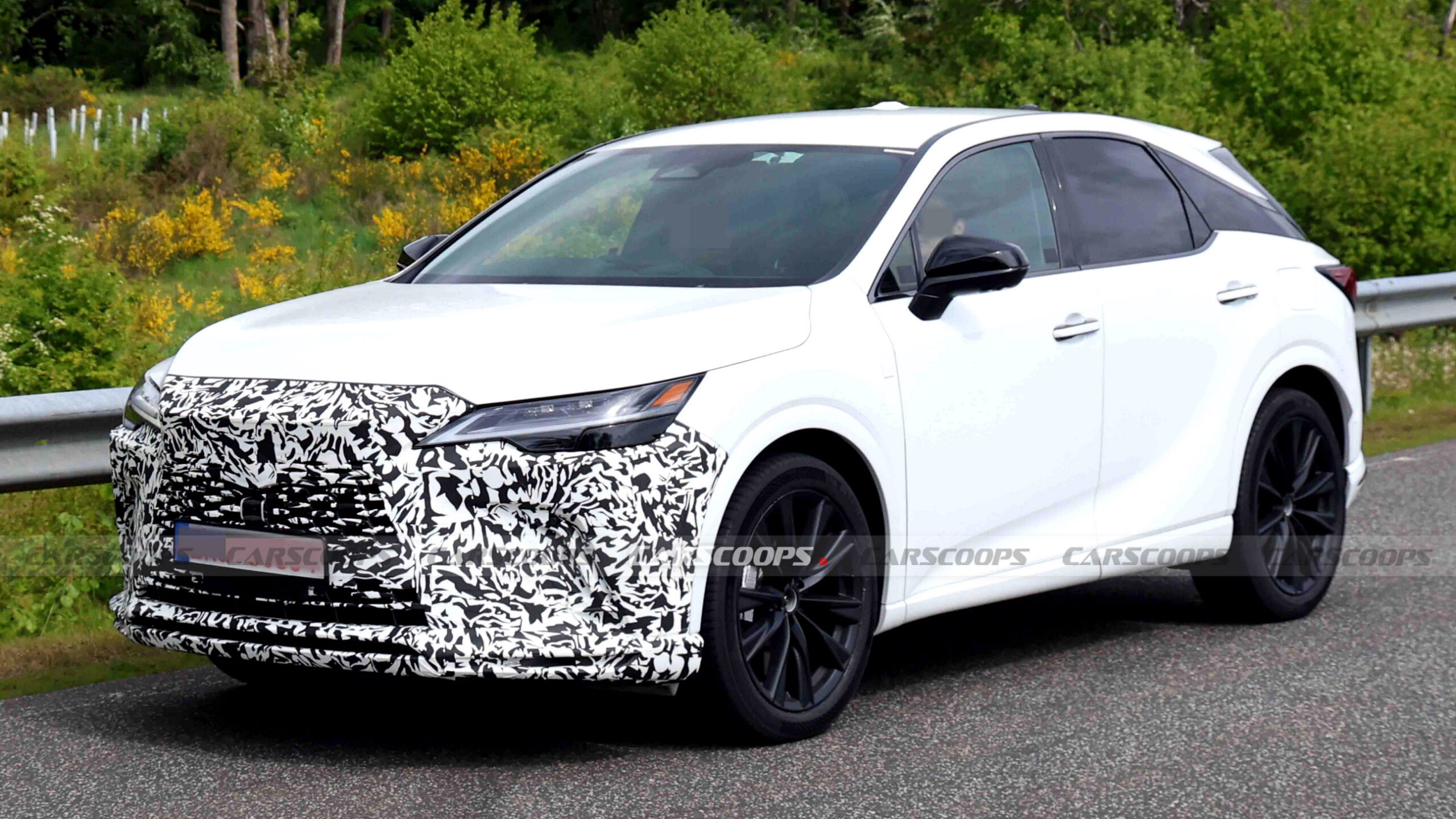
A camouflaged Lexus RX prototype just turned up near the Nürburgring, and from the outside, you’d barely notice the difference. Revised grille, updated fascia, maybe some new lighting units down the road. Standard mid-cycle stuff for a crossover that doesn’t need to reinvent itself.
But the exterior isn’t where Lexus is placing its bet.
The real overhaul is expected inside the cabin, where the RX is poised to inherit the interior architecture debuted in the redesigned ES sedan and the all-new TZ. That means a minimalist dashboard, a rectangular 14-inch infotainment display, and a computing platform that finally gives Lexus a credible answer to the responsiveness complaints that have dogged its touchscreen since the current RX launched.
The updated system reportedly brings a revamped quick control menu, better voice recognition, a drive recorder function, and deeper personalization options. The familiar “L” steering wheel gets retired in favor of a new design spelling out “LEXUS” across the hub. It’s a detail that first appeared on recent models, signaling Toyota’s luxury division is trying to build a more distinct visual identity one piece at a time.
A stubbier shift lever and refreshed interior trim are also expected. None of it is revolutionary on paper. But for the RX, which remains Lexus’ best-selling nameplate by a wide margin, the cabin is where conquest buyers are won or lost.
The current interior, while handsome, has started to feel a half-step behind the Germans in terms of tech integration.
The powertrain lineup appears likely to carry over largely unchanged. The turbocharged 2.4-liter four-cylinder makes 275 horsepower, the standard hybrid puts out 246 hp, and the performance-oriented hybrid delivers 366 hp. The plug-in hybrid RX 450h+ sits at 304 hp with 38 miles of electric range, decent but not class-leading as competitors push past 40 miles.
This is an early prototype, and spy photographers didn’t get a clean interior shot. Lexus could still surprise with more extensive exterior work on later test mules. Updated wheels and a revised rear end wouldn’t be unusual for a facelift of this magnitude.
The timing matters. This facelifted RX is expected to debut next year as a 2028 model, landing right as BMW’s refreshed X5, the next-generation Mercedes GLE, and Audi’s evolving Q7 lineup all jostle for the same suburban driveways. Lexus has held its ground in this segment largely on reliability reputation and value positioning.
The luxury crossover market doesn’t stand still, though, and infotainment quality has become a genuine differentiator. Lexus spent years suffering under a maddening touchpad interface that alienated even loyal customers. The current touchscreen was an improvement, but this next system needs to be the one that closes the gap for good.
The RX doesn’t need a dramatic reinvention. It needs the kind of surgical update that keeps a best-seller feeling current without alienating the buyers who already love it. From what the early spy shots suggest, that’s exactly the play Lexus is making, with the most consequential changes happening where drivers actually spend their time.

Share this Story