
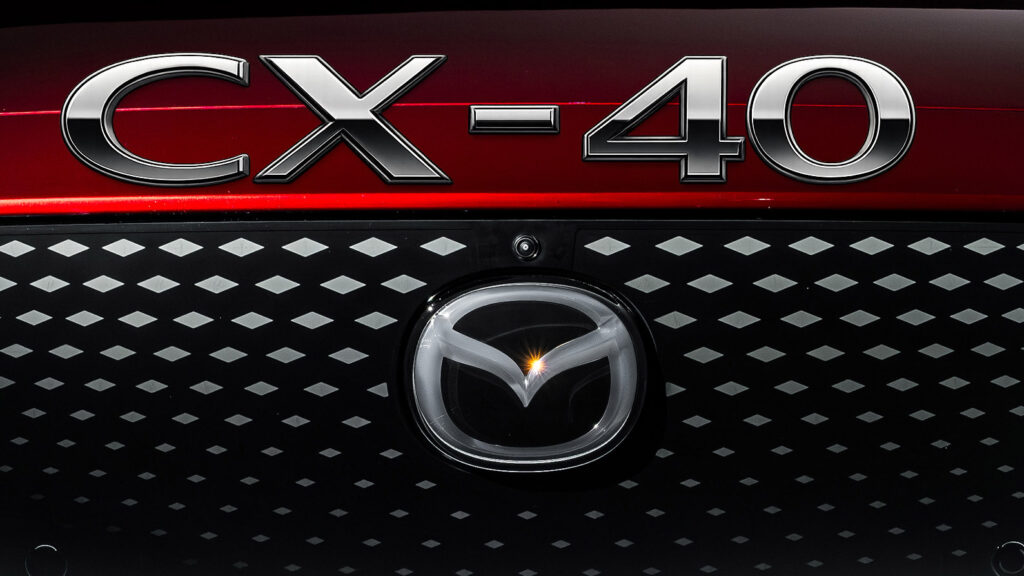


Mazda filed a trademark application with the United States Patent and Trademark Office earlier this year for the name CX-40. The company has said nothing about it publicly. That silence is doing a lot of heavy lifting.
The filing, first reported by Autoblog, slots neatly between two of Mazda’s existing nameplates — the CX-30 subcompact crossover and the CX-5, the brand’s volume king. If a production model follows, it would drop Mazda squarely into the white-hot compact crossover segment currently dominated by the Toyota Corolla Cross, Honda HR-V, and a swarm of Korean and Chinese competitors.
Mazda isn’t new to this game of trademarking names it may never use. The CX-40 name has been registered in Australia since 2019. The company also holds active trademarks for CX-10 and CX-20 in multiple countries.
None of those have materialized as production vehicles. Filing paperwork is cheap insurance against competitors claiming a name. Building an actual vehicle is another matter entirely.
But there are breadcrumbs worth following.
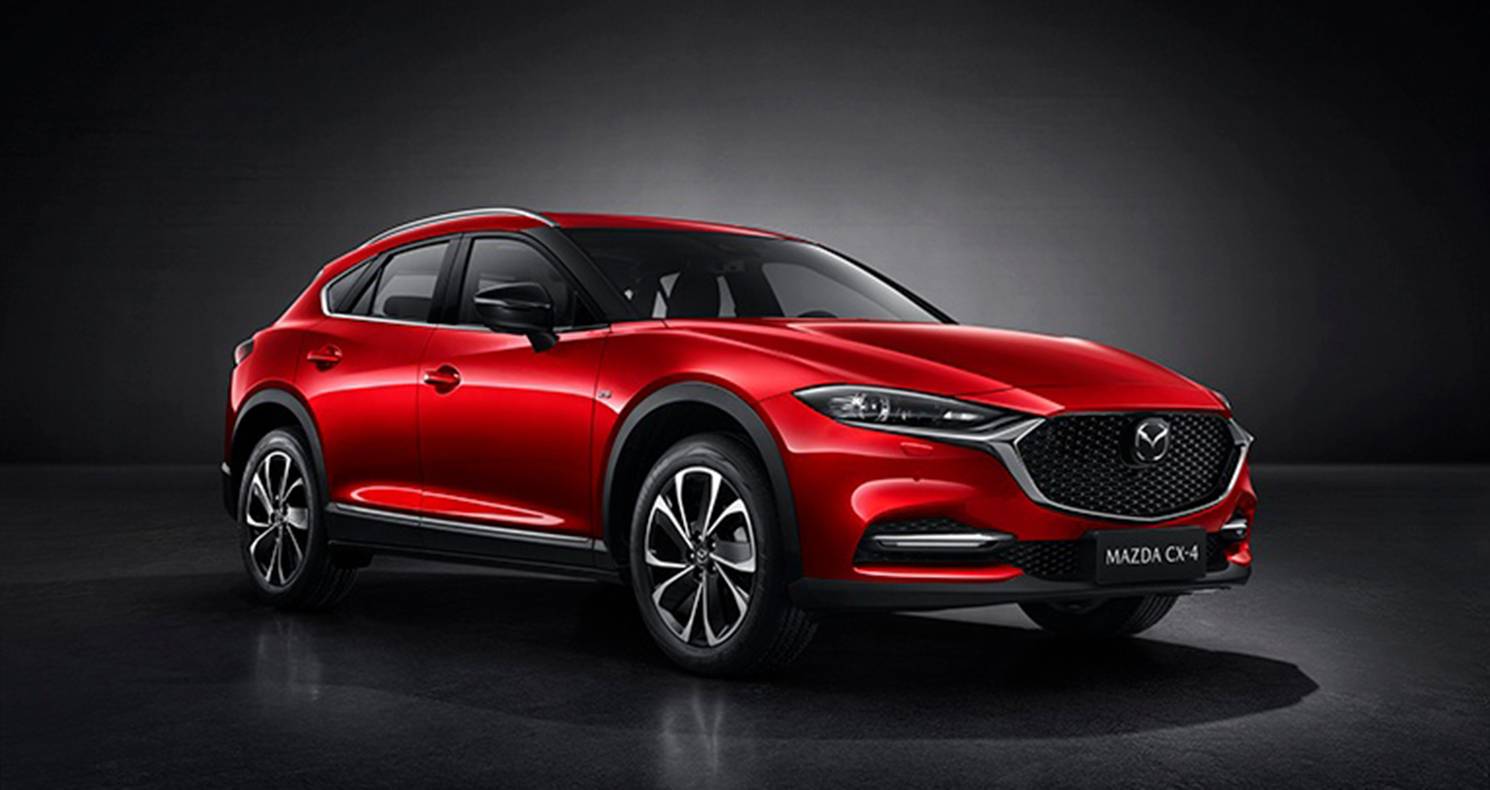
Mazda sold a model called the CX-4 exclusively in China from 2016 to 2025. It rode on the same platform as the previous-generation Mazda 3 and first-gen CX-5, wearing a lifted wagon body with coupe-like proportions. It was a niche play for a single market, but it proved Mazda could think beyond the boxy crossover template when it wanted to.
Last year’s Tokyo Motor Show offered two relevant concepts. The Vision X-Coupe showed a sleek, low-roofed crossover silhouette that could easily preview something in the CX-40 mold. The Vision X Compact, meanwhile, hinted at a next-generation Mazda 2 with subtle SUV cues.
Together, they sketched out a vision of Mazda’s compact future that looks less like cookie-cutter crossovers and more like vehicles with actual design ambition.
Then there’s the money trail. Mazda has committed to expanding its production facility in Thailand, earmarking investment for a new compact SUV — potentially with a hybrid powertrain — alongside electric vehicles. Thailand is Mazda’s manufacturing base for Southeast Asian and Australian markets, and a compact hybrid crossover built there would make strategic sense for regions where electrification incentives are real but full EV infrastructure remains patchy.
The gap between the CX-30 and CX-5 is not just a naming opportunity. It represents a price and size segment where Mazda currently has no answer to the Corolla Cross, the Seltos, or the Hyundai Kona. Those three models collectively move enormous volume globally, and Mazda has watched that parade from the sidewalk for years.
The company’s recent trajectory tells the story of a brand caught between premium aspirations and mainstream realities. The CX-60 and CX-80 pushed upmarket with inline-six engines and rear-wheel-drive platforms. But the bread-and-butter compact segment — the one that actually pays the bills — has been left to age.
A CX-40 with hybrid power, built affordably in Thailand, wearing something like the Vision X-Coupe’s sharper lines, would be the most commercially rational thing Mazda has done in years. Whether the trademark becomes a vehicle or remains a placeholder in a government database is the question Mazda refuses to answer.
The company’s track record suggests caution. Its ambitions suggest otherwise. Somewhere between those two impulses sits a crossover the market is already asking for.

Share this Story