
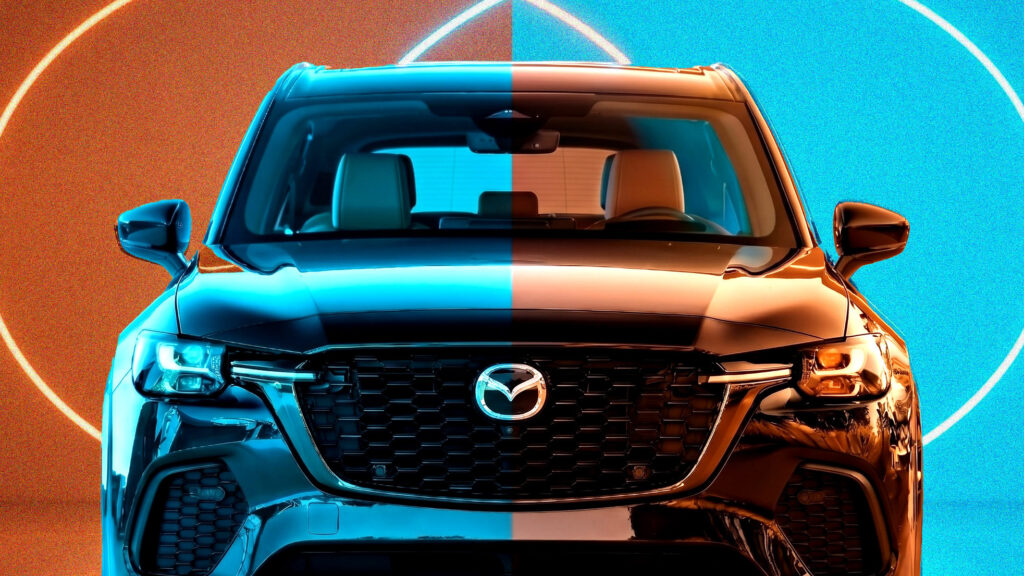


Tom Donnelly, Mazda’s top executive in North America, just told his own dealers the quiet part out loud: nobody knows what Mazda is. Not the customers. Not the casual shoppers. Maybe not even the dealers themselves.
Speaking at the company’s annual dealer gathering in Texas, the CEO of Mazda North American Operations confessed that if you stopped ten people on the street and asked them what Mazda stands for, you’d get ten different answers. That’s the kind of admission that doesn’t usually make it past the corporate filter.
Donnelly told Automotive News that this identity fog is the single thing keeping him up at night. It’s also the single biggest barrier between Mazda’s current 400,000 annual U.S. sales and the 500,000 he wants.
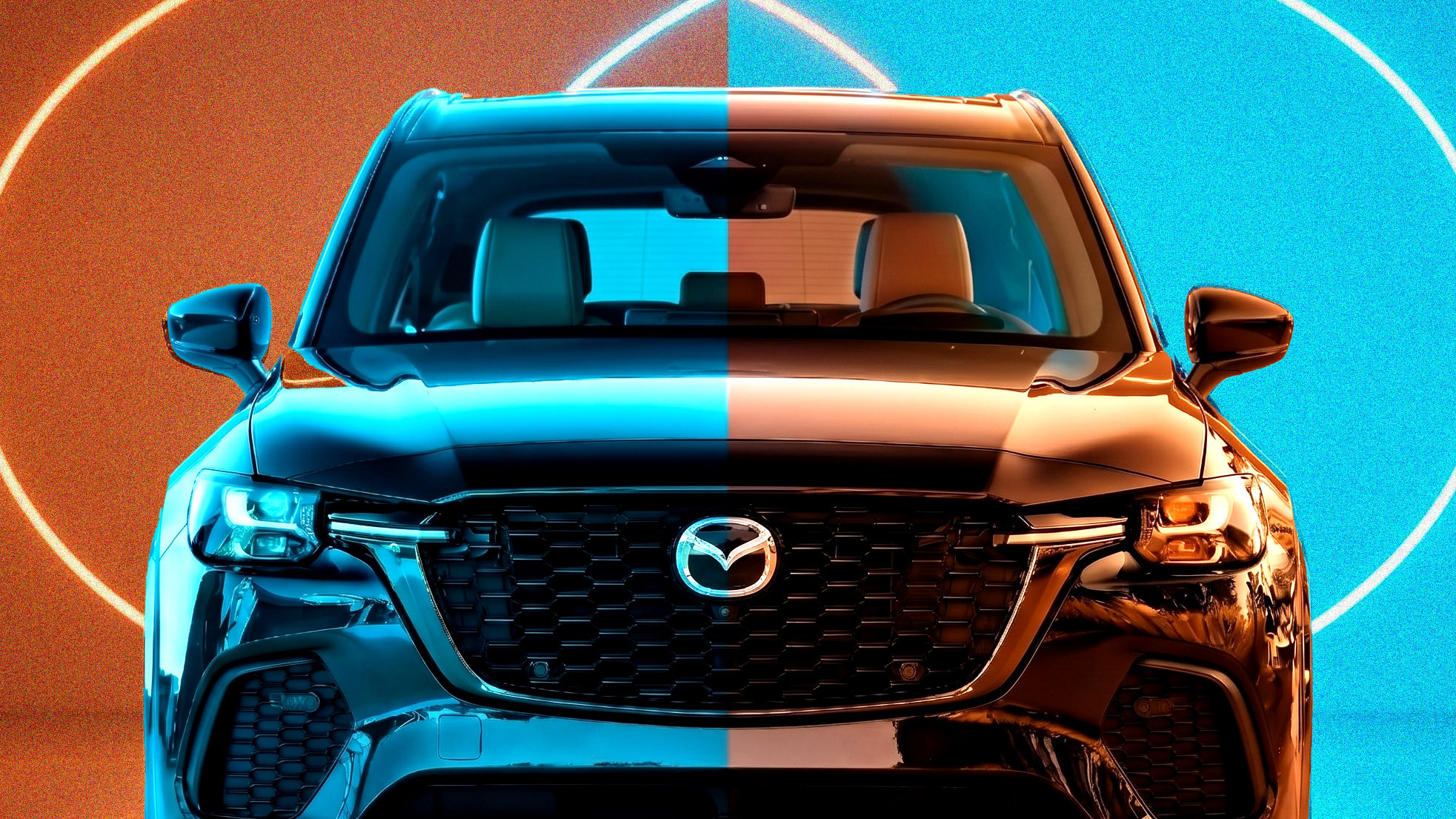
The irony is thick. Mazda’s cars are arguably the best they’ve ever been. The CX-50 and CX-90 sell in real volume, build quality is strong, and driving dynamics remain a cut above the mainstream.
The problem isn’t the metal. It’s the story around the metal.
Donnelly himself traced the roots of the confusion. There was a time when Mazda meant “Mazda3” — a tight, fun compact that enthusiasts loved and everyone else tolerated. Then the CX-5 became the face of the brand, a crossover that hit above its weight in refinement.
Now the lineup has ballooned to include the CX-50, CX-70, and CX-90, spanning a price range that starts in the mid-$20s and pushes past $50,000. That’s a lot of territory for a company with no truck, no EV volume, and no clear luxury badge.
And that’s the trap. Mazda prices itself above Honda and Toyota in many segments but lacks the brand equity to justify the premium to most buyers. It’s not a luxury brand — not in reputation, not in dealer count, not in resale perception.
It’s stuck in a purgatory that European brands like Alfa Romeo know well: too refined for the mainstream, too obscure for the prestige crowd.
Donnelly’s prescription leans heavily on retail experience. Dealers have poured money into store renovations, and Mazda believes the showroom environment can do some of the heavy lifting in defining who they are. He used the word “stickier” to describe his vision for customer retention — buyers who come back for a second and third Mazda instead of wandering to a Hyundai or Lexus after one lease cycle.
It’s a reasonable aspiration, but showroom tile and mood lighting don’t build a brand. Product conviction does. BMW didn’t become BMW because of nice dealerships.
It became BMW because for decades it made cars that did one thing — drive — better than anything else in the class. Porsche is Porsche because it never apologized for being Porsche.
Mazda, meanwhile, keeps hedging. It builds a sublime roadster in the MX-5 and then buries its marketing budget in crossover campaigns. It teases the Iconic SP sports car concept and then launches another three-row SUV. Every signal contradicts the last.
The company has the engineering talent, the design language, and the driving soul to carve out a real identity. What it lacks is the corporate nerve to pick a lane and hold it.
Donnelly clearly understands the problem. Whether Mazda’s leadership in Hiroshima shares his urgency — and his willingness to make hard choices — will determine if that 500,000 number ever becomes real or remains another dealer-meeting talking point.
At 400,000 sales, Mazda is surviving. To thrive, it needs to answer a question it has been dodging for a decade: What are you? The cars already have an answer. The brand just refuses to commit to it.

Share this Story