
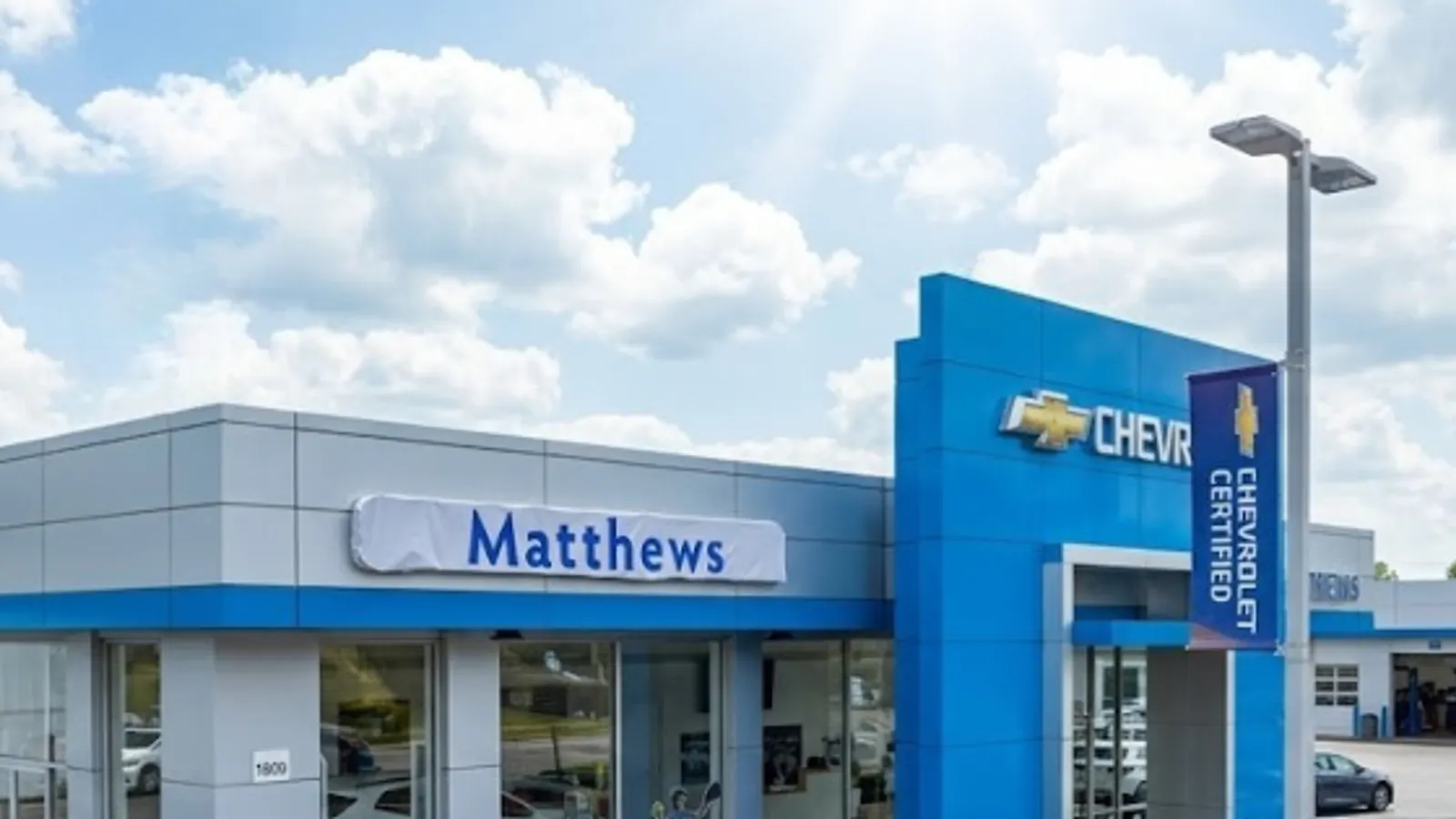


Matthews Automotive Group closed on Sylvester Chevrolet in Peckville, Pa., in late March, absorbing a family dealership whose roots trace back decades into a 16-rooftop regional operation spanning New York and Pennsylvania. The deal itself was modest. The story behind it is not.
Derek Sylvester, 67, who sold his first truck in 1978, made the call to let go of the store his father built. Not because the business was failing. Because the math no longer works for a single-point dealer selling a brand whose parent company has shed more than half its U.S. market share since the 1970s.
GM commanded north of 40% of the American market when Sylvester was learning the trade. Today it sits around 17%. That erosion changes everything for a small operator — floor traffic, allocation leverage, margin on every unit.
“I don’t see my kids being able to keep it together like I did when my father gave it to me,” Sylvester told WardsAuto.
His wife, brother, nephew, and two daughters all worked the store. It was as family-run as a dealership gets. But being family-run and being viable long-term are two different things in 2026.
Rob Matthews, CEO of the acquiring group, didn’t sugarcoat the advantage. “We just have more resources than a single store can have,” he said. Centralized BDC operations, scaled-up digital marketing, and the halo effect of already having a Kia store a few miles away in Blakely — these are table stakes for a regional consolidator. For a standalone operator, they’re overhead that doesn’t pencil.
The facility being image-compliant — meeting GM’s current standards for how a Chevy store should look — made the deal considerably more attractive, Matthews said. That detail matters. Manufacturers keep raising the bar on facility requirements, and for a single-point dealer, a multi-million-dollar renovation with no guarantee of payback is a gut check few want to face alone.
Talon Fee of the Dave Cantin Group, which brokered the deal, called this pattern a trend: small stores and single-point operations selling into privately held regional groups that are focused on geography. These aren’t publicly traded giants strip-mining local markets. They’re operators who know the territory and can squeeze out efficiencies a lone store never could.
Matthews kept virtually all the staff. Sylvester himself stays on as a “transition coordinator,” selling cars to longtime customers and bridging the old world to the new. His two daughters and nephew remain employed.
It’s the softest possible landing for a family exit — which may be exactly why Sylvester chose Matthews over other suitors. The two men didn’t actually meet until after the deal was agreed upon. “Love at first sight,” Sylvester called it, with a laugh.
But behind the warmth sits a harder truth Sylvester was blunt about: he waited too long. “I should have done it two years ago,” he said. “I would have got more money.” Blue sky values for franchise dealerships peaked in 2021 and 2022, and the window has been narrowing since.
Matthews Auto Group now carries 16 rooftops across most domestic brands and several import lines. The CEO said further expansion is coming, though any move outside his current New York-Pennsylvania footprint would need to be a four- or five-store cluster to justify the reach.
The age of the single-point franchise dealer isn’t officially over. But the economics are speaking clearly, and families like the Sylvesters are listening. When a 67-year-old lifer who bleeds Chevrolet looks at his own children and decides they can’t replicate what he did, that’s not sentiment. That’s a market verdict.


Share this Story