
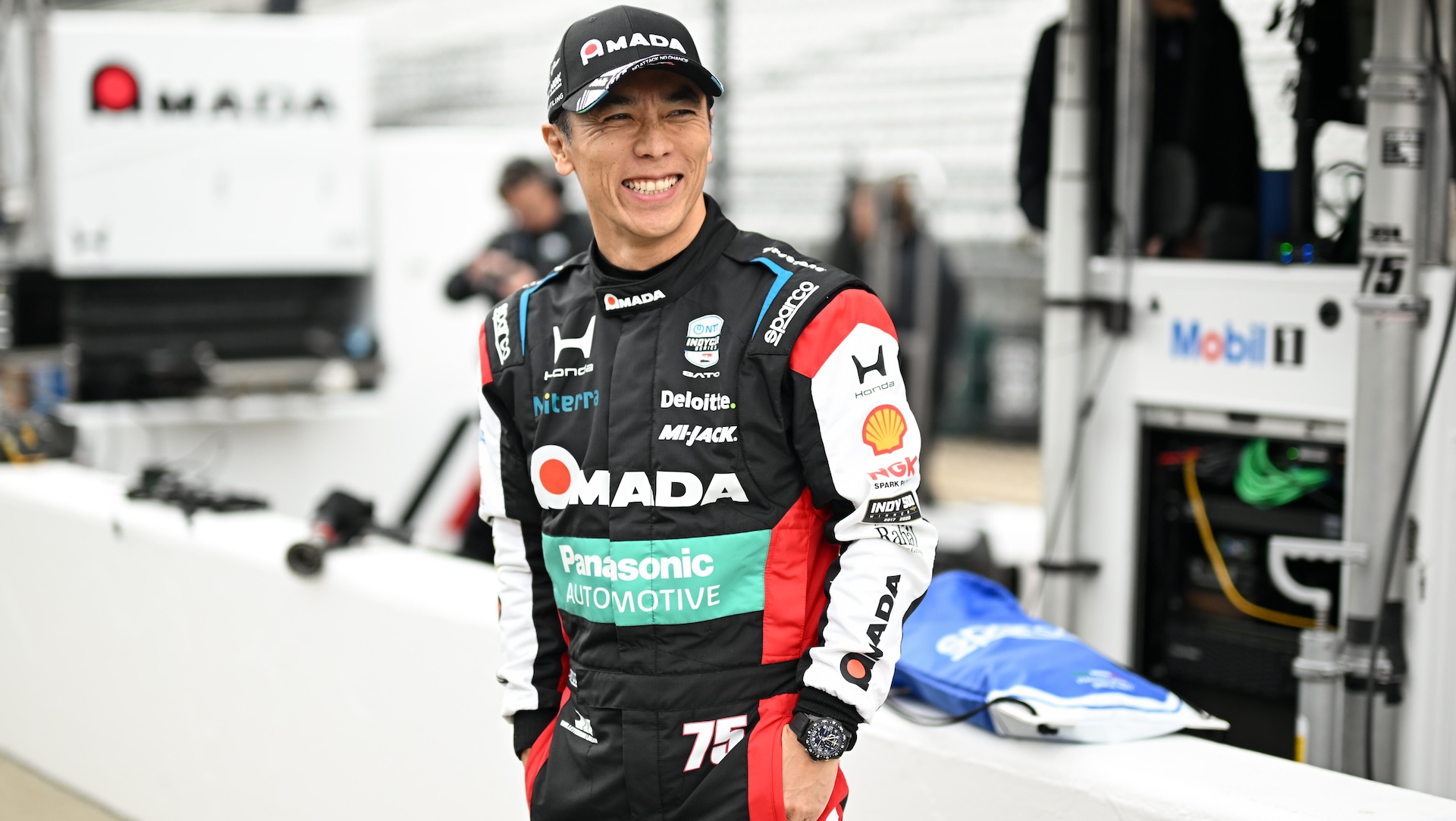


Takuma Sato was six or seven years old, spinning a rotary dial on a television in Tokyo, when he stumbled onto a car moving faster than anything he’d ever seen. It wasn’t Formula 1. It was the Indianapolis 500. Nearly four decades later, the two-time winner lines up 12th on the grid for the 110th running, chasing something no amount of prior glory has been able to quiet.
Sato sat down with select media ahead of race day in a round table organized by Honda, and the word that best describes his energy is unfinished. Not restless. Not desperate. Unfinished. He has two Borg-Warner trophies, a six-year Formula 1 career that took him to Monaco, Spa, and the Nürburgring, and a best F1 finish of third at the 2004 US Grand Prix. None of it scratches the itch that Indianapolis carved into him.
His first 500 didn’t fully register. “I didn’t really quite understand what is the Indy 500,” he admitted, despite knowing intellectually it was the biggest race in the world. The magnitude, the weight of nearly a century of tradition pressing down on every lap — that took years to absorb.
The turning point came in 2012, his third attempt, when he threw a last-lap move on Dario Franchitti in Turn 1 and ended up in the wall. It was reckless and glorious and heartbreaking, and it taught him the central truth of this race: you need everything. Speed, strategy, luck, timing, nerve — leave one at home and the Speedway will eat you alive.
He eventually got everything right. Twice. His 2017 victory delivered the full sensory experience — 300,000 people screaming, the milk, the mythology. His 2020 win delivered the checkered flag but stripped away the rest.
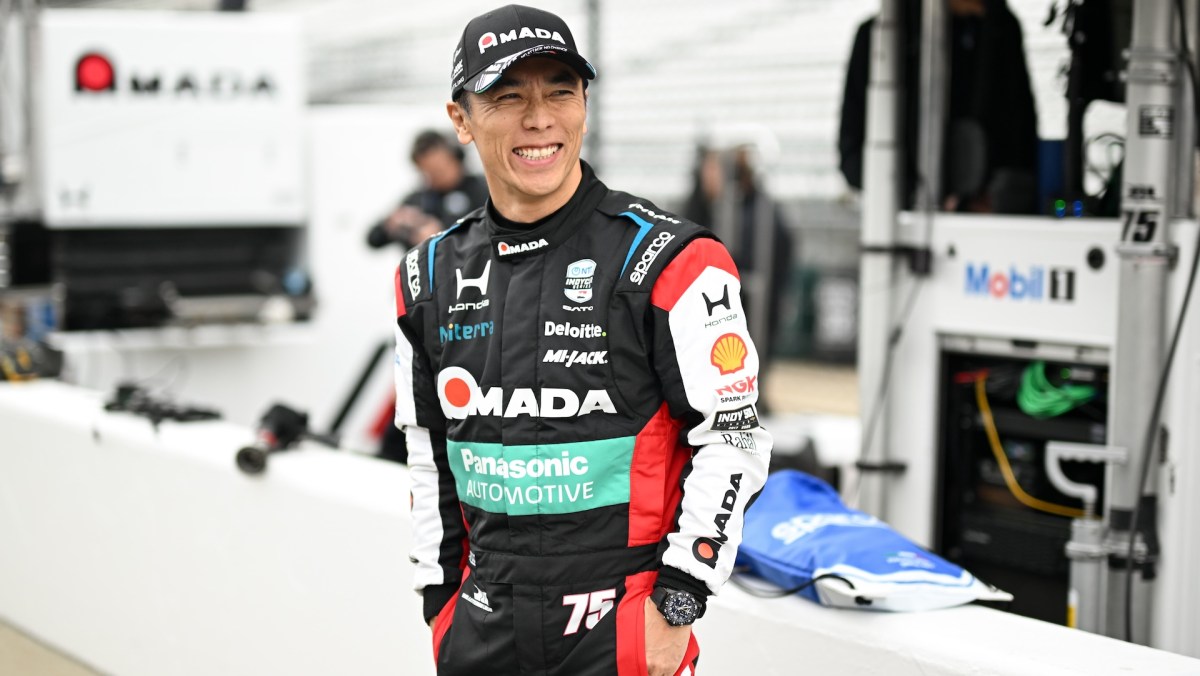
The pandemic reduced the crowd to a fraction, and Sato felt the absence like a missing limb. “It was kind of sad. Lonely. Quiet,” he said. “There’s not 350,000 people.”
That hollow feeling is the engine driving this third attempt. Sato doesn’t just want another win. He wants the version of winning that the pandemic stole from him — the wall of noise when the car crosses the yard of bricks flat-out, the energy transfer between a quarter-million fans and a single driver in a single moment. The checkered flag alone wasn’t enough. He needs the roar.
At 48 years old, running a one-off entry with Rahal Letterman Lanigan Racing’s No. 75 car, Sato is not the favorite. He doesn’t need to be. Only two drivers in the race’s history have won from 12th on the grid.
The odds are long, the field is deep, and the Speedway has never cared about sentiment. But Sato has always been wired differently. This is the driver who attacked Franchitti on the last lap when discretion would have earned him a safe second place.
This is the former F1 driver who willingly left the global circus because a single American oval held more gravity for him than every European cathedral circuit combined. “The Indy 500 is nothing like it,” he said. “It’s just based on history and tradition, and the people are so excited.”
The people. It always comes back to the people for Sato. The sound of Gasoline Alley, the murmur building to a crescendo as race morning unfolds, the sensation of nearly 300,000 humans focused on the same strip of asphalt.
Sunday will tell us whether the No. 75 has the pace and the fortune to put Sato back in Victory Lane. But the story here isn’t really about whether he wins. It’s about a man who already owns two of the most prestigious trophies in motorsport and cannot stop reaching for a third — not because of ego, but because one of those trophies came without its soundtrack.


Share this Story