
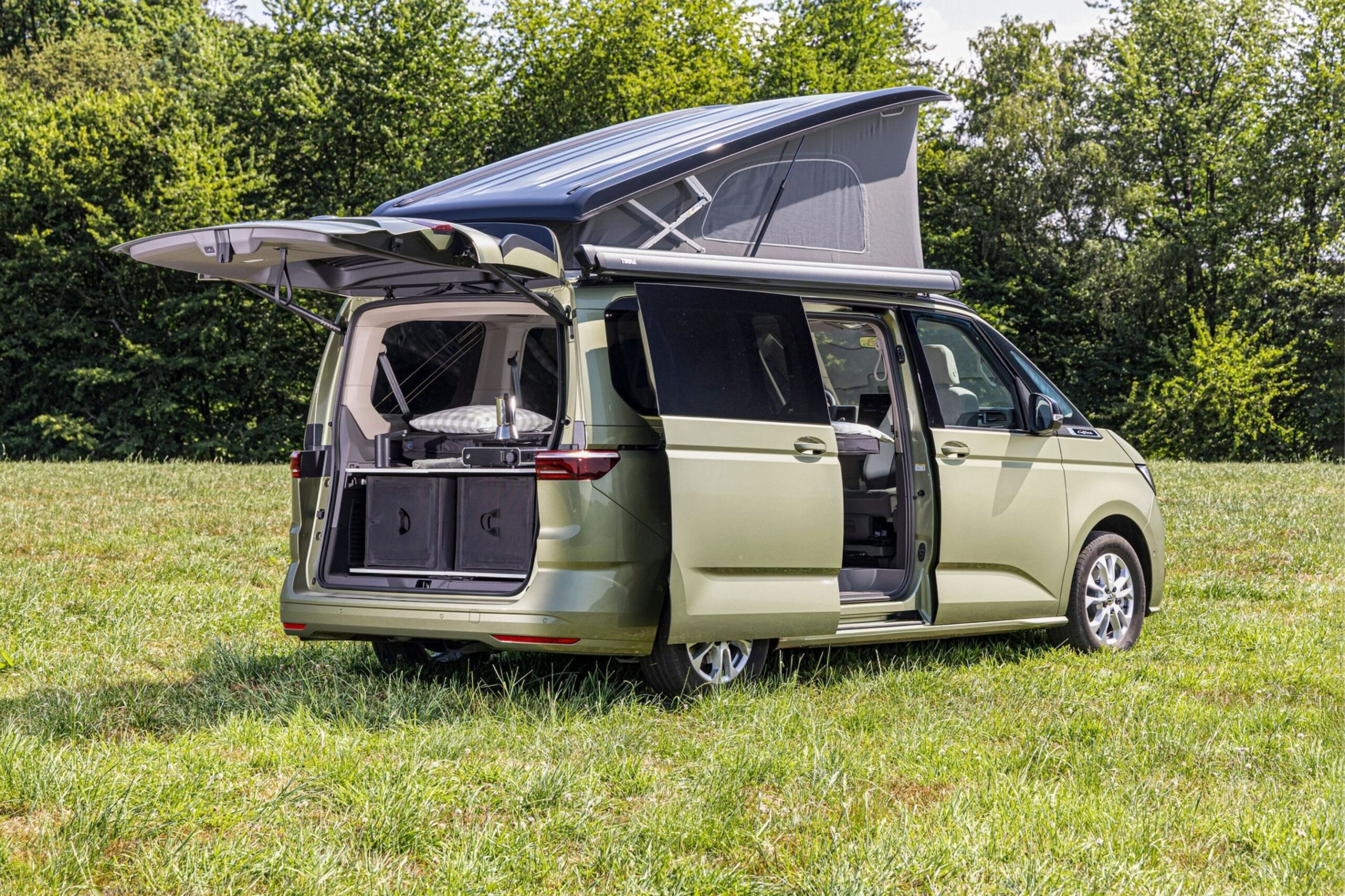


Volkswagen just unveiled two camper-van concepts that Americans can’t buy. One uses inflatable camping gear. The other runs on batteries. Neither is coming to the U.S., at least not yet.
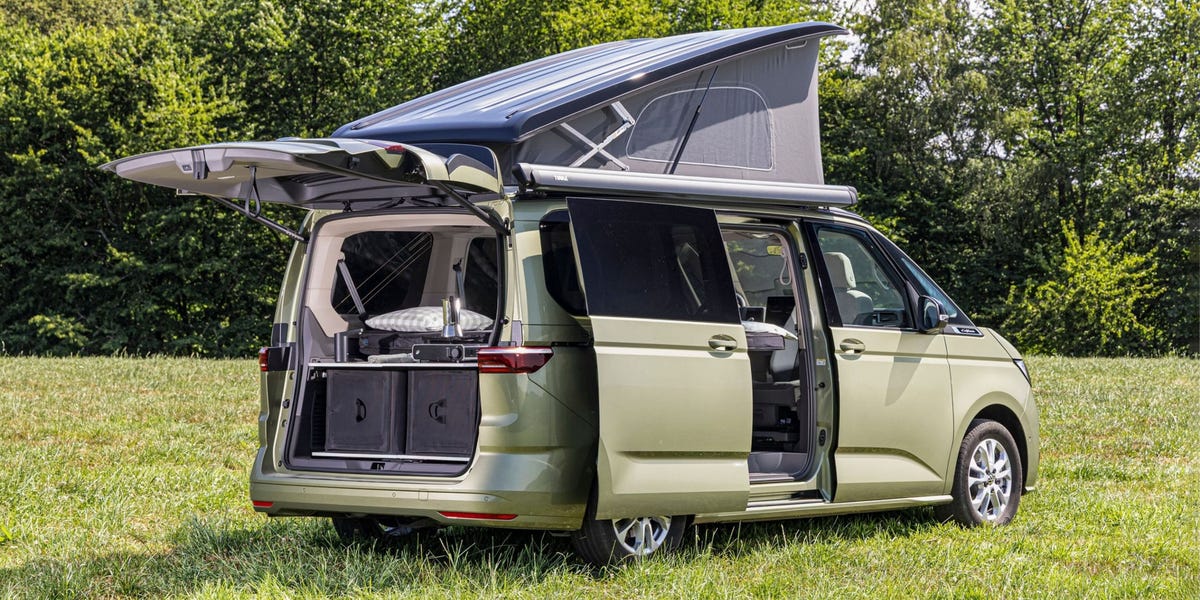
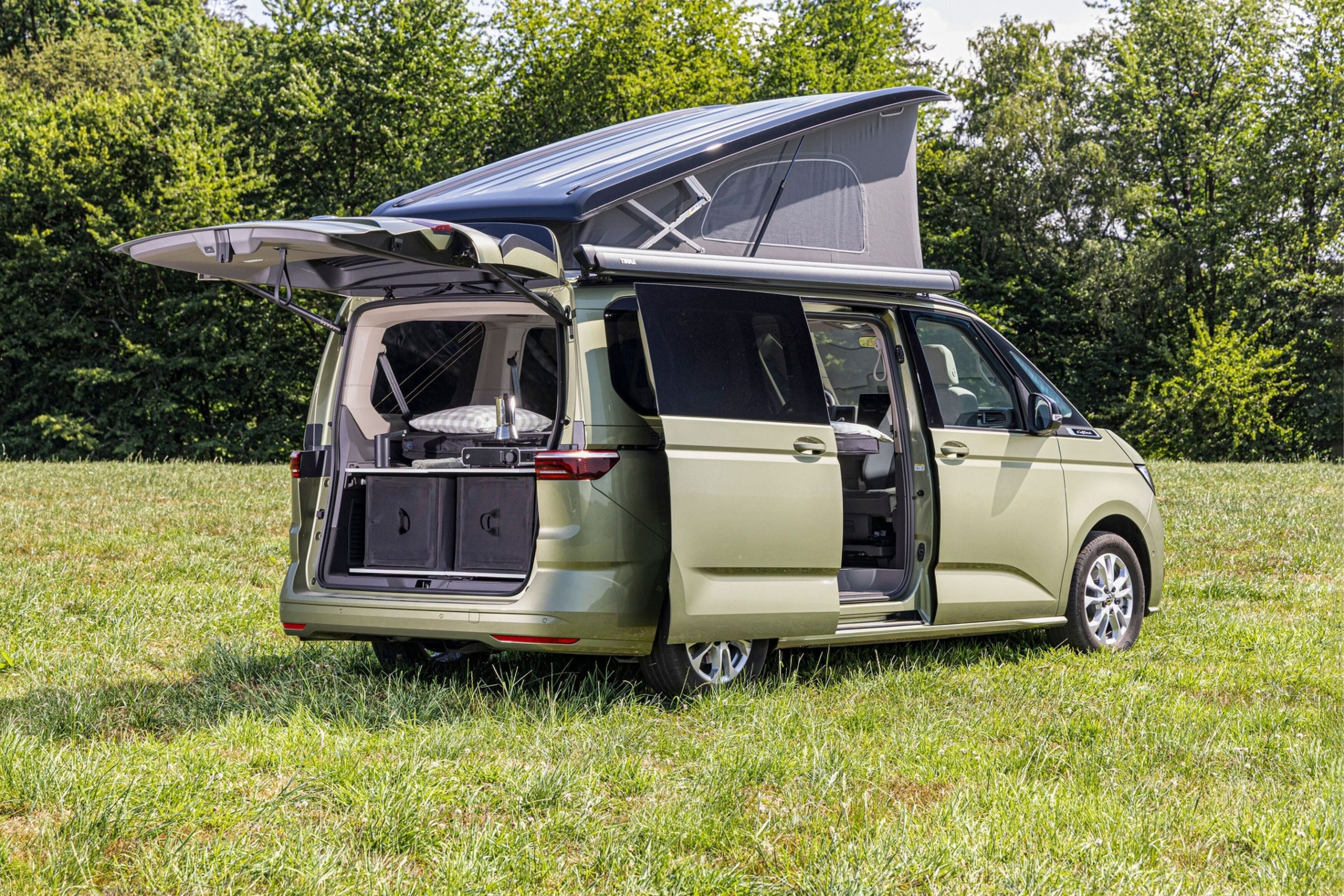
The first concept, shown ahead of the Caravan Salon in Düsseldorf opening August 28, retrofits the California Beach van with removable, inflatable kitchen and bed modules developed with a company called Stuff Bubble. The kitchen weighs under 22 pounds and uses a closed water system. The bed measures roughly 79 by 53 inches and breathes like layered fabric rather than a cheap air mattress.
One person can install or remove the whole setup in minutes. Traditional camper conversions saddle you with permanent cabinetry and cooking gear whether you’re heading to a national park or a grocery store. This system packs away in a closet when you don’t need it, turning the California Beach back into a regular people-mover.
VW’s commercial vehicles CEO Stefan Mecha said engineers drew inspiration from inflatable structures in kite sports and paragliding. It’s still a concept, though. VW and Stuff Bubble plan to gauge reactions at the show before committing to production.
The second reveal carries more weight. Volkswagen is showing the California Cruise, an electric camper van built on the ID.Buzz platform. The company calls it the starting point for a full family of battery-electric California campers arriving through 2028.
Technical details remain scarce, but moving the California nameplate from combustion-powered Multivan underpinnings to the ID.Buzz’s electric architecture is a deliberate pivot. The current European California lineup offers gas, diesel, and plug-in hybrid. Pure electric would be new territory.
And here’s where it stings for American buyers. The ID.Buzz already sells in the United States. The platform exists, the dealership network exists, and VW has given no indication it will bring the camper version stateside.
This is a pattern, not an oversight. Europe gets the California and the Grand California. America gets nothing.
VW has sold camper vans in one form or another for decades in European markets, building a lifestyle brand that traces back to the original Westfalia conversions of the 1950s and ’60s. The American market, where overlanding culture and van life have exploded in popularity, gets shut out by the same company that arguably invented recreational van culture. The irony of a camper van called “California” being unavailable in California has been noted before.
It hasn’t changed anything. Part of the calculus is regulatory. Homologating a camper conversion for U.S. crash standards, emissions rules, and FMVSS compliance adds cost and complexity.
Part of it is volume. VW may not see enough margin in what would be a niche product competing against upfitters like Winnebago and Storyteller Overland, companies that already convert the Ford Transit and Mercedes Sprinter for American buyers.
But the demand is real. Van-life social media accounts pull millions of followers. Sprinter-based camper conversions routinely sell for north of $150,000. The affordable end of the market, where a factory-backed VW camper would slot, is largely empty.
VW keeps building these things, naming them after American places, showing them at European trade shows, and leaving U.S. buyers to watch from across the Atlantic. The ID.Buzz California Cruise could change that equation if the economics ever line up. For now, it’s another concept on another continent, wearing a name that belongs to a state where you still can’t buy one.
Share this Story