
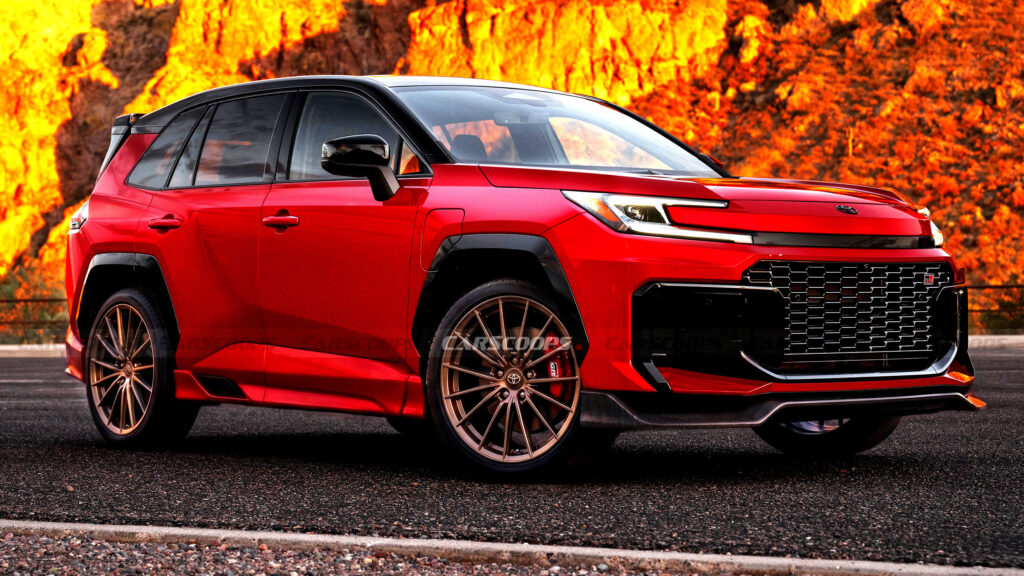


Toyota’s chief engineer just admitted the quiet part out loud. Yoshinori Futonagane told Drive that a 2.4-liter turbo engine — already sitting in the company’s parts bin — fits right into the RAV4’s engine bay. With electrification, that powertrain can push 366 horsepower.
The RAV4 GR Sport currently tops out at 320. So the engineering is done. The space exists, the engine exists, and Toyota is choosing not to do it.
The RAV4 GR Sport, which pairs a plug-in hybrid setup with revised suspension, wider track, and 20-inch wheels, already clocks a claimed 0-62 mph time of 5.8 seconds. It’s the fastest, most capable RAV4 ever made. By any historical measure, that’s remarkable for a nameplate that spent decades being the automotive equivalent of sensible shoes.
But a GR Sport badge and a full GR badge are very different animals. The GR Sport is a trim level with sharper tuning. A proper GR model — think GR Corolla, GR Yaris, GR86 — means Gazoo Racing gets its fingerprints deep into the chassis, the powertrain calibration, the entire character of the vehicle.
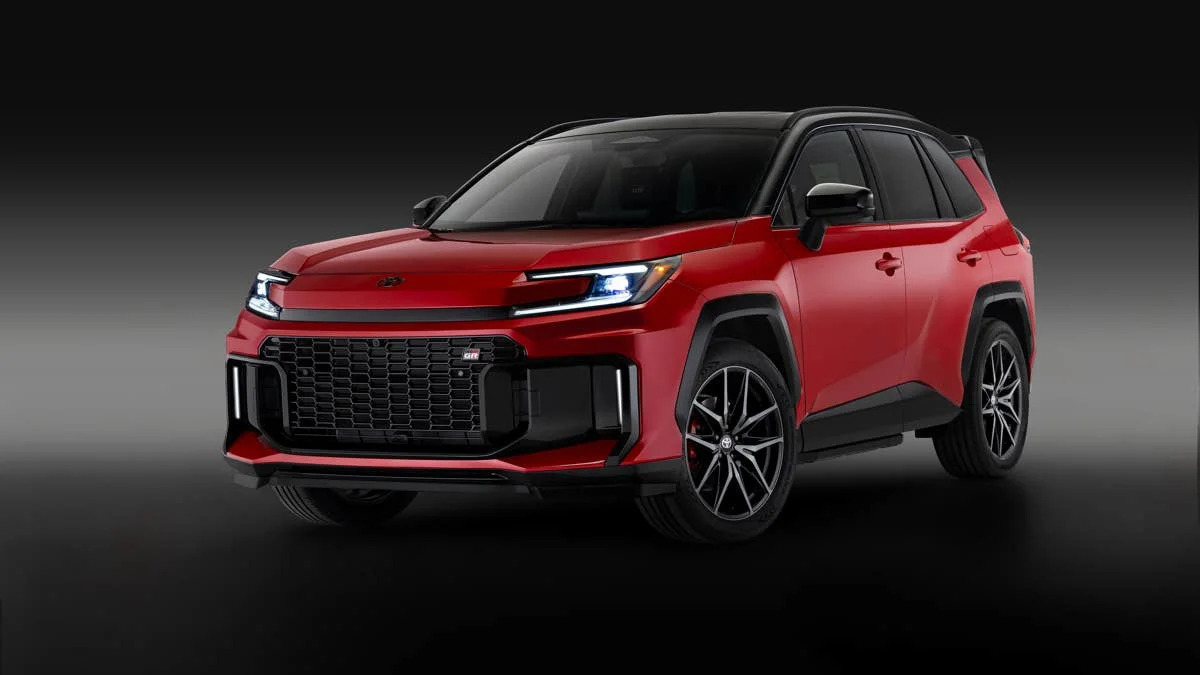
That’s the leap Toyota won’t commit to. Futonagane was diplomatic about it. No official plans exist.
The company wants to gauge demand first, to see if enough buyers actually want a high-performance compact SUV that could trade punches with the Volkswagen Tiguan R. It’s a familiar Toyota refrain: prove the market exists before we spend a yen.
There’s a clock ticking, though. The 2.4-liter turbo four-cylinder is approaching the end of its lifecycle. Toyota is already developing next-generation modular engines to replace it.
If a GR RAV4 is going to happen with this powertrain, the window is narrow and closing. Waiting for demand data while the hardware expires is a convenient way to let the opportunity die quietly.
This is the central tension inside Toyota right now. Gazoo Racing has proven it can build thrilling cars that generate enormous enthusiasm — the GR Corolla allocation battles alone demonstrated that. Yet when it comes to the company’s highest-volume global nameplate, the instinct is caution.
The RAV4 sells in staggering numbers precisely because it’s safe, reliable, and inoffensive. Bolting a turbo to that identity is a risk Toyota’s product planners apparently aren’t ready to take.
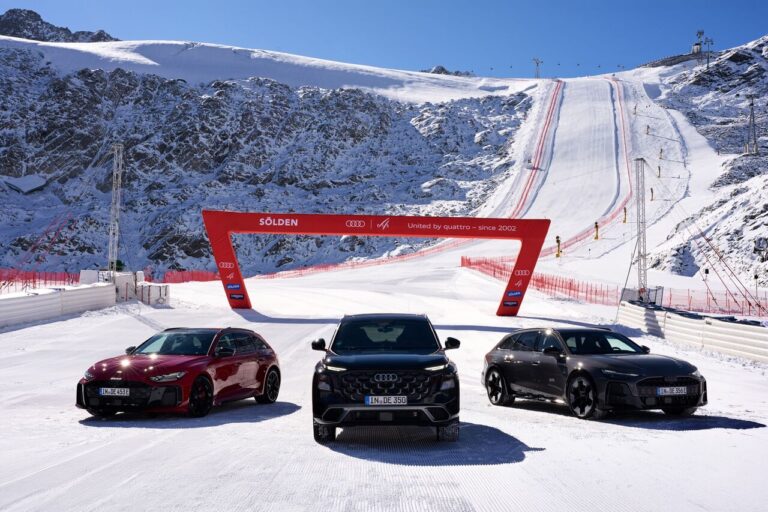
The irony is that the European performance SUV segment is thriving. Volkswagen, Audi, BMW, and Mercedes-AMG have all proven that families will pay serious money for serious speed wrapped in a practical shape. Toyota has watched this happen for a decade.
It has the parts on the shelf and an engineer willing to say so publicly. What it lacks is institutional nerve.
The GR Sport will continue to serve as the compromise. It’s quick enough to impress most buyers, composed enough to justify the price, and just restrained enough to keep Toyota’s risk managers comfortable. It pushes the RAV4 into territory that would have seemed absurd ten years ago.
But 366 horsepower sitting unused in a corporate parts catalog, with an engineer publicly volunteering the feasibility, tells you everything about the gap between what Toyota can do and what it allows itself to do. The ceiling isn’t engineering. It never was.
The ceiling is a boardroom in Aichi that would rather watch a competitor own the segment than risk the RAV4’s reputation as everyone’s safe choice. If the turbo engine sunsets without a GR RAV4, don’t blame the engineers. They were ready.


Share this Story