
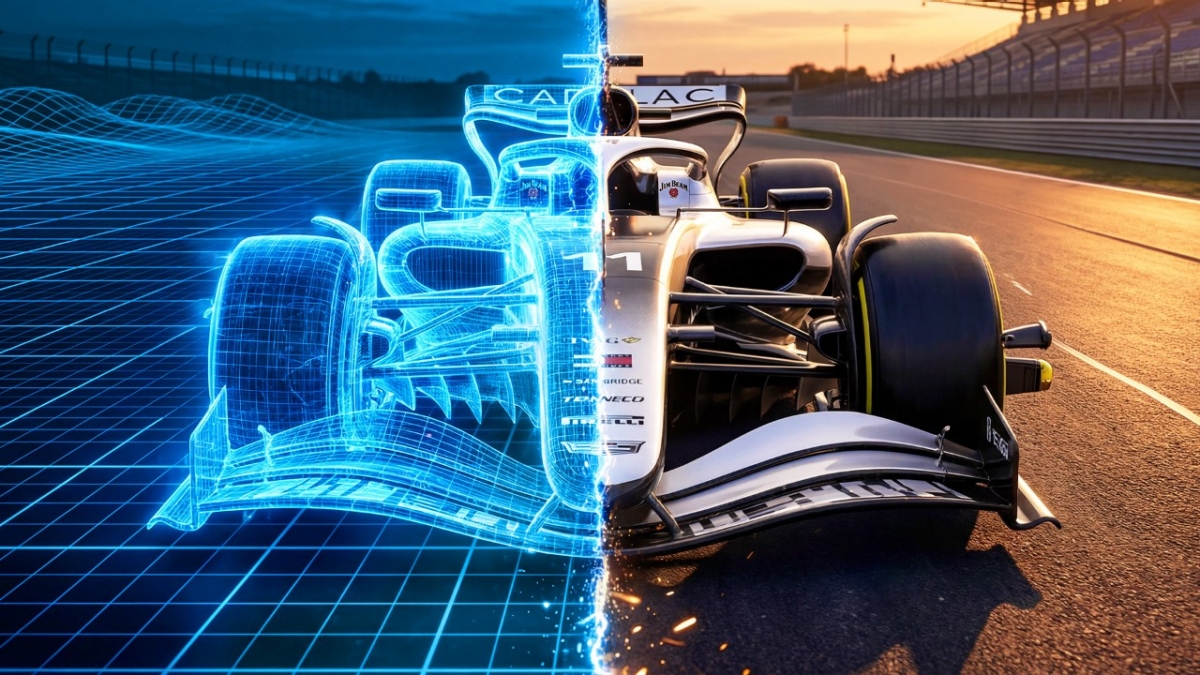


Sergio Perez crossed the line in P16 at the Australian Grand Prix, three laps down on the winning Mercedes and dead last among classified finishers. Valtteri Bottas didn’t make it that far, parked trackside after Ferrari flagged falling fuel pressure in his customer power unit. For the Cadillac Formula 1 Team, this was cause for celebration.
That tells you everything about where GM’s ambitious F1 project actually stands.
The team’s first-ever race weekend in Melbourne was, by any operational measure, a minor triumph. Friday marked the first time Cadillac had run two cars simultaneously — testing rules limit teams to one. The crew executed its first live pit stop, its first qualifying session, its first race start.
They even squeezed in an extra tire change near the end for Perez purely for practice, since it wouldn’t affect his position anyway. Boxes were ticked. Lessons were banked.
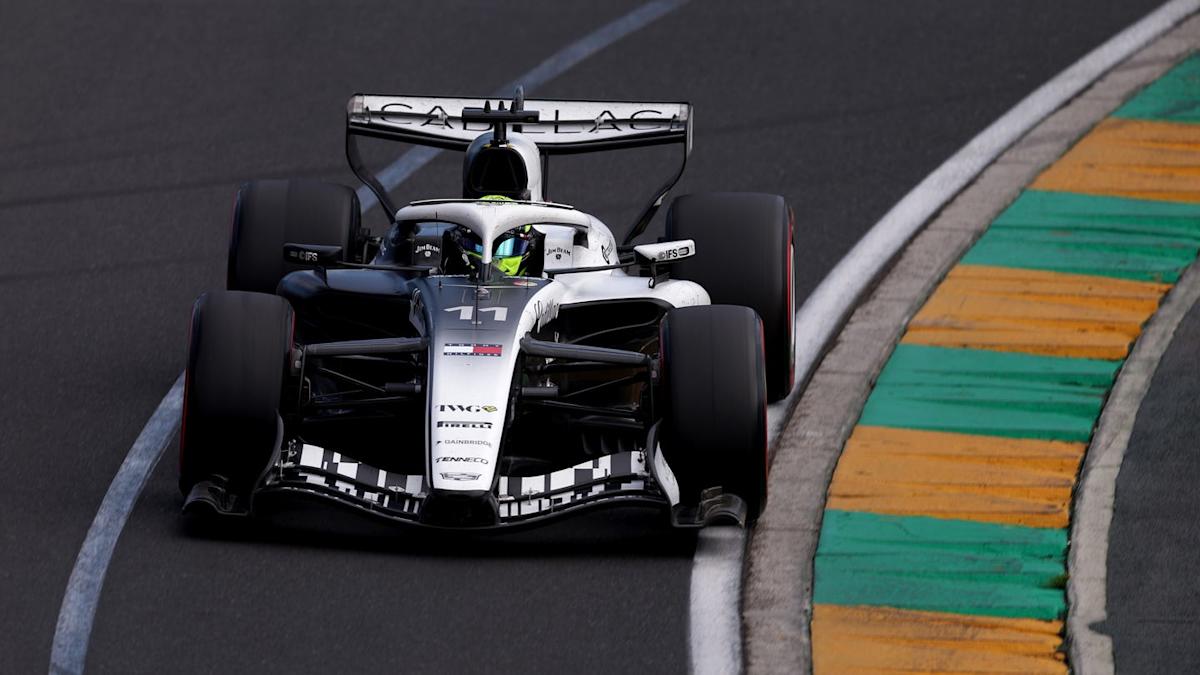
But strip away the feel-good narrative and one number stares back: 1.9 seconds. That was the qualifying gap in Q1 between Perez and the quickest Haas, a team running the same Ferrari power unit. Nearly two seconds between cars with identical engines is an aero and chassis deficit, plain and simple.
Cadillac was closer to Alpine, Williams, and Aston Martin, but “closer” is doing heavy lifting in that sentence.
Team principal Graeme Lowdon was candid about setting the result aside. “We can forget the result, to some extent, this weekend,” he said. “The performance already is way ahead of what people were saying we would have.”
Executive technical consultant Pat Symonds — who engineered Ayrton Senna’s first F1 season in 1984 and later won titles with Schumacher and Alonso — echoed the point while acknowledging the road ahead. “We have a very clear idea of what we need to do over the coming months. It’s going to be hard work, but we’ve got a good basis.”
Development parts are reportedly targeted for Japan and Bahrain. The team signed off key components early just to ensure the car existed in time, a pragmatic decision that guaranteed Melbourne participation at the cost of raw pace.
Meanwhile, back in Charlotte, the simulator feedback loop is spinning. Bottas and Perez shuttle between real-world track impressions from their Barcelona shakedown and the sim, calibrating one against the other. Better sim data produces better car development, which produces better sim data.
It’s the virtuous cycle every F1 constructor relies on — except Cadillac is building theirs from scratch while the grid’s established teams have refined theirs over decades.
Context matters. Audi’s second car didn’t even take the start in Melbourne due to technical problems. Both Aston Martins were withdrawn mid-race to protect power units for China. A Red Bull expired in smoke.
Simply finishing, in this new-regulation environment, was not a given. Bottas, despite retiring, found encouragement in keeping an Aston Martin behind him before his issues surfaced. “It’s not like, initially, falling miles back,” he said. “The only way is up from here.”
The Chinese Grand Prix arrives this weekend, giving Cadillac almost no breathing room. Lowdon sees that as a feature, not a bug. “It’s good that we’re going again next weekend — because we keep some intensity, which is needed.”
Intensity they have. The roster of experienced hands is deep, the corporate backing from General Motors is real, and the ambition is obvious. None of that changes the physics of a 1.9-second gap. Surviving Melbourne proved Cadillac belongs on the entry list. Closing that chasm will prove whether it belongs in the fight.


Share this Story