
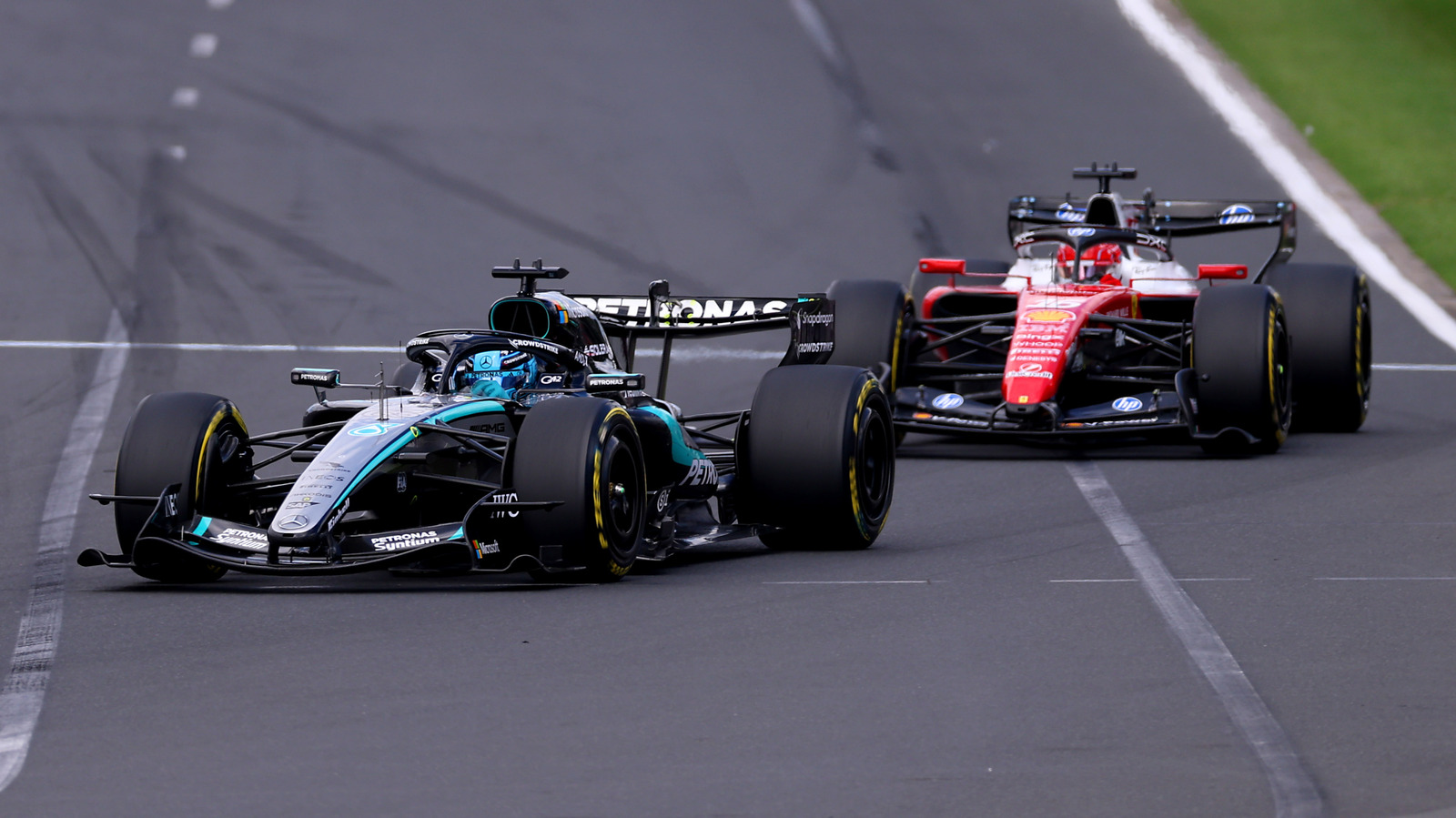


One hundred and twenty overtakes. Seven lead changes in nine laps between George Russell and Charles Leclerc. A Mercedes 1-2 finish that looked nothing like dominance for the first ten laps. And yet the loudest conversation leaving Melbourne had nothing to do with who won the 2026 Australian Grand Prix — it was about why the cars were slowing down on straights.
Welcome to the age of super clipping.
The term became the sport’s instant villain during Saturday qualifying, when onboard footage of Russell’s pole lap showed his Mercedes decelerating at full throttle before Albert Park’s Turn 9-10 chicane. The car wasn’t braking. It was routing engine power directly to the MGU-K to recharge a battery that drains dry every single lap. Russell’s 1:18.518 was competitive historically, but the visual was jarring — an F1 car appearing to hold itself back on a straight.
Max Verstappen, who has been railing against these regulations since 2022, called the new machines “Formula E on steroids.” Lando Norris, the reigning world champion, went from dismissing Verstappen’s complaints during preseason testing to calling Sunday’s racing “very artificial” after finishing fifth. “Depending on what the power unit decides to do and randomly does at times, you just get overtaken by five cars or you can just do nothing about it,” Norris said.
The technical roots of the problem are almost comically simple. Manufacturers wanted to ditch the expensive turbo-mounted MGU-H while nearly tripling electrical power output from 120 kW to 350 kW. But the cars still carry the same 4 MJ batteries from 2014, while a Toyota Prius plug-in hybrid packs a 49 MJ battery. The math doesn’t work, so teams invented super clipping — capped at 250 kW — to bridge the energy gap every lap.
Then Sunday happened, and the mood swung hard. Leclerc used a blistering Ferrari launch to jump Russell off the line. The two traded positions relentlessly, with Overtake Mode — DRS’s replacement, granting a speed boost when within one second — turning every straight into a chess match.
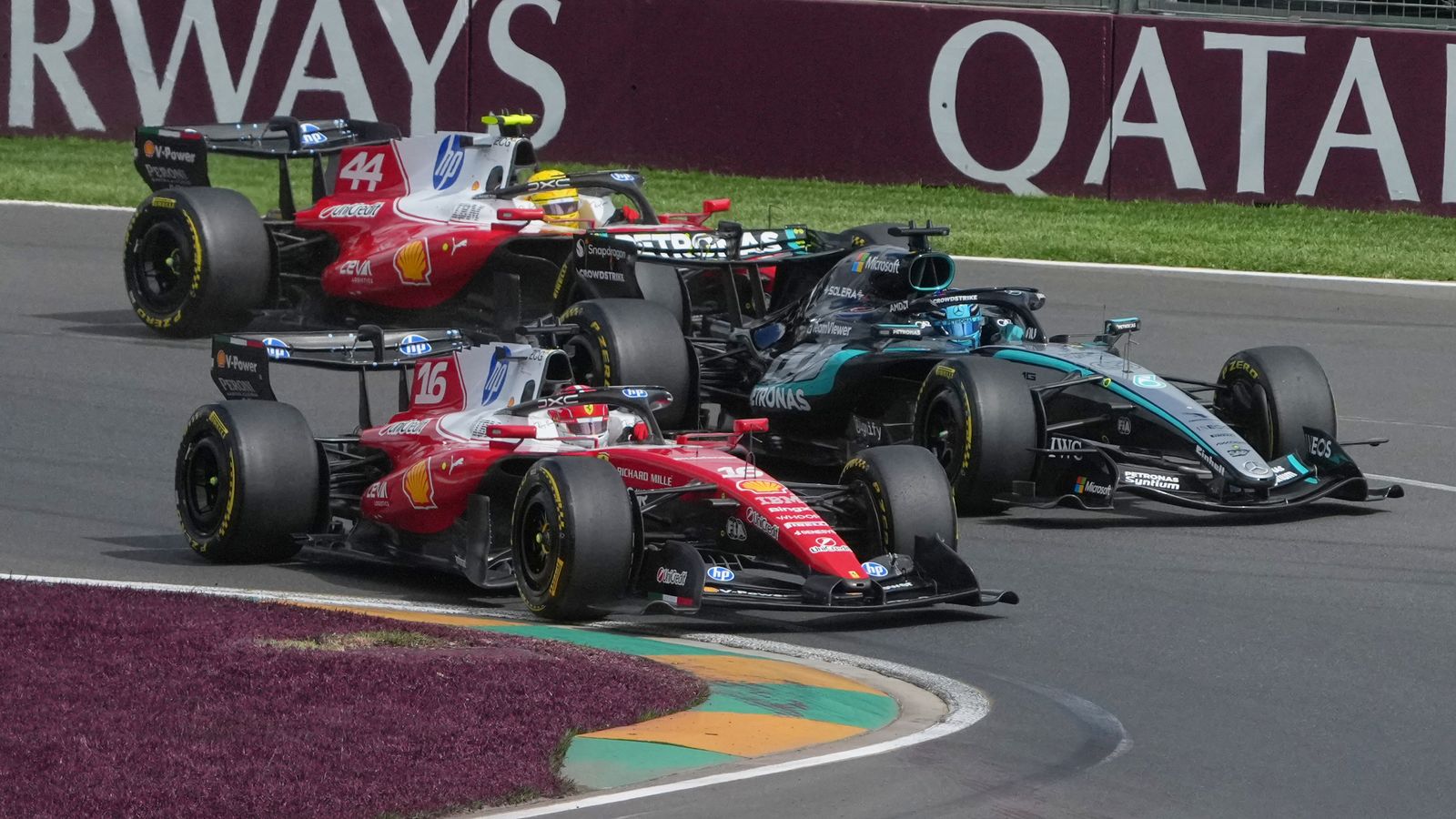
Lewis Hamilton and Kimi Antonelli lurked close enough to threaten before Ferrari’s strategy gamble on a longer first stint backfired. Russell crossed the line 15 seconds clear of Leclerc, but by recent F1 standards that margin was modest.
Hamilton, who spent four years loathing the previous ground-effect cars, was the happiest man in the paddock. “The race was really fun to drive,” he said. “I watched the cars ahead and there was good battling back and forth. It was awesome.” Russell sang “I like these cars, I like these engines” on his cool-down lap, though winning tends to improve acoustics.
Ferrari principal Frederic Vasseur urged patience. “The first 10 laps, I’m not sure I saw something like this in the last 10 years,” he said. “It would be a mistake to react too quickly.”
Fixes are already being discussed. McLaren boss Andrea Stella proposed raising the super clipping cap to 350 kW during preseason testing, which would smooth the visual problem but actually encourage more energy harvesting on straights, not less. The cleaner solution is bigger batteries — enough capacity for multiple push laps, eliminating the absurd spectacle of harvesting mid-hot-lap in qualifying.
Russell made a shrewd observation: Albert Park, with its multiple short straights demanding divided energy deployment, is a worst-case track for these regulations. Shanghai, next on the calendar, features one dominant straight where drivers can concentrate their battery output. The super clipping horror show may fade as the calendar rolls on.
Five British drivers finished in the top eight, including Racing Bulls rookie Arvid Lindblad on a stunning debut. Red Bull’s Isack Hadjar retired with a mechanical failure after qualifying an impressive third. The competitive order is genuinely scrambled, which is exactly what a regulation reset is supposed to deliver.
The tension at the heart of F1’s 2026 experiment is now laid bare. The same energy-management constraints that made qualifying look absurd made the race look spectacular. Saturday produced a car slowing itself on a straight, and Sunday produced 120 overtakes — same rules, same weekend, same track. Whether F1 can keep the thrilling racing without the cringe-inducing qualifying remains the question that will define this entire era.
Share this Story