


Toyota’s Akio Toyoda didn’t fire off an angry press release when a Pebble Beach attendee told him “Lexus is boring” in 2011. He didn’t rage-post on social media when developmental prototypes from rival brands blew past his aged Mk4 Supra at the Nürburgring. He absorbed it.
The Japanese call that gaman — bearing hardship with silence and dignity — and it’s spelled with kanji characters meaning “ego” and “ridicule.” That cultural concept, rooted in language itself, eventually produced the Lexus LFA successor and the GR GT supercar program. This is not a coincidence. It’s a pattern.
A deep dive from The Drive’s Adam Ismail argues that Japanese language — its structure, its writing systems, its roughly 4,500 onomatopoeia — actively shapes how the country designs, builds, and obsesses over automobiles. The thesis sounds academic until you start pulling threads, and then it becomes difficult to unsee.
Consider the kanji character for “car” (車): a box between two axles. Or “mountain” (山): three peaks. Or “sky” (天): a person with a line above their head representing the heavens.
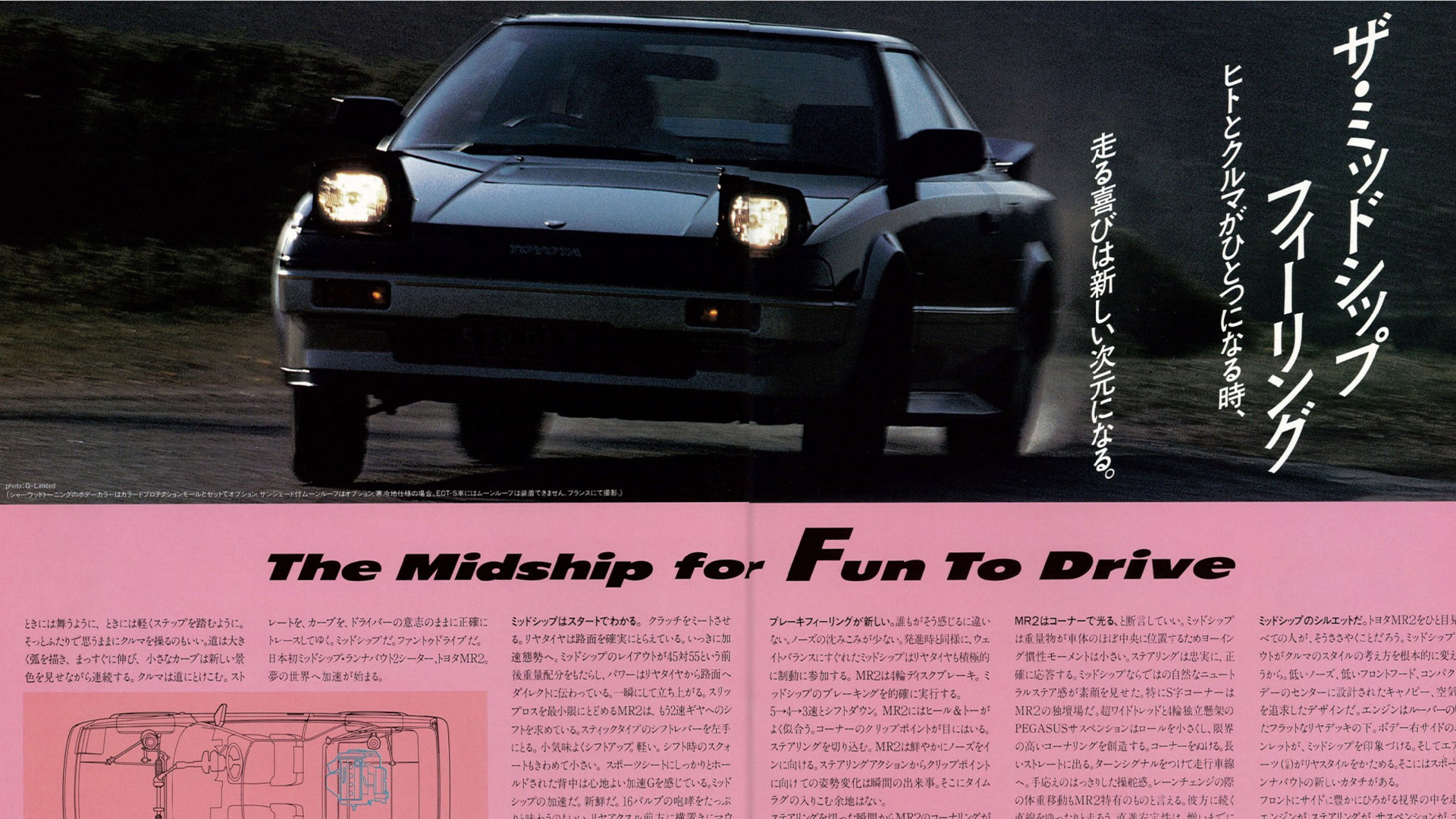
When Japanese engineers and designers write about their work, they are literally drawing pictures of concepts. The language forces visualization in a way that alphabetic systems simply don’t.
Toshi Hayama, a bilingual creative producer who has worked with Toyota, Lexus, and the production crew behind Fast and Furious: Tokyo Drift, serves as Ismail’s cultural bridge. Hayama’s job goes far beyond translation. He relays the emotional nuances and thought processes of Japanese engineers to English-speaking audiences, navigating a gap where terminology and concepts diverge sharply.
“Japanese people find beauty in minimalism, the smallest things,” Hayama explained. “The last grain of rice is beautiful, the fleeting sakura cherry blossoms, the changing seasons.”
That sensibility bleeds directly into product development. Honda’s new Prelude has drawn criticism for being gentle rather than aggressive, but its development lead Tomoyuki Yamagami described its inspiration in terms of sky, gliders, and childhood memories at a riverbank. The car rewards smooth inputs and momentum over brute force. It is, by design, a reflection of environmental mindfulness baked into Japanese creative DNA.
Japan doesn’t just recognize four seasons. It acknowledges 72 microseasons, each lasting about five days. One marks when fish emerge from ice in mid-February. A culture that parses the natural world with that granularity is going to engineer differently than one that doesn’t.
The influence runs deeper than boardrooms and R&D labs. Japan’s car culture — from Initial D manga to bosozoku builds to pristine kyusha restorations — is soaked in linguistic expression.
Manga artists deploy onomatopoeia like weapons: gyaaaaaaa (ギャアアアアア) for squealing tires, doa (ドア) for a turbo blow-off valve. These aren’t just sound effects. They’re emotional cues embedded in a language built for sensory texture.
Customization trends mirror regional dialects. Osaka builders don’t modify cars the same way Tokyo builders do, just as speakers from Japan’s western prefectures use different intonation and verb forms than their eastern counterparts. The modest restraint of kyusha sits at one pole; the screaming silhouette-style chibaragi racers occupy the other. Both are valid expressions within a culture that treats automobiles as extensions of identity.
German engineering gets all the credit for precision, and rightly so — a language with a compound word for everything will produce meticulous machines. But Japan’s contribution operates on a different axis entirely. It’s not about over-engineering. It’s about feeling, distilled through a writing system that turns abstract concepts into visual symbols every time pen meets paper.
Toyoda’s quiet humiliation at Pebble Beach didn’t produce a memo. It produced a philosophy. “No more boring cars” wasn’t a slogan — it was gaman transformed into horsepower. The pain went in. The supercars came out.
That’s not marketing. That’s language made metal.





Share this Story