
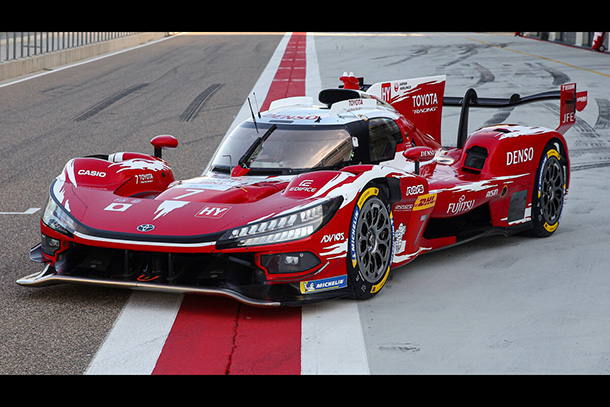


When Toyota lines up at Imola on April 19 for the opening round of the 2026 FIA World Endurance Championship season, the press materials will trumpet a tidy milestone: the team’s 100th WEC race powered by hybrid technology. Thirteen world titles. Forty-nine victories. Five Le Mans triumphs since the program returned in 2012.
The numbers are real. So is the subtext nobody at Toyota Racing is bothering to hide.
Brendon Hartley called 2025 “character-building.” Kamui Kobayashi, now pulling double duty as team principal and driver of the number 7 car, acknowledged the old machine “had limitations” while rivals made “performance steps.” Mike Conway said the revised TR010 Hybrid should “bring us back in the game.” You don’t use that phrase when you’ve been leading it.
Toyota enters 2026 with a fresh corporate identity — the operation is now formally branded Toyota Racing — and a car wearing an aggressive red-and-white livery inspired by the Japanese concept of “wind.” The aero has been reworked to match Toyota’s current road-car design language, which is a polite way of saying last year’s package wasn’t cutting it against seven other Hypercar manufacturers who have closed the gap or blown past it.
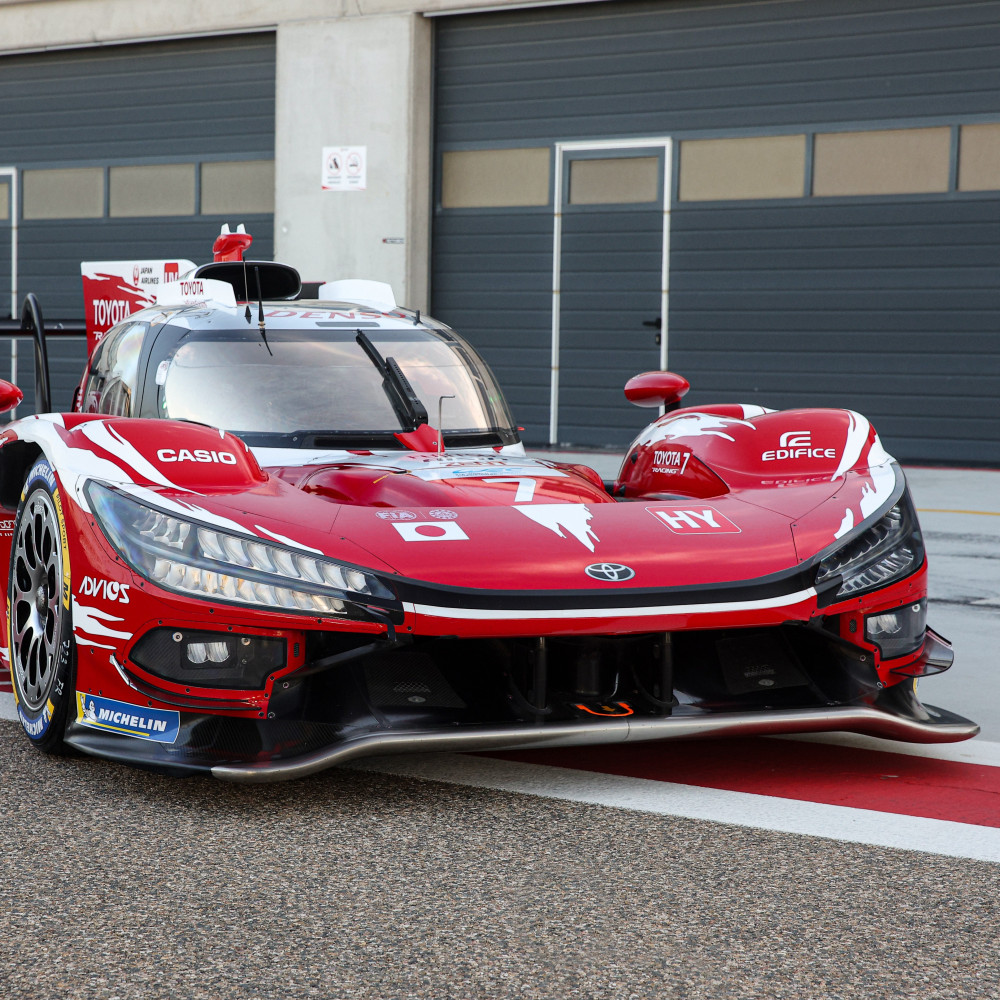
Under the restyled bodywork sits the familiar 3.5-liter twin-turbo V6 hybrid powertrain, built at Toyota’s Higashi-Fuji technical center and producing north of 700 PS on 100% renewable racing fuel. Partners Denso and Aisin supply the front-axle hybrid motor and inverter. New to the supplier roster is Akebono, contributing brake calipers and discs — a detail that suggests Toyota went looking for gains in every corner of the car, not just the obvious ones.
Michelin’s new-for-2026 tires, made with 50% recycled and renewable materials and engineered to hit operating temperature faster, add another variable. Every team gets the same rubber, but how quickly each car exploits that early warm-up window could separate winners from also-rans on race day.
The driver lineups are unchanged. Conway, Kobayashi, and Nyck de Vries stay in the number 7 entry for a third season together. Sébastien Buemi, Hartley, and Ryo Hirakawa continue in the number 8 car for a fifth consecutive year.
Stability in the cockpit is a luxury in endurance racing, and Toyota is leaning on it. Testing of the updated TR010 Hybrid began last December, giving crews months to calibrate.
The season was supposed to start in Qatar in March. Regional instability forced a postponement, pushing the opener to the 4.909-kilometer Autodromo Enzo e Dino Ferrari, where the number 7 crew won in 2024. A one-day Prologue test on April 14 will offer the first competitive comparison against the full Hypercar field before qualifying on Saturday and the six-hour race on Sunday.
Eight manufacturers, eight races, 72 hours of competition across four continents. That density gives nobody room to ease into form. Buemi, who has been with the program since race one, set the tone plainly: “A podium in our 100th WEC race is obviously the target.” Not a win. A podium.
That kind of calibrated expectation from a team with Toyota’s resources and pedigree tells you everything about where the Hypercar class stands in 2026. The century of hybrid races is a genuine achievement — no other manufacturer can claim that continuity. But continuity alone doesn’t win championships.
The revised TR010 Hybrid is Toyota’s answer to a grid that caught up while the Japanese giant was polishing its legacy. Whether the answer is good enough starts being graded at Imola in eleven days.
Share this Story