
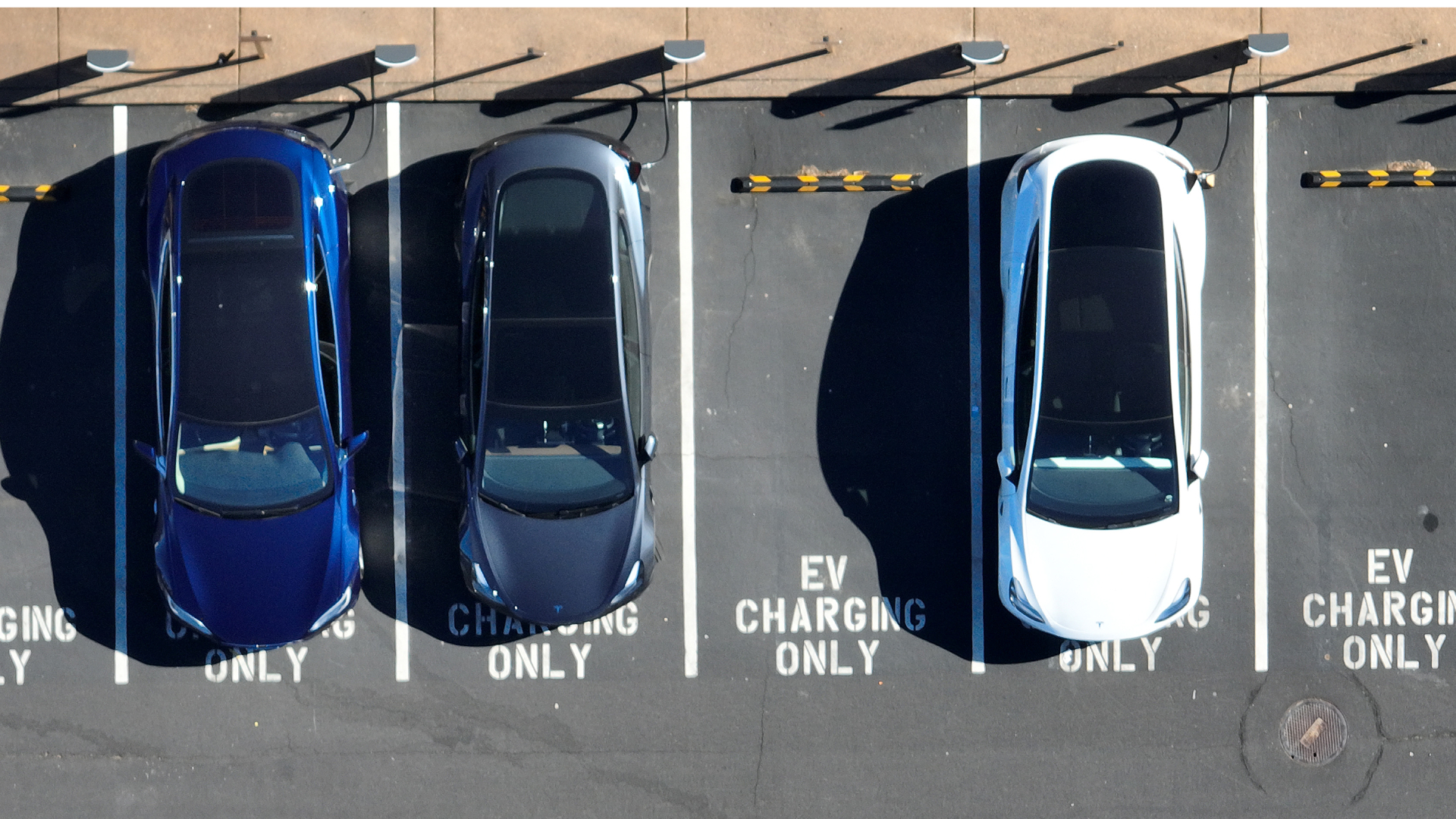


Frequent DC fast charging is slowly killing EV batteries, and everyone in the industry knows it. The question has always been whether software can outrun the physics. Researchers at Sweden’s Chalmers University of Technology now claim they have an algorithm that can extend a battery’s usable life by roughly 23 percent, without adding a single minute to charge times.
The paper, published by IEEE, describes a “health-aware” charging system that reads a battery’s degradation state in real time and adjusts voltage limits on the fly. As the pack ages, the algorithm learns its weaknesses and modulates charging aggression accordingly.
In simulations, the managed battery survived 703 charge-discharge cycles before dropping below 80 percent capacity. A battery charged at constant voltage lasted only 572 cycles. That’s 131 extra cycles before hitting the threshold most automakers use to define end-of-useful-life.
Charge times were virtually identical: 24.12 minutes for the new method versus 24.15 minutes for the conventional approach. The researchers also claim their system eliminates the need for dedicated degradation sensors by analyzing chemical behavior within the cells rather than just monitoring voltage.
Simulation results and real-world performance are, of course, different animals. Labs don’t have to contend with temperature swings, inconsistent grid power, or the kind of abuse a battery takes in a Minnesota winter or an Arizona summer. But the direction of this research lines up with what commercial players are already doing.
At CES, a company called GBatteries showed off its own adaptive charging software. Breathe Battery Technologies, a spinoff from Imperial College London, has gone further, signing a deal with Volvo to supply charging software for the automaker’s next-generation EVs starting with the 2027 EX60. Breathe claims its system can improve charging speed by 15 to 30 percent through real-time data monitoring while protecting battery health.
That Volvo partnership is the more telling development. When an OEM bakes third-party battery intelligence into a production vehicle, it signals that the industry sees real money in this space. Battery replacements often exceed $15,000, and warranty exposure on degraded packs is a growing concern for every automaker selling EVs at scale.
The irony is thick. Automakers have spent years in an arms race over peak charging speeds, plastering “10 to 80 percent in 18 minutes” across their marketing materials. Now the emerging realization is that all that speed comes with a cost, and the fix isn’t a better battery chemistry but smarter software managing the chemistry we already have.
Whether this particular Chalmers algorithm ever makes it into a production vehicle is secondary. The trajectory is clear. Charging intelligence is moving from research papers to supplier contracts to factory dashboards.
The EV battery was always going to be the most expensive and most fragile component in the car. The industry spent a decade trying to engineer around that with hardware. Now it’s betting that software can paper over the gap between what batteries can physically endure and what consumers demand from them, and the early numbers suggest that bet might pay off.






Share this Story