


BMW doesn’t just build cars in America. It hoards them.
The Petersen Automotive Museum recently gained access to a hidden BMW Group Classic warehouse at an undisclosed location in the United States, and the inventory reads like a fever dream for anyone who has followed this brand for decades. The collection spans from a 1953 503 Coupe to the quietly forgotten ActiveE, the electric 1 Series prototype that preceded the i3 by several years.
Thomas Plucinsky, head of BMW Group Classic USA, walked the Petersen crew through the facility, and the highlights are genuinely surprising. Not just the predictable icons like the E30 M3 and the E9 3.0 CSL, but the deep cuts that reveal how BMW thinks about its own legacy.
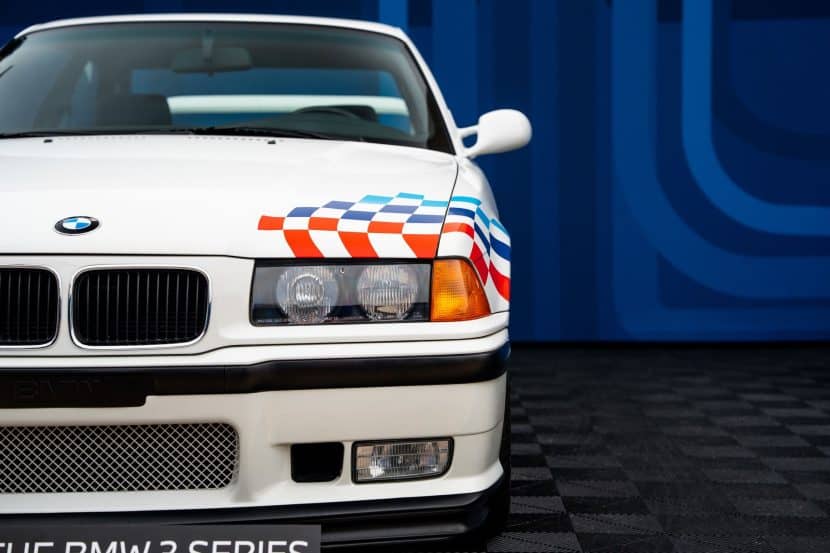
Take the unassuming 318i sitting on the warehouse floor. An E36, no performance pedigree, nothing to quicken anybody’s pulse on paper. But it was the first BMW ever built at the Spartanburg plant in South Carolina, the factory that now pumps out X models by the hundreds of thousands.
That plant’s five-millionth vehicle, a Tornado Red X5 M, and its six-millionth, a Java Green X6 M, are stored there too. The trajectory from a base-model 3 Series to high-margin performance SUVs tells you everything about where BMW’s money comes from now.
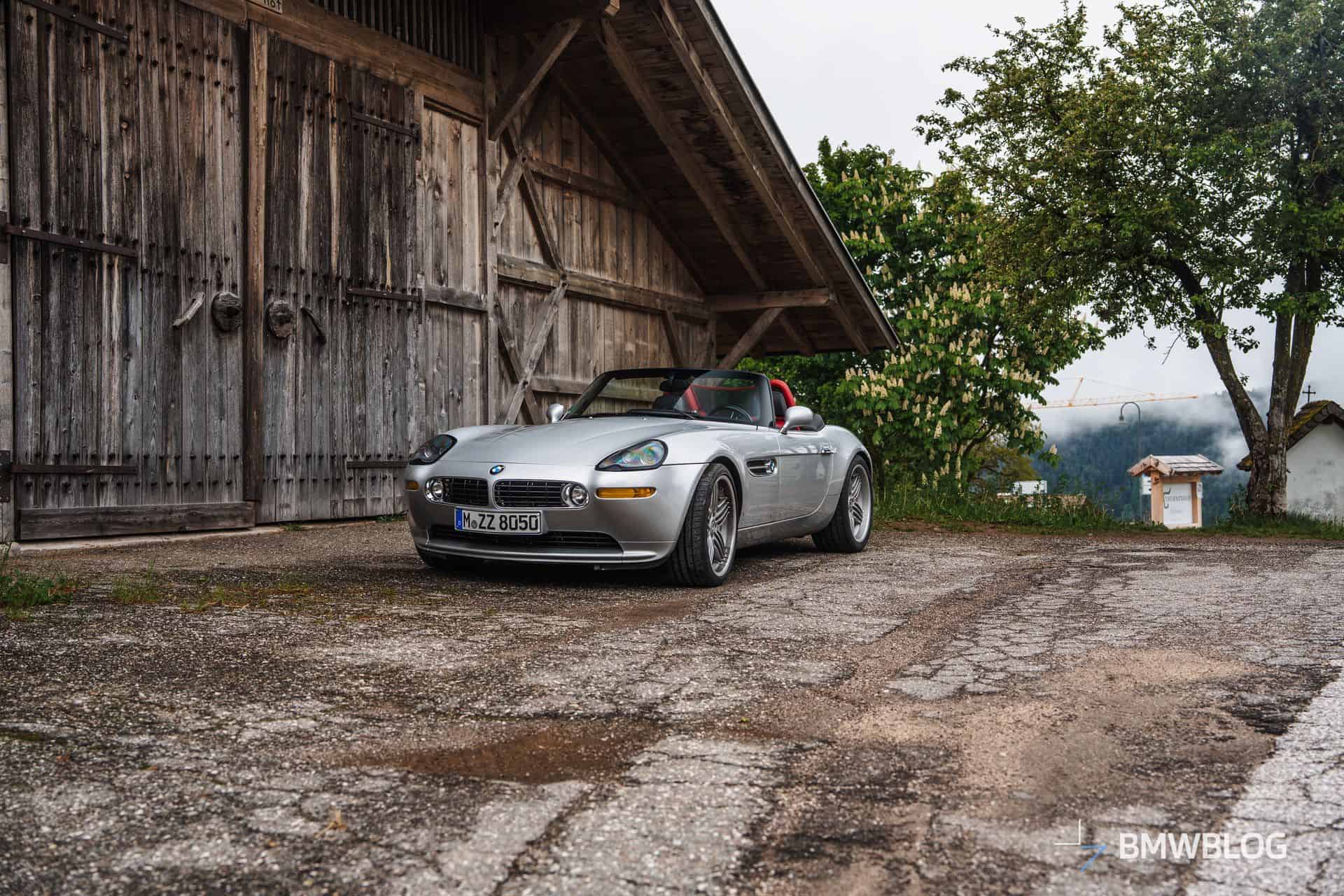
The Z car section alone could fill a small museum. A one-off Z3 in British Racing Green with BBS wheels and a tan top has covered fewer than 1,000 miles. A late-production M Coupe sits nearby, along with ALPINA-tuned Z4 and Z8 variants that BMW built in tiny numbers, kept pristine, and locked away from public view.
Then there’s the strange stuff. A one-of-a-kind Z3 Coupe design study with half doors and a gutted interior served as the blueprint for a race car that competed at the Nürburgring. It’s the kind of prototype that would have been scrapped at most automakers, but BMW kept it.
The race car wing holds GTP and Formula 2 machinery alongside David Donohue’s championship-winning E34 M5 from the IMSA Bridgestone Supercar Championship. That M5 represents a period when BMW’s motorsport ambitions in North America were dead serious, before the brand shifted its racing budget toward factory GT programs and Formula E.
Among the most compelling pieces is the E60 M5 with a six-speed manual. BMW’s only production V10, a naturally aspirated 5.0-liter screamer, paired with a stick shift that was exclusive to North America. That car was a unicorn when it was new. It’s an artifact now.
The ActiveE, a converted 1 Series Coupe that BMW trialed in roughly 500 units before the i3 launched in 2013, sits in the collection as a reminder that the company’s electric ambitions started with a whisper, not a press conference. A late-production i3s parked directly in front of it creates an accidental timeline of BMW’s halting EV evolution.
What BMW chooses to preserve says as much about the company as what it chooses to build. The warehouse isn’t a museum. It’s a corporate memory bank, with the first Spartanburg car next to the five-millionth and the manual V10 next to the electric prototype.
The Petersen promises a second episode next week. If an M1 surfaces, the internet will lose its collective mind. It probably should.
Share this Story