
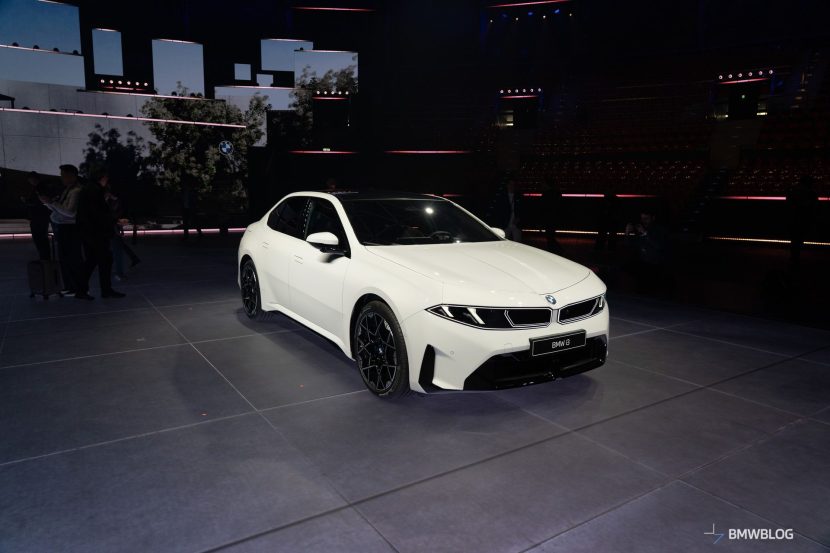


The 2027 BMW 3 Series will roll off the line at Dingolfing in November 2026 with no manual transmission anywhere in the lineup. Not as an option. Not in a single market.
The gearbox that arrived with the E21 in 1975 is done. That alone would make the G50 newsworthy. But the larger story is stranger: BMW is launching two completely different 3 Series simultaneously, built in different factories on different platforms, and daring customers to pick one.
The combustion G50 rides on CLAR II, an evolution of the architecture under the current G20 and G45 X3. The electric version, codenamed NA0, sits on the purpose-built Neue Klasse NCAR platform and wears the i3 badge. They share almost nothing underneath.
The NA0 gets shorter overhangs, a longer wheelbase, no transmission tunnel, and the packaging freedom that comes with a flat floor. The G50 still has a driveshaft running through the cabin and a turbocharged six under a long hood.
BMW design boss Adrian van Hooydonk says customers will be “hard-pressed to tell which one is the electric one.” That’s aspirational spin. The G50’s job is to look like its electric twin while being mechanically rooted in the last decade of BMW engineering.
The M340i name dies with the G20. Its replacement is the M350, and the rebrand reflects more than marketing vanity. BMW is stripping the “i” suffix from every combustion model — it now belongs exclusively to electrics.
The G45 X3 already dropped it. The logic is clean, even if it erases decades of naming convention overnight.
Under the M350’s hood, the B58 inline-six is expected to make more power than the outgoing M340i, assisted by a 48-volt mild-hybrid system calibrated for Euro 7 compliance. The eight-speed ZF automatic carries over. Below the M350, BMW is reportedly rolling out the B48TÜ3, an updated 2.0-liter turbo four that will anchor the 320, 330, and 330e.
Whether rear-wheel drive survives as an option remains unconfirmed, which in BMW’s corporate dialect usually means xDrive-only.
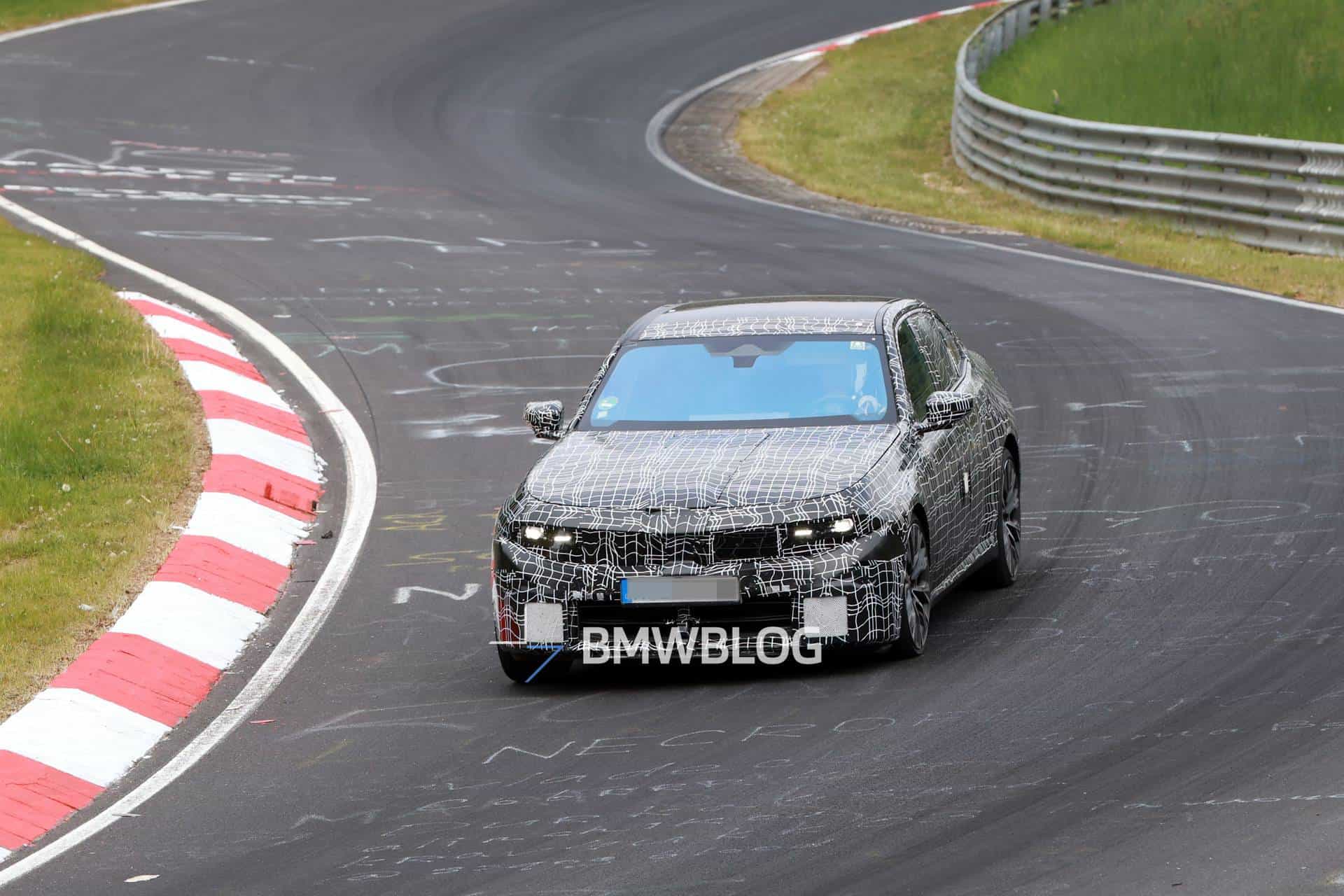
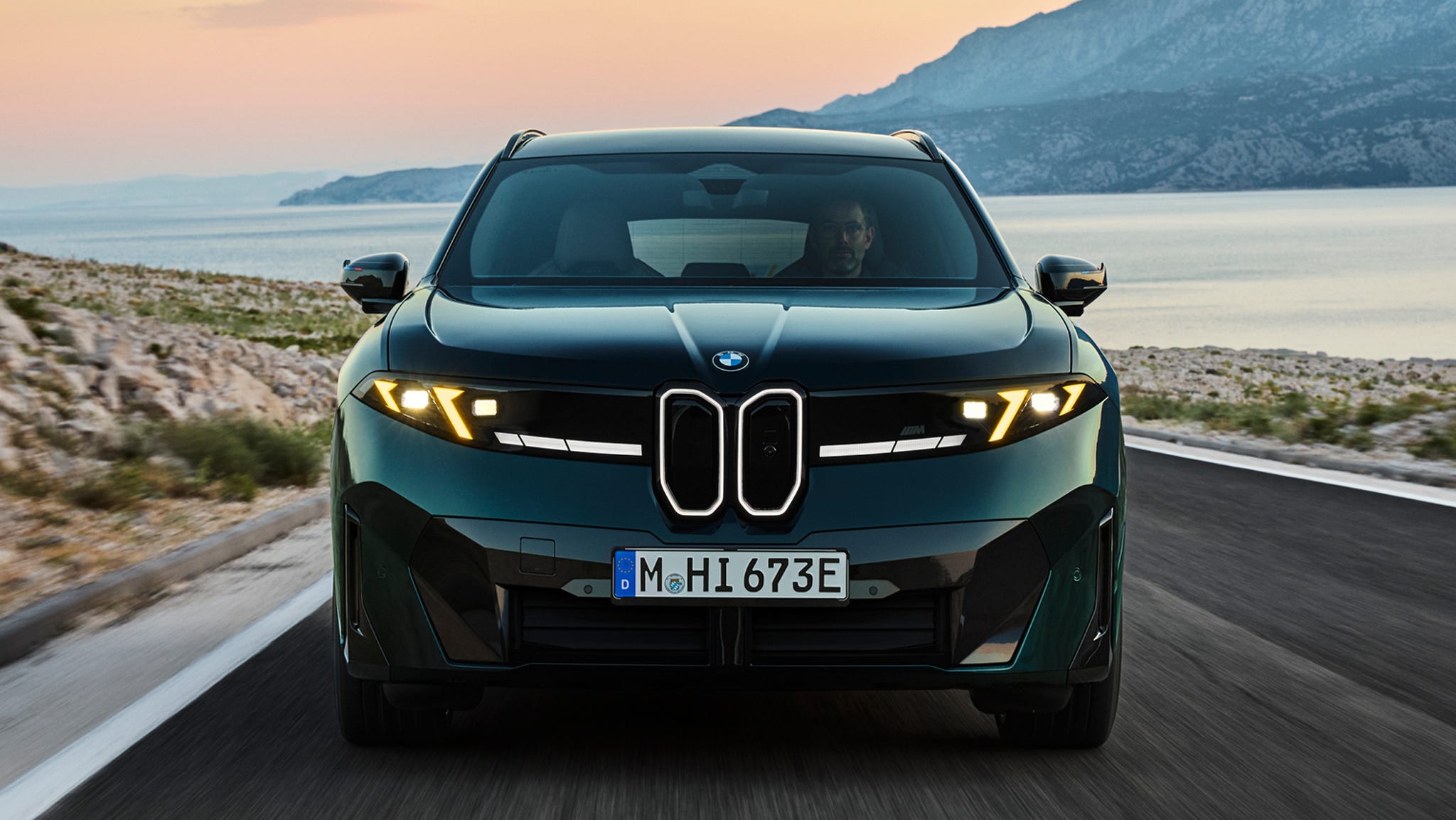
Spy shots from the Nürburgring and public roads tell a visual story that tracks closely with the Neue Klasse language. The oversized kidney grille era is over. The G50’s front end uses a horizontal glass panel that integrates headlights into slimmer, more geometric kidneys.
Flush door handles replace conventional units. Side surfacing is stripped back — closer to E30 minimalism than the origami creases of the G20. Quad exhaust tips appear on M Performance models, a visual privilege previously reserved for full M cars.
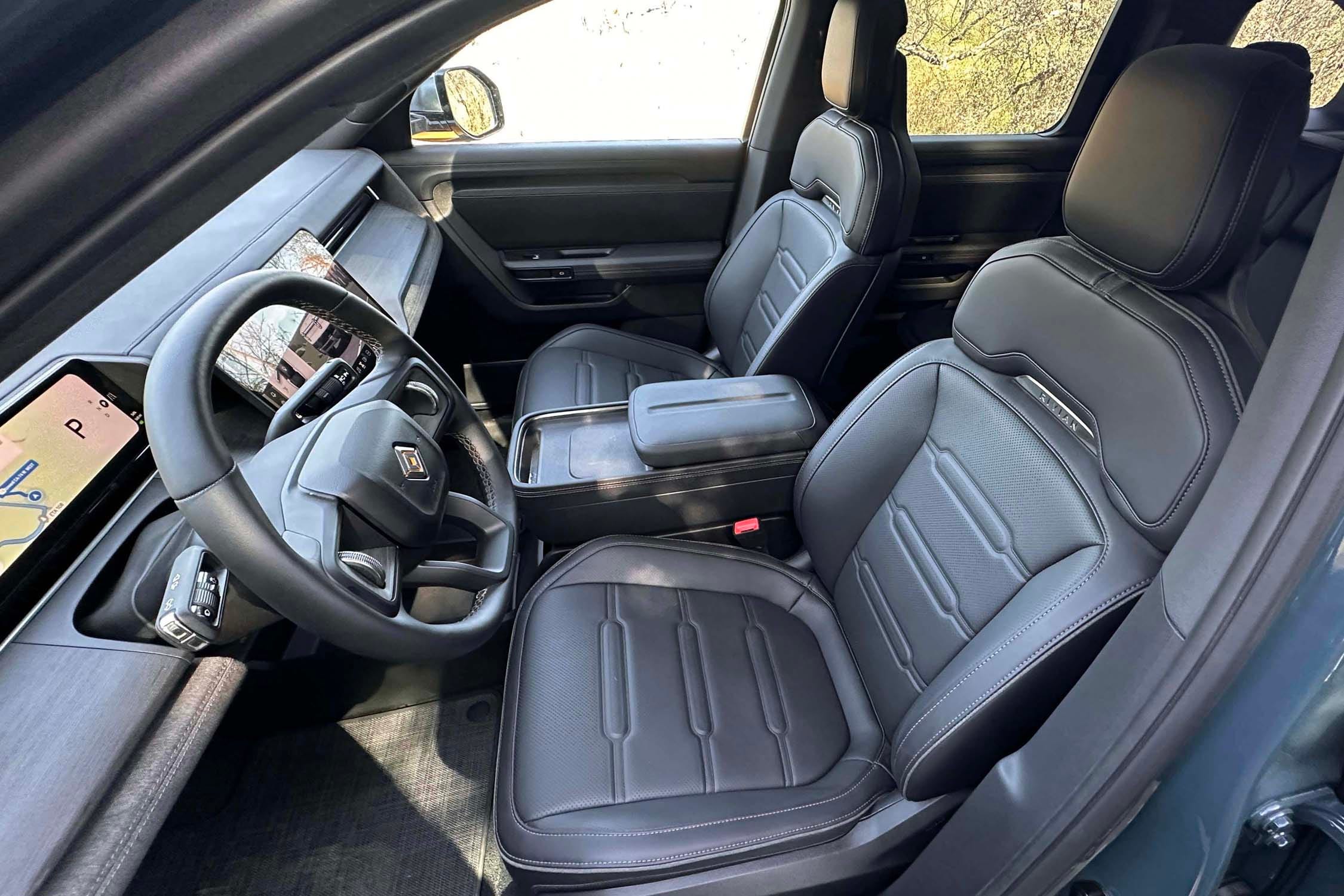
The interior remains partially a mystery, but the constraints are obvious. CLAR means a transmission tunnel. CLAR means less freedom than the flat-floored NA0.
BMW will compensate with Neue Klasse-inspired design — a Panoramic Display spanning the windshield width, a larger central touchscreen, and the iDrive X software that debuted on the electric i3.
This is BMW’s hedge made physical. The G50 is the volume car, the one dealers will stock in bulk, the sedan for markets BMW keeps saying aren’t ready for full electrification. The NA0 i3, starting production in Munich this summer, is the future BMW wants credit for building.
Selling both under the same nameplate, at the same time, in the same showrooms, is a bet that customers will sort themselves.
The G50 gets a projected seven-year production run. Touring variants for both the combustion G51 and electric NA0 are expected in 2027 or 2028. That’s a long time for two fundamentally different cars to coexist under one badge — long enough for the market to render a verdict BMW may not be able to engineer around.
The 3 Series has been BMW’s identity since the company needed one. Splitting it in half is either the smartest play in the segment or the beginning of an identity crisis. The answer depends entirely on which 3 Series you’re standing next to.
Share this Story