
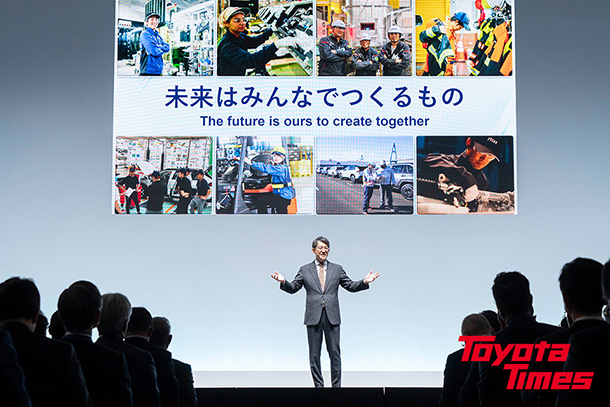


Koji Sato stood before 484 suppliers at Toyota Arena Tokyo on March 25 and said what no Toyota CEO has ever said quite so plainly. “Unless things change, we will not survive.”
That’s not a motivational soundbite. It’s an outgoing chief executive, days before handing the keys to successor Kenta Kon, telling the entire supply ecosystem that the company synonymous with manufacturing discipline has lost its edge.
Sato’s targets were specific. Toyota has been rejecting steering wheels with resin wrinkles invisible to the human eye. Scrapping tens of thousands of wire harness components for minor discoloration no customer would ever notice. These aren’t quality standards. They’re relics — expensive rituals that pad costs and slow the machine while Chinese competitors ship feature-rich, software-heavy vehicles at a pace Toyota can’t match.
The new initiative, called “Smart Standard Activity,” is designed to kill those rituals. Strip back over-engineered thresholds. Cut component costs. Build a supply chain fast enough to compete with BYD, Chery, and the wave of Chinese brands rewriting the economics of car manufacturing.
But the harder admission wasn’t about China. It was about Toyota itself.
“We’re not even doing the basics right,” Sato said. From the company that invented the Toyota Production System — the global gold standard for lean manufacturing — that sentence lands like a grenade.
He described a culture paralyzed by “just to be safe” thinking, where entrenched assumptions about what “cannot be changed” have turned the Toyota Standard from a streamlining tool into, in his own words, “a massive task list.” He apologized directly to suppliers, conceding that Toyota’s poor understanding of their operations had placed “considerable burdens” on them.
This is not a company tweaking around the margins. This is a company admitting its operating philosophy has calcified.
Incoming CEO Kenta Kon, who stepped up from CFO on April 1, reinforced the message at the same event. Toyota, Lexus, Daihatsu, and Hino collectively delivered a record 11.32 million vehicles globally last financial year. Kon’s assessment of that achievement: the business is not in a “secure and comfortable position.”
Record volume and existential anxiety in the same breath. That tells you everything about where the global auto industry sits right now. Scale alone buys you nothing if your cost structure is bloated and your software capability trails the competition.
Toyota’s corrective plan reads like a confession of what went wrong: streamlined development, more in-house software talent, fewer powertrain and software variants across the lineup. The company is also pushing partnerships beyond automotive — into robotics, hydrogen, AI, and data centers. That’s an implicit acknowledgment that the next competitive battlefield isn’t just under the hood.
The real story here isn’t that Chinese automakers are dangerous. Everyone knows that. It’s that the world’s largest automaker, the one that taught the entire manufacturing world how to eliminate waste, allowed waste to spread unchecked under the banner of quality.
Toyota spent decades building systems so rigorous they became the textbook. Now those same systems have become the problem — too rigid, too cautious, too slow. Sato saw it clearly enough to say it out loud on his way out the door.
Whether Kon can actually dismantle the culture that created this mess while keeping the parts of Toyota that still work is the question that matters now. Record sales bought the company time. Sato just told everyone how little of it is left.

Share this Story