
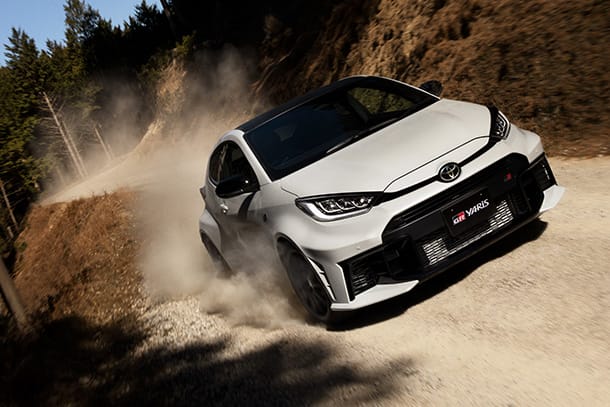


Toyota’s GAZOO Racing division has done something unusual with the GR Yaris — it made the already hardcore hot hatch even more extreme, then slapped a license plate on it. The new Type 26 GR Yaris, named after the Nürburgring Nordschleife’s 26 turns, represents the sharpest road-legal weapon Toyota has built in years. It arrives as the clearest signal yet that the company’s motorsport program isn’t just marketing theater.
The name tells you everything about the philosophy. Toyota has been grinding laps at the Nordschleife for years through its development program, and the Type 26 designation has become shorthand within GAZOO Racing for parts and calibrations proven on that brutal 12.9-mile circuit. This isn’t a sticker package bolted onto a showroom car. It’s the inverse — a competition program’s learnings distilled into something street-legal.
Underneath, the Type 26 gets revised suspension geometry, stiffer bushings, and damper tuning pulled directly from GR’s racing efforts. The 1.6-liter turbocharged three-cylinder carries over, but the calibration work — fueling, boost management, throttle response — reflects thousands of kilometers of competitive data. Toyota hasn’t released final power figures for every market, but the direction is clear: sharper, not necessarily bigger.

The chassis revisions matter more than any horsepower bump. Spring rates, roll bar stiffness, and steering response have been recalibrated to work as an integrated system rather than individual upgrades. Anyone who has driven the standard GR Yaris knows it already punches absurdly above its weight class. The Type 26 aims to close the remaining gap between a very good road car and a proper track tool.
Weight reduction plays a role too. Forged wheels, stripped interior options, and careful material substitution shave kilograms in the places that matter most — unsprung mass and rotational inertia. Toyota learned these lessons the hard way, through competition attrition and the relentless feedback loop between professional drivers and engineers who share garage space at endurance events.
The timing is deliberate. Performance car buyers in 2025 face a strange market. Electric hypercars dominate headlines, but the affordable, analog, driver-focused segment has been hollowed out.
The GR Yaris already occupied rare territory as a genuinely small, genuinely light, all-wheel-drive performance car with a manual gearbox. The Type 26 doubles down on exactly that formula at a moment when most manufacturers are running the other direction.
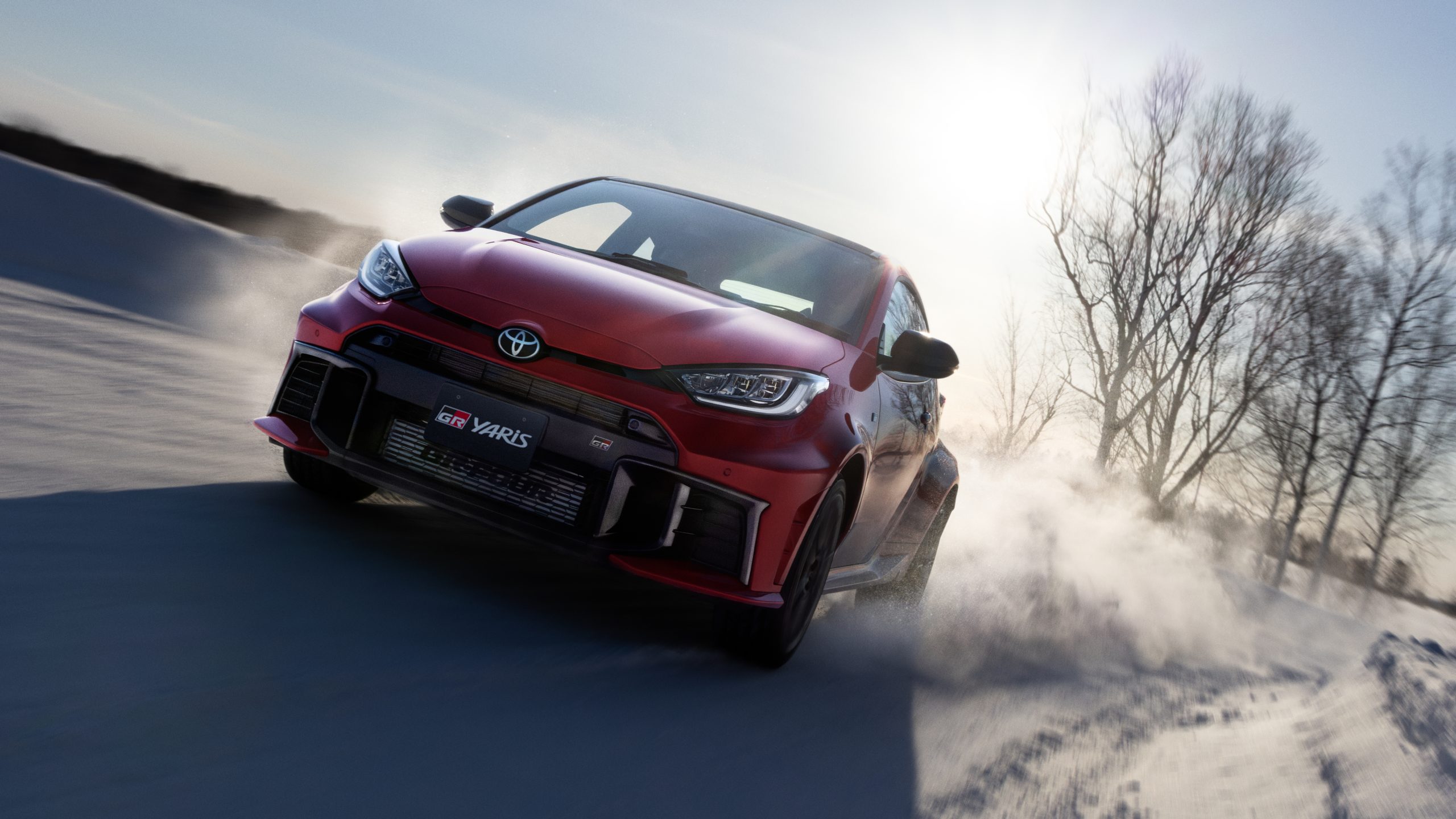
GAZOO Racing president Takao Aimoto has been pushing the idea that motorsport must feed production cars or it has no business existing inside Toyota. The Type 26 is his proof of concept. Every modification traces back to a specific problem encountered on track — not a focus group, not a market study, not a design clinic.
Production numbers will be limited, though Toyota hasn’t confirmed exact allocations by region. Demand for the standard GR Yaris has consistently outstripped supply since its 2020 launch, and the Type 26 will almost certainly follow the same pattern. Dealers who managed to avoid markups on the base car will face intense pressure on this one.
The GR Yaris Type 26 isn’t trying to compete with Porsche GT cars or AMG Black Series specials. It lives in a different world — smaller, cheaper, and built on the principle that a 1,280-kilogram car with proper chassis tuning can deliver driving satisfaction that six-figure machines struggle to match. Toyota’s bet is that the Nürburgring proved it. Now the road has to agree.

Share this Story