
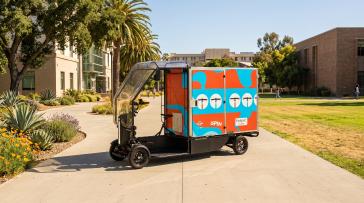


Honda built a four-wheeled electric micromobility vehicle and a fleet management platform to go with it. Now it needs someone to actually buy in. The company’s Fastport venture, launched quietly in 2023, just landed its first publicly announced customer: Third Lane Mobility, the parent company of Bird and Spin, two scooter-share brands operating in more than 200 cities worldwide.
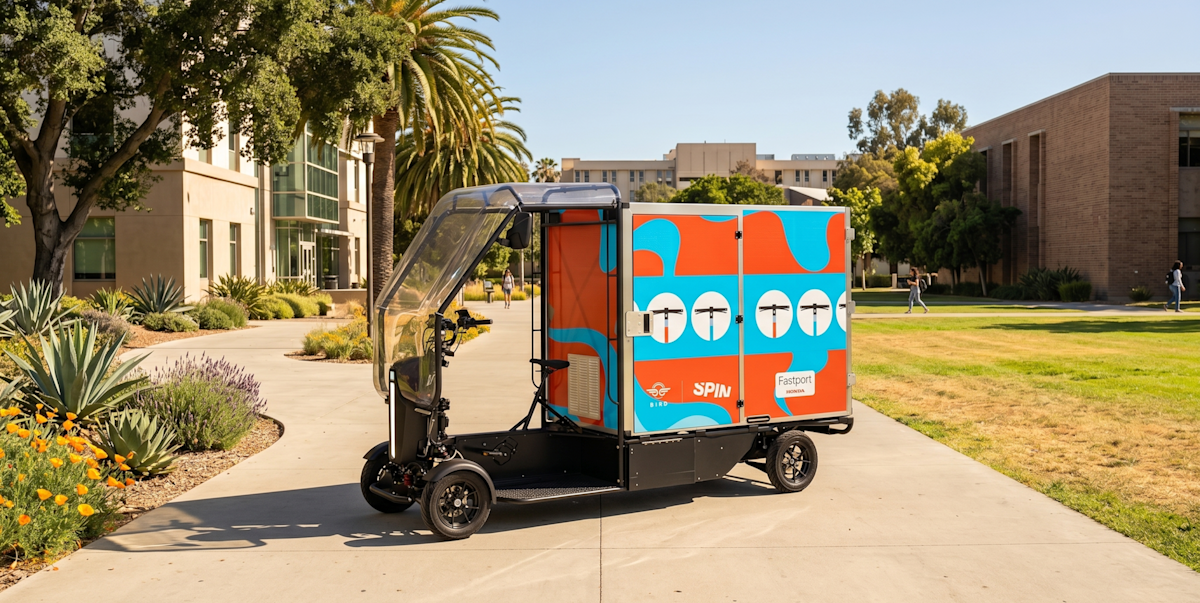
The deal puts Fastport’s eQuad — a single-rider, pedal-assist, all-electric quad designed to replace vans in tight urban corridors — into Bird and Spin field operations on select university campuses and in major metro areas across the U.S. The crews who swap batteries, rebalance scooter fleets, and handle maintenance will trade their gas-powered trucks for something that fits in a bike lane. It’s a pragmatic first deployment, not a splashy consumer launch.
Bird and Spin field teams make dozens of stops per shift in the most congested pockets of cities. They haul scooter batteries. They redistribute e-bikes that pile up at popular stations.
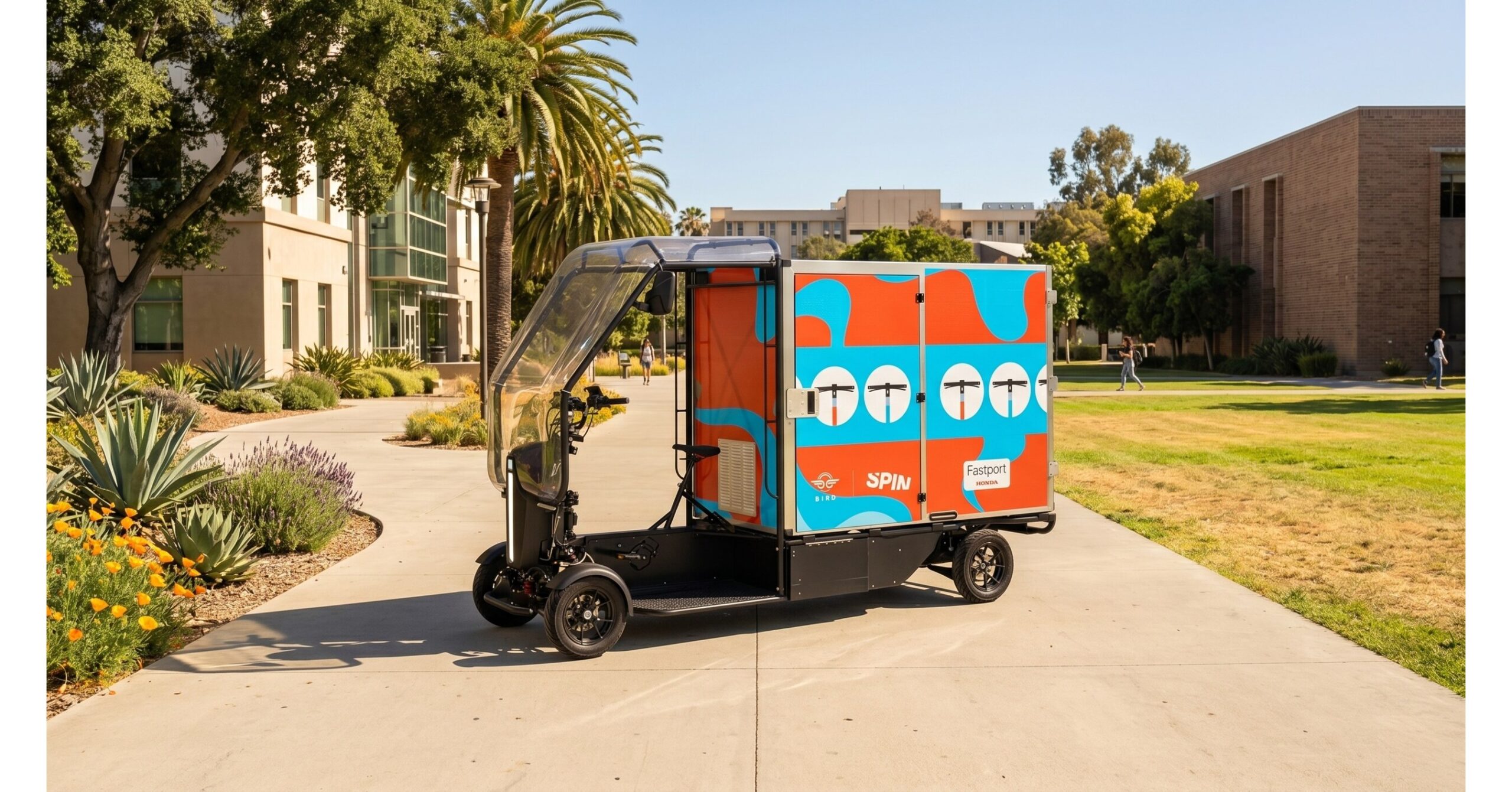
They do it all day, every day, in neighborhoods where a Sprinter van is a liability. The eQuad’s compact four-wheel footprint, swappable Honda Mobile Power Pack e: batteries, and regenerative braking system are tailored to exactly this kind of dense, repetitive, short-hop work.
“The partnership between Bird and Fastport is really about bringing a zero-emissions fleet to support vision zero goals in a way that’s more economical for our business,” said Stewart Lyons, CEO of Third Lane Mobility.
Honda is selling the eQuad through a Fleet-as-a-Service model — subscription or on-demand access rather than outright purchase. Small commercial operators don’t want to own and maintain specialty vehicles. They want a monthly line item and a phone number to call when something breaks.
Fastport bundles the hardware with software tools: over-the-air updates, API-ready fleet integration, diagnostic data, and a dedicated service technician tool. Jose Wyszogrod, Fastport’s general manager, framed the pitch around congestion, emissions, and operating costs — the three pressure points squeezing urban delivery operators. “Full-size commercial vehicles are less practical,” he said, which is corporate understatement for the fact that parking a box truck on a college campus to swap scooter batteries is absurd.
The eQuad itself is engineered to live in bike lanes, subject to local regulations. It runs a pedal-by-wire drivetrain with automatic parking brakes for constant stop-and-go and swappable batteries so drivers don’t lose hours at charging stations. Honda hasn’t released detailed specs or pricing yet, and launch markets remain unnamed, which suggests Fastport is still scaling production and negotiating additional partnerships.
Bird’s own history adds context. The company cratered through a bankruptcy in 2023 before Third Lane Mobility scooped up the brand. Spin, originally a Ford subsidiary, landed under the same umbrella.
Both brands survived by trimming costs and focusing on reliable campus and city programs rather than venture-capital-fueled expansion. They don’t need flashy vehicles. They need cheap ones that work.
Honda, meanwhile, is a company that sells 1.3 million cars a year in the U.S. and builds jet engines. The eQuad is a rounding error on its balance sheet. But Fastport represents a strategic bet that urban logistics will keep fragmenting — that the future isn’t just bigger EVs replacing bigger trucks, but right-sized vehicles replacing everything that’s overkill.
One scooter-share operator on a handful of campuses doesn’t validate that thesis. But it does give Honda something it didn’t have yesterday: a paying customer willing to prove the concept in the real world.

Share this Story