
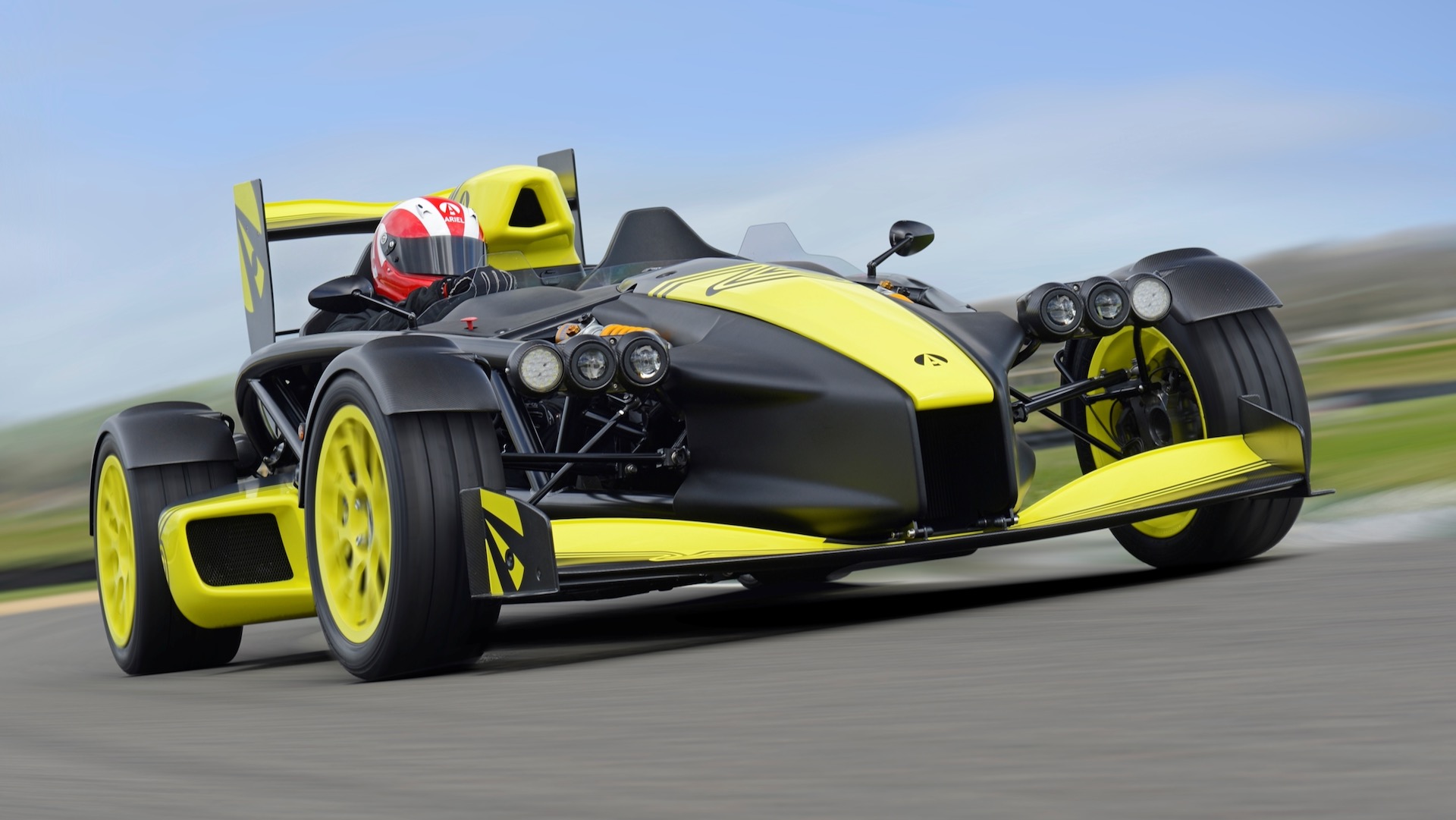


A 2.0-liter Honda four-cylinder making 525 horsepower in a car that weighs 1,474 pounds. That’s the pitch from Ariel Motor Company, whose new Atom 4RR marks 25 years of building stripped-out exoskeletal machines that make supercars look overweight and overstuffed.
The price? A cool 208,000 British pounds, roughly $279,000 at current exchange rates. That’s Lamborghini Huracán territory for a vehicle with no roof, no doors, no windshield, and no apologies.
Ariel’s K20C engine, the same basic Honda architecture underpinning the Civic Type R and Integra Type S, has been torn apart and rebuilt by hand in Crewkerne, England. Closed-deck sleeves, forged pistons and rods, revised head porting, alloy valves, new camshafts, and an enlarged turbocharger running 1.7 bar of boost. The injectors alone are 1,400 cc, industrial-scale hardware for a four-cylinder.
It breathes through a carbon fiber intake Ariel claims is F1-grade, and exhales through a full titanium exhaust.
Three selectable engine maps dial the fury up in stages: 400 hp, 500 hp, and the full 525-hp war cry at 8,200 rpm with 405 lb-ft of torque. The idea that you’d ever select map one in a car this light feels generous, but Ariel knows its customer base includes people who track these things on wet British circuits.
The gearbox is a Quaife six-speed sequential with pneumatic paddle shifters. The clutch exists only to get you rolling. After that, it’s clutchless upshifts and auto-blipped downshifts, pure race-car behavior wrapped in a road-legal package.
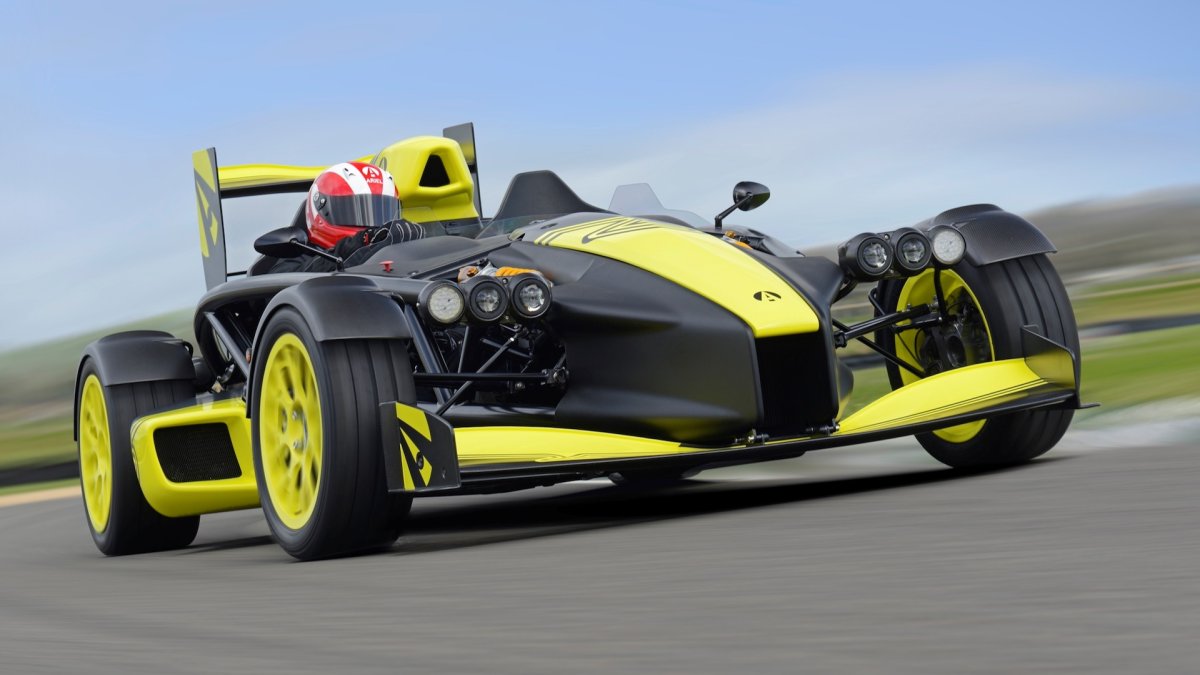
And road-legal it technically is. Ariel insists the 4RR is designed for street use, though the mud guards and 25th anniversary graphics feel like a thin disguise for what is fundamentally a track weapon. Zero to 62 mph takes 2.4 seconds. Zero to 100 mph, 5.1.
Top speed is 175 mph, which in a car this exposed to the elements probably feels like 300.
The chassis is Ariel’s signature tubular steel exoskeleton, fully bronze-welded for additional rigidity over previous Atoms. Öhlins twin-tube dampers are fully adjustable. So are the chromoly wishbones, pushrods, and machined aluminum uprights.
AP Racing supplies 12.2-inch two-piece ventilated discs and four-piston calipers. The Bosch ABS system offers 11 settings, including a full-off mode for drivers with either supreme confidence or a death wish.
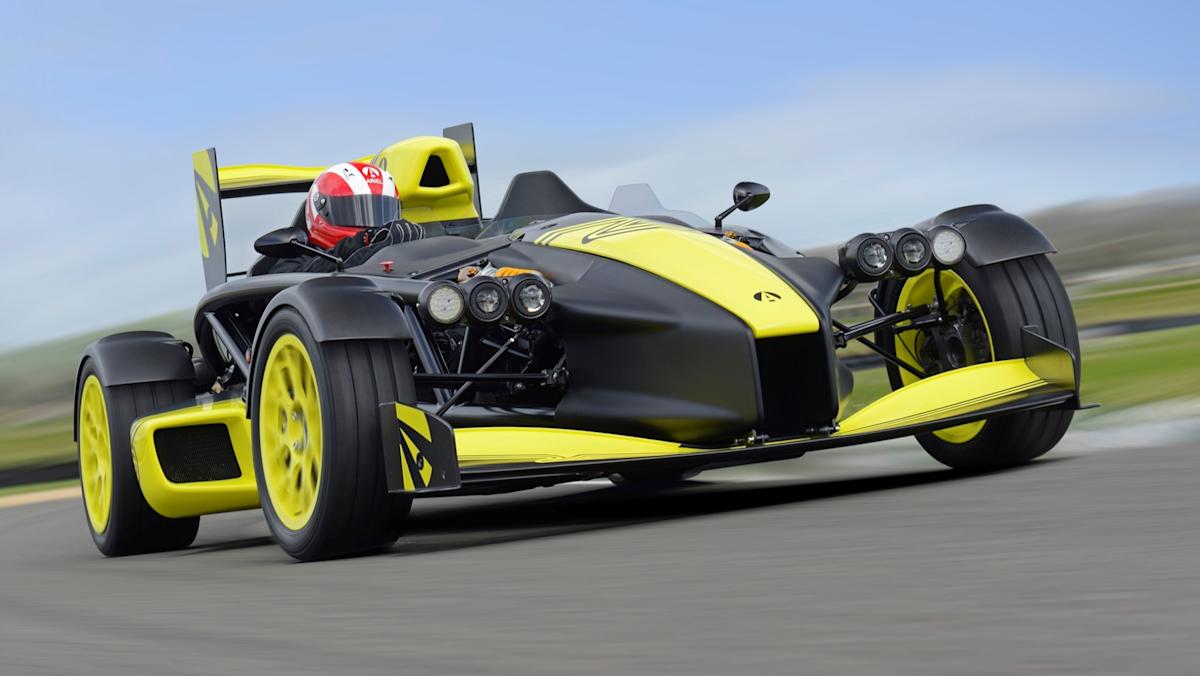
Staggered wheels, 16-inch fronts and 17-inch rears, wear Yokohama A052 semi-slick rubber. For dedicated track rats, Ariel offers options including a plated differential, electronically controlled dampers, a motorsport roll cage, and on-board air jacks. At that point, you’re building a race car with license plates.
The tension in the 4RR’s story is obvious: Ariel is charging supercar money for a machine that shares its engine DNA with a $45,000 Honda. But that comparison misses the point entirely. Nobody buys an Atom because it’s sensible.
They buy it because nothing else on earth delivers this power-to-weight ratio, 356 horsepower per ton, while remaining something you can technically drive to dinner.
“Its performance capability demands respect while rewarding drivers with an intensity and precision that few other cars can match,” said managing director Henry Siebert-Saunders. That’s corporate-speak, but in this case, it happens to be true.
Production will be extremely limited, built to order. Ariel hasn’t confirmed U.S. allocation. Given the company’s tiny scale and the complexity of American homologation, stateside buyers may need patience, connections, or both.
Twenty-five years in, the Atom formula hasn’t changed: less car, more experience. The 4RR just pushes the ratio to its most absurd extreme yet.



Share this Story