
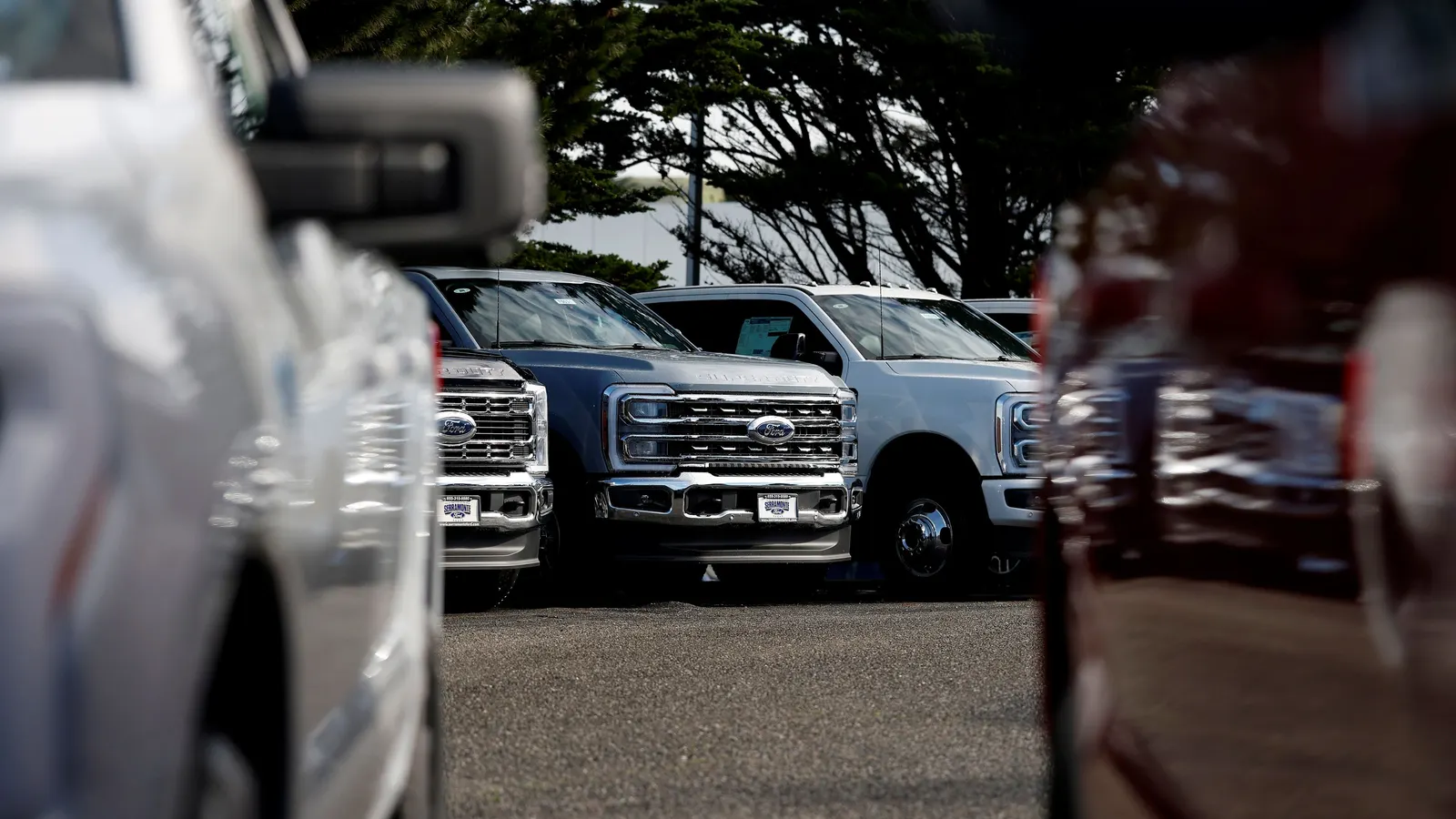


Ford is expecting $1.3 billion back from the federal government for tariffs that were levied and later invalidated between February 2025 and March 2026. On paper, that looks like a lifeline. In practice, the automaker is staring down a wall of costs that makes the refund look like a rounding error.
CFO Sherry House laid out the math on Ford’s April 29 earnings call. The Ford Blue division gets $700 million of the refund, Ford Pro takes $500 million. But nobody at Ford could say when the money would actually arrive, and the company is still bracing for a $1 billion hit from tariffs that remain very much in effect.
Ford isn’t alone in lining up for refund checks. General Motors is projecting $500 million back. Stellantis expects roughly $469 million. The Detroit Three collectively overpaid billions in duties on levies that Washington eventually reversed, a staggering indictment of how chaotic trade policy whipsawed the industry over the past 18 months.
But here’s where Ford’s story diverges sharply from its crosstown rivals. The company is projecting $2 billion in commodity headwinds this year, driven overwhelmingly by aluminum prices. That number dwarfs any tariff refund, and it traces directly back to a crisis Ford has been grinding through for months: multiple fires at a Novelis facility that is one of the automaker’s primary aluminum sources.
House told analysts the company will absorb $1.5 billion to $2 billion in one-time costs just for sourcing aluminum from alternative suppliers while Novelis recovers. Ford builds its most profitable vehicles — F-150s, Super Dutys, Expeditions — on aluminum-intensive platforms. When your primary metal supplier catches fire, repeatedly, there is no quick fix.
COO Kumar Galhotra offered the most optimistic note of the call, saying the damaged Novelis equipment is on track to restart operations later this month. That aligns with Ford’s earlier projection of a full return to normal by Q2 2026. “All the enablers for the ramp-up are on track,” Galhotra said, adding that Ford has contingency aluminum supplies locked in if things slip again.
The confidence is understandable. The second half of the year looks cleaner for aluminum availability. But Ford has been managing this disruption since last year, and the financial scars are deep.
CEO Jim Farley pointed to more than $1 billion in material and warranty cost improvements planned for 2026 as a counterweight. That’s real money, and it speaks to operational tightening that Ford has needed for years. Yet it barely offsets the aluminum headwinds alone, let alone the tariff exposure that persists.
House acknowledged that Ford’s commodity contracts come in several flavors — fixed-price deals, multiyear agreements, and index-based arrangements that lag a quarter behind market moves. That lag means Ford is still absorbing price spikes well after they hit the spot market. “You’re going to have a range there,” she said, which is corporate shorthand for continued volatility.
The tariff refund number will grab headlines. It’s big, it’s tangible, and it signals that the worst of the tariff chaos may be receding. But Ford’s real battle in 2026 is physical, not political. Aluminum supply, aluminum pricing, and the slow recovery of a single critical facility will determine whether the company can build and ship its highest-margin trucks at the volumes Wall Street expects.
A $1.3 billion check from Customs and Border Protection helps. It doesn’t solve a $2 billion commodity problem and up to $2 billion more in emergency sourcing costs. Ford’s exposure to a single supplier and a single material remains the more urgent story, and the one that no government portal can refund.



Share this Story