
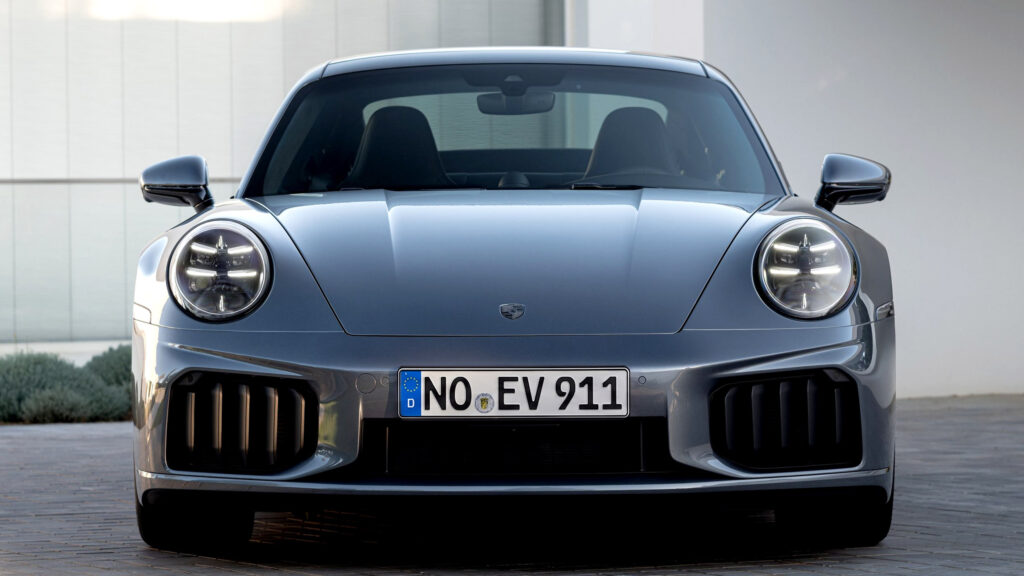


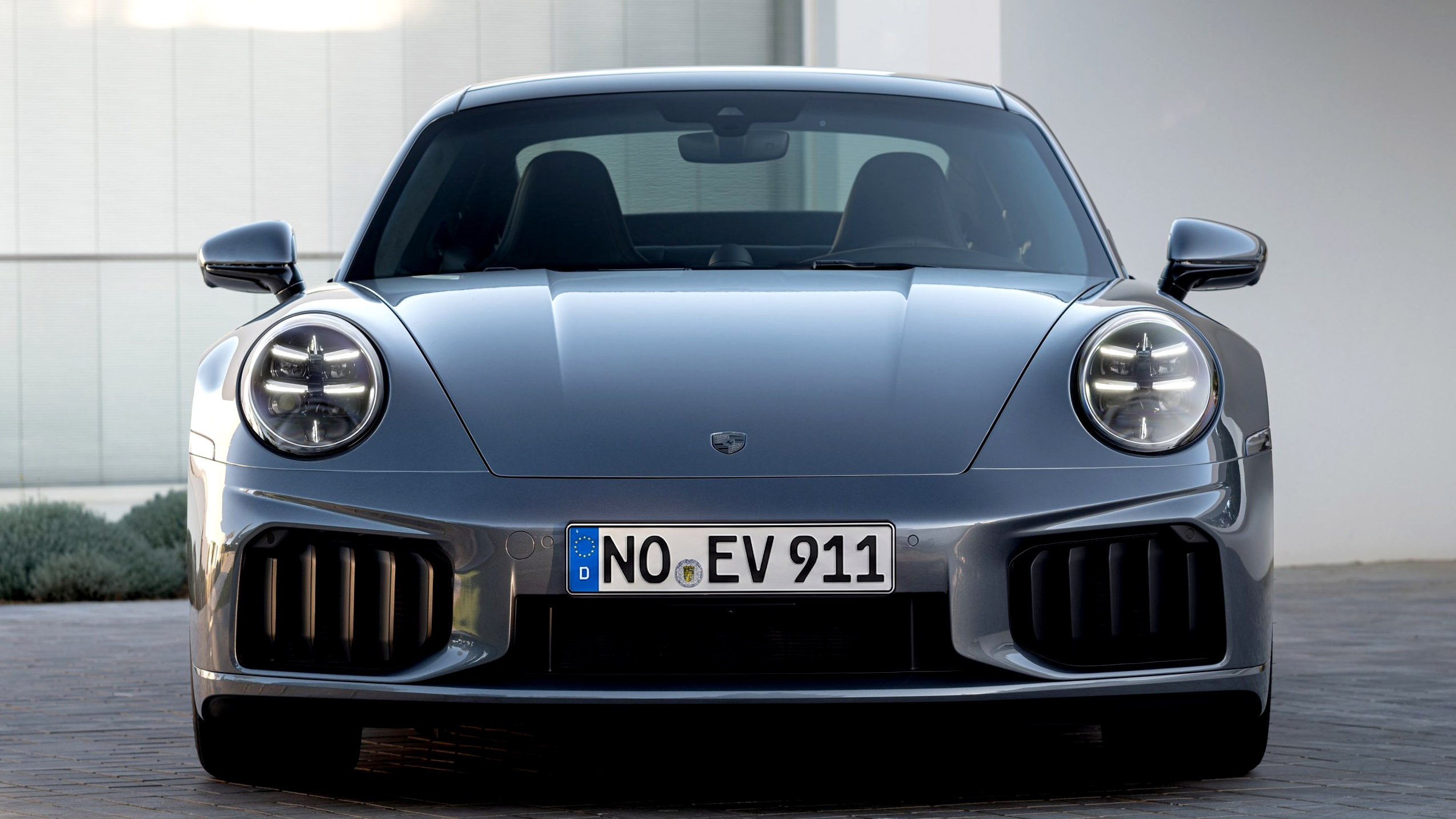
Porsche has drawn a clear line in the sand: no fully electric 911 this decade. The car that defines Zuffenhausen will soldier on with combustion and hybrid power through at least 2030. The smaller, less sacred 718 Cayman and Boxster absorb the risk of going battery-electric first.
Daniel Schmollinger, CEO of Porsche Cars Australia, confirmed the strategy in comments to CarSales. We will go with the 718 electric as the first two-door electric sports car,” he said. “The 911 for the moment stays what it is.”
That phrasing — “for the moment” — is doing a lot of work. It keeps the door cracked without committing to anything. Porsche has always said the 911 would be the last model to lose its engine, but a few years ago, “last” still implied “eventually.
Now, with global EV demand cooling and Porsche’s own electrification timeline in retreat, “eventually” looks more like “maybe never.” At least for anyone buying a 911 in the next decade.
The 718 program has survived its own turbulence. Internal reviews and delays threatened the battery-powered Cayman and Boxster, but both remain on track. They will be sold as EVs alongside combustion variants positioned higher in the lineup — an inversion that says everything about where perceived value still lives.
Meanwhile, the 911’s T-Hybrid system, deployed in the current GTS and Turbo S trims, represents Porsche’s preferred middle path. It uses electrification to extract more performance without the mass penalty of a full battery pack. It is clever engineering in service of a very old argument: that the 911 doesn’t need to change its fundamental nature to stay relevant.
The Macan tells the cautionary tale. Porsche’s electric Macan launched to tepid sales volumes that can’t touch what the aging gas-powered version still pulls. Germany will soon stop building the combustion Macan, but Porsche is stockpiling units to keep feeding markets that aren’t ready to switch.
Schmollinger frames the resistance gently: “It’s not a decision against the car. It’s a decision against not being ready for electric.” That diplomatic read glosses over a harder truth.
Porsche bet heavily on electrification across its lineup — the Taycan, the electric Macan, the planned Cayenne EV — and the market responded with a shrug. The company recently shuttered its e-bike division and cut 500 jobs. Synthetic fuels, another hedge Porsche has championed loudly, remain what Schmollinger himself calls “far from mainstream.”
So the strategy has become: offer everything and let the customer decide. The Cayenne now spans gasoline, plug-in hybrid, and full electric. A hybrid Macan is in development to run alongside the EV. This is a portfolio engineered not around conviction but around uncertainty, designed to absorb whatever direction the market actually moves.
The 911 sits apart from all of this hedging. Porsche can afford to protect it precisely because it doesn’t need to sell in Cayenne or Macan volumes. It is the halo, the brand’s emotional core, and Porsche understands that electrifying it prematurely carries more risk than waiting too long.
Every 911 buyer who opens a configurator today and sees a flat-six on the spec sheet is a customer Porsche doesn’t have to convince of anything.
The 718 gets to be the test case, the proving ground, the car that absorbs whatever consumer backlash or enthusiasm comes with putting batteries in a mid-engine Porsche sports car. If it works, the lessons flow upward. If it doesn’t, the 911 remains untouched.
Porsche isn’t abandoning electrification. It’s just making very sure the 911 isn’t the car that pays for the experiment.
Share this Story