
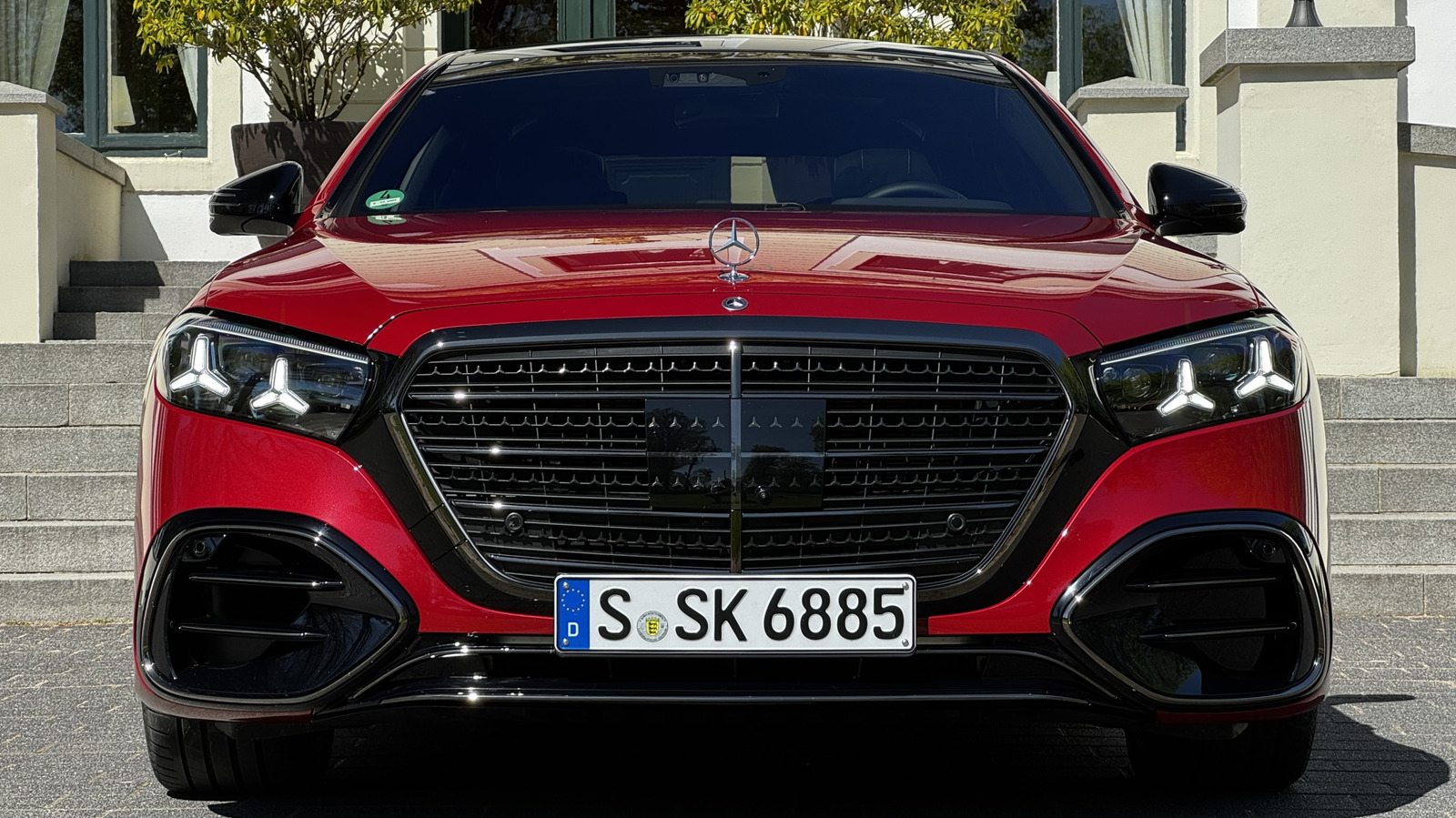


Ask enthusiasts to name their favorite flagship vehicle and you get a fascinating autopsy of the luxury car business. Jalopnik posed exactly that question to its readers last week, and the answers tell a story the industry probably doesn’t want to hear.
The responses landed all over the map — a 2001 Lexus LS430, a Volkswagen Phaeton, a 1960s Lincoln Continental with suicide doors, even a third-generation Honda Prelude. What they didn’t land on, with any real enthusiasm, was anything a dealer could sell you today.
That’s the quiet indictment buried in the thread. The modern flagships, the ones currently sitting in showrooms with six-figure window stickers and enough screens to run air traffic control, barely registered. One reader praised the Audi S8 but only after dismissing the current Mercedes-Benz S-Class as looking like a “suppository.”
Another picked the Lexus LC500 specifically because the LS, Lexus’s actual flagship sedan, “took a few steps down recently.
The prompt came from a review of the facelifted 2027 Mercedes-Benz S-Class, which writer Logan Carter acknowledged as the flagship segment’s defining nameplate. He called it “your favorite flagship’s favorite flagship.” But even Carter didn’t pick the S-Class as his own favorite.
He went with the Genesis G90, praising its audacity for showing up with bold, unapologetic styling while the Germans were still clinging to understated anonymity. Then they scrambled to catch up with illuminated grilles and oversized hood ornaments.
The readers’ picks read like a love letter to a different era of ambition. The Volkswagen Phaeton got a passionate nomination for its absurd engineering brief: maintain 186 mph all day in 122-degree heat while keeping the cabin at 72. Radiant heat instead of forced air, because blowing hot air on occupants was for “peasants.”
Ferdinand Piëch’s monument to irrational perfectionism sold terribly and died young. Readers still worship it.
The Aston Martin One-77 showed up — a V-12, a six-speed manual, a carbon fiber body, and looks that could stop traffic in any decade. Seventy-seven were built. A flagship used to mean the best a company could possibly build, cost and volume be damned.
A mid-1990s BMW 850i V12 made the list despite its owner freely admitting it was “famously unreliable.” Didn’t matter. Its road presence was the thing.
A 1960s Ford Thunderbird Sports Roadster got the nod as the “very top of the Ford heap,” a jet-age machine from a company that still believed in aspiration above the Mustang.
The Lincoln Continental nomination came loaded with visceral memory: “AC like a meat locker” and compact cars scattering “like bait fish fleeing a shark.” That’s what a flagship used to feel like — physical dominance wrapped in effortless confidence.
Then there was the Honda Prelude, a pick that stretches the definition of flagship almost to its breaking point. But the reader’s argument had teeth: the third-gen Prelude beat Ferraris, Porsches, and Corvettes in Car and Driver’s slalom testing in 1987. It represented Honda at its most daring, a company proving it could out-engineer anyone on the planet.
The thread reveals a growing disconnect. Today’s flagships are defined by technology stacks, autonomous driving hardware, and subscription services. The cars readers actually love are defined by engineering conviction, visual authority, and the willingness to build something impractical just because a company believed it should exist.
Nobody nominated a car with a monthly software fee. Nobody gushed about a 56-inch hyperscreen. The vehicles that stir genuine affection are the ones where an engineer or a designer had an unreasonable vision and a company had the nerve to build it.
The flagship, as a concept, isn’t dead. But the soul that made people care about flagships might be on life support.
Share this Story