
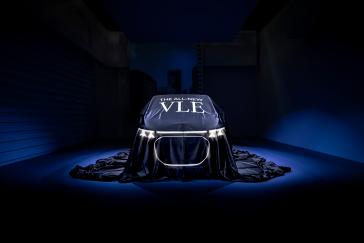


Mercedes-Benz will unveil the all-electric VLE on March 10 in Stuttgart, a vehicle the company is calling a “grand limousine” — a term no one in the industry has used before because the category doesn’t exist yet.
That’s the point, apparently.
The VLE is the first model built on Mercedes-Benz’s new modular van architecture, and the company is positioning it somewhere between a luxury sedan and a people mover. Up to eight seats. Limousine ride quality. MPV versatility. Mercedes is calling it a “shapeshifter,” which is marketing-speak for a vehicle that tries to be everything to everyone.
Family hauler. Premium shuttle. Lifestyle accessory. Pick your lane — or don’t.
The world premiere livestream is set for 1:00 p.m. ET, and Mercedes is clearly treating this as a major strategic moment, not just another product launch. The language around it — “ushering in a new era,” “the beginning of a new era” — signals that Stuttgart sees the VLE as the opening salvo for a platform that will underpin future electric vans and commercial vehicles.
That modular van architecture matters more than the VLE itself. It’s the skeleton Mercedes will use to build out its electric van and large-vehicle portfolio for years. Getting it right is existential for a company that still moves serious metal in the Sprinter and Metris segments.
Getting it wrong means ceding that ground to an increasingly aggressive Stellantis, which already has electric commercial vans on the road, and to Chinese entrants circling European and American markets with cheaper alternatives.
The idea of a luxury electric MPV isn’t entirely new. Volvo has flirted with it through its EM90. Zeekr’s 009 plays in adjacent waters in China. But Mercedes is betting it can do what those vehicles haven’t — crack the Western luxury market with something that rides like an S-Class but seats like a minivan.
It’s a bold bet in a segment Americans in particular have spent two decades abandoning. The minivan has been cultural poison in the U.S. since the mid-2000s, replaced by three-row SUVs that do the same job with less stigma. Mercedes is gambling that electric power, a limousine badge, and enough premium interior design can reverse that psychology.
The company hasn’t released specs — no range, no powertrain details, no pricing. All of that will presumably come during the Stuttgart event. What we know is form factor and intent: big, electric, flexible, luxurious.
There’s a logic to it. The global chauffeured-vehicle market is enormous, particularly in China and the Middle East, where large luxury MPVs already sell in significant numbers. Mercedes-Benz has watched Toyota’s Alphard dominate that space for years without a direct competitor. The VLE looks like the answer Stuttgart has been working toward.
Whether it translates to the American market is another question entirely. MBUSA, based in Atlanta, will handle distribution stateside, but the company offered no U.S.-specific positioning in its announcement. That silence is telling.
Mercedes needs this platform to work globally. The VLE is the showpiece, the halo that proves the architecture can deliver a premium experience. But the real payoff comes later, when those same bones underpin electric Sprinter successors and commercial variants that generate actual volume.
March 10 will give us the glossy reveal. The harder questions — range, price, production timeline, market allocation — will determine whether the VLE is a genuine new segment or just a very expensive press conference.

Share this Story