
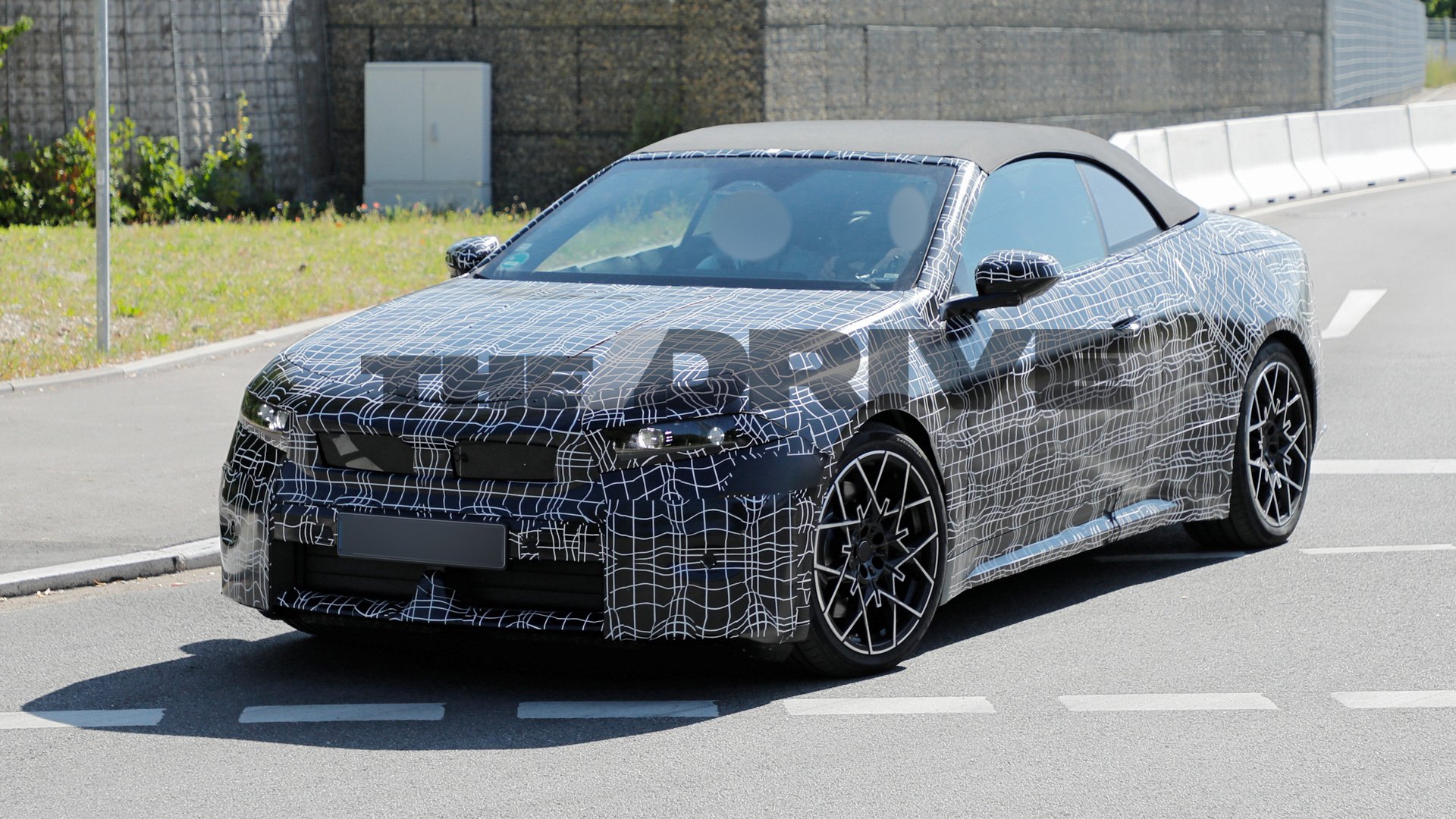


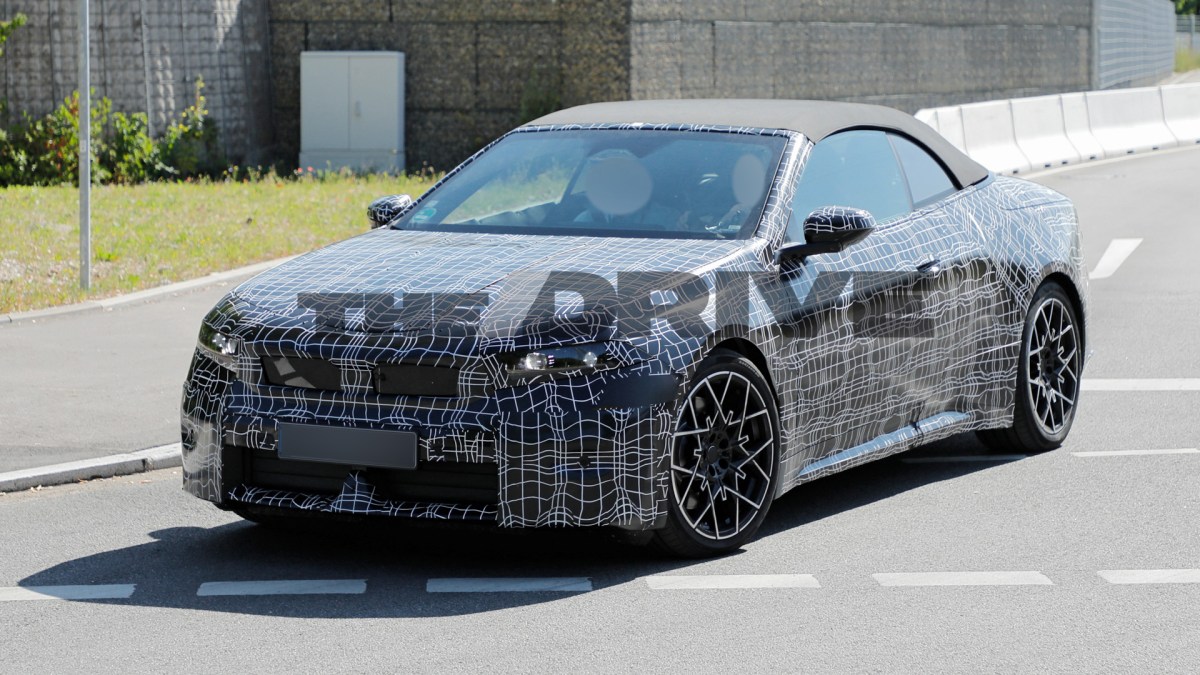
Spy photographers have caught a camouflaged BMW i4 Cabriolet prototype running on public roads, confirming what insiders have been whispering for months. The electric drop-top is targeting a 2028 model year launch and will wear BMW’s Neue Klasse design language. It appears to use a traditional cloth soft top rather than a folding hardtop.
That last detail matters from an engineering standpoint. Every pound counts in an EV, and a fabric roof saves meaningful weight over the complex mechanism of a retractable hardtop. BMW’s engineers clearly chose range over rigidity on this one.
The convertible EV segment barely exists. Maserati’s GranCabrio Folgore is the only real player right now, and its sales numbers haven’t exactly set the world on fire. Polestar once had grand ambitions for its stunning Polestar 6 roadster concept, but that project got delayed repeatedly and will almost certainly never reach production.
BMW, unlike Polestar, actually knows how to build and sell convertibles at scale. The 4 Series Convertible has been a consistent earner, and the 2 Series and 8 Series have kept showrooms stocked with open-air options. This isn’t a startup’s fantasy sketch. It’s a calculated product extension from a company with decades of soft-top expertise.
The current i4 lineup spans four configurations, all as four-door Gran Coupe sedans. Power ranges from the 335-horsepower eDrive40 up to the M60, with range running from roughly 230 to 330 miles depending on the variant. A convertible body will inevitably cut into those numbers through added weight, worse aerodynamics, and structural reinforcement needed to compensate for the missing roof.
The skateboard architecture of modern EV platforms could actually work in the convertible’s favor, though. Battery packs integrated into the floor create inherent structural stiffness that traditional combustion convertibles never had. Whether that advantage offsets the penalties of open-air motoring remains to be seen.
Industry sources suggest BMW will also release a hardtop i4 coupe around the same timeframe, though both body styles may arrive in the United States later than in Europe. A BMW dealer contact noted that US allocations for the iX3 are already constrained because European demand is consuming most of the supply. If the i4 coupe and cabrio follow a similar pattern, American buyers might be waiting a while.
The broader picture here is that BMW is betting on emotional vehicles at a time when most EV makers are chasing crossovers and SUVs. Every startup with a battery pack wants to sell you a tall, heavy box. BMW is going the other direction, investing in a niche body style that has never made rational sense and never needed to.
Convertibles sell on desire, not spreadsheets. The question is whether enough buyers will pay what will almost certainly be a steep premium, likely well north of $60,000, for an electric four-seat convertible when the range penalty and price gap over the sedan could be substantial.
Production timing puts this car roughly three years out, which means plenty can change. Battery technology is advancing fast enough that the range hit might shrink before the i4 Cabriolet reaches dealers. The prototype is on the road, and the clock is running.
Share this Story