
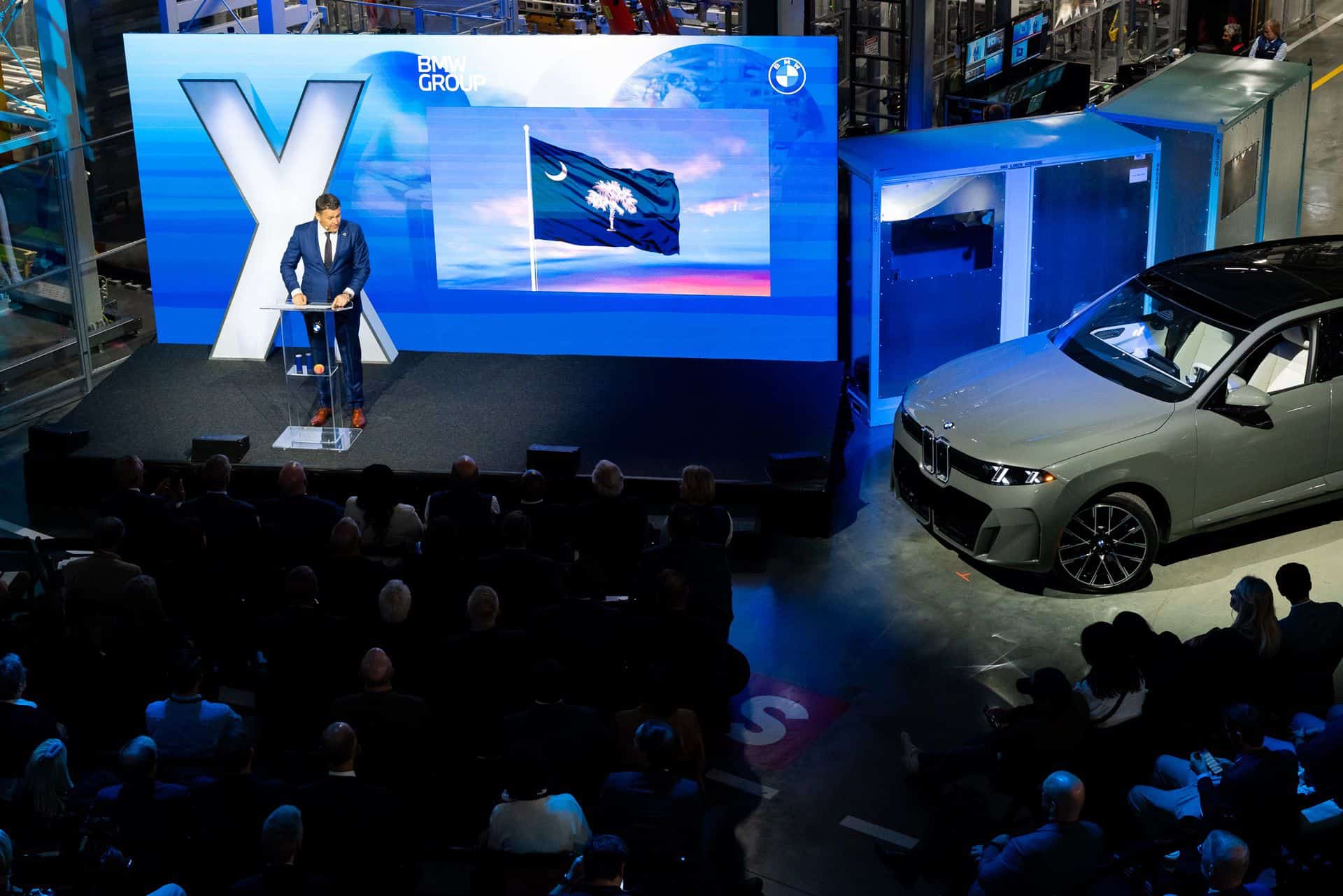


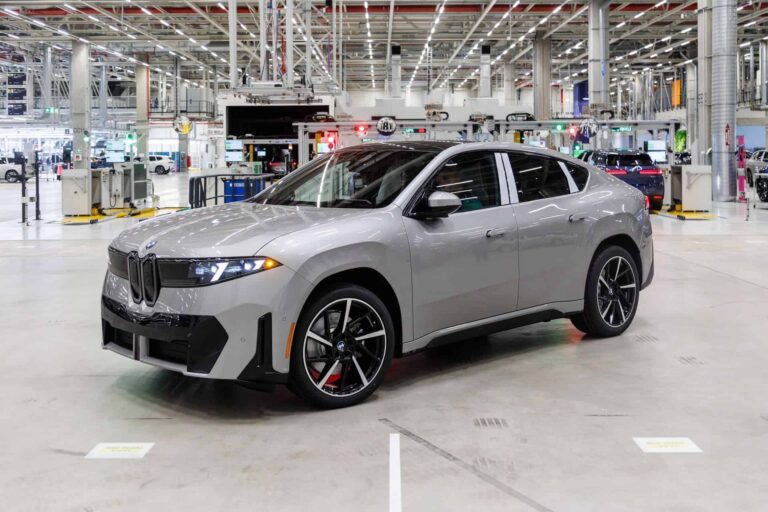
The first sixth-generation battery packs rolled off the line at BMW’s Plant Woodruff in South Carolina on November 13. They’re headed 15 miles down the road to Spartanburg, where they’ll power the iX5, the first fully electric BMW ever assembled in the United States.
It’s a real milestone. It’s also a pack plant, not a cell plant, and that distinction matters more than the ribbon-cutting suggests.
Robert Engelhorn, president and CEO of BMW Manufacturing in Spartanburg, called the opening a promise kept. BMW said it would build EVs in America by the end of 2026, and it’s on track to start iX5 production before the year runs out.
The hardware is serious. The US-spec iX5 60 xDrive carries a 144-kWh usable pack built from cylindrical cells 46 mm wide and 120 mm tall, which BMW says hold almost 30 percent more usable energy than the 95-mm cells in the iX3.
BMW’s preliminary range estimate is 435 miles, based on its own testing to EPA procedures. Peak charging is 460 kW. The price is $79,800 plus a $1,450 destination charge, so $81,250 out the door, with sales starting in the first quarter of 2027.
Now look at where the cells come from.
When BMW announced this project in 2022, its cell partner was AESC, which was building a factory in Florence, South Carolina, about two hours away. That was the local supply chain story. In June 2025, AESC paused construction, citing policy and market uncertainty.
AESC will keep supplying BMW in the meantime. The long-term answer is LG Energy Solution, which will ship Gen6 cells from its existing plant in Arizona starting in the late 2020s.
Not next year. Not a firm date.
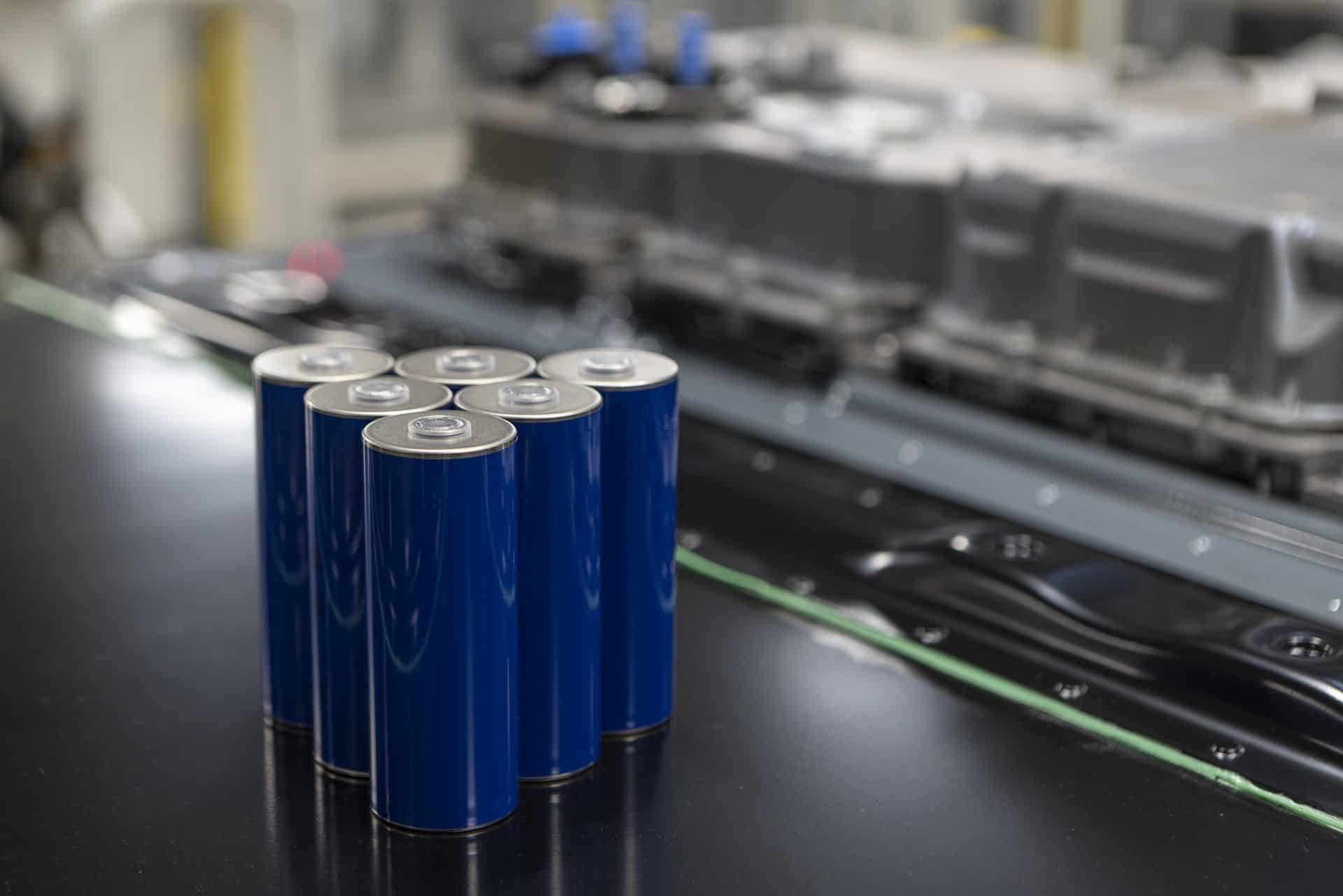
So the $700 million facility on a former peach farm does exactly what BMW designed it to do. It takes cells built to Munich’s specifications, checks every delivery, and turns them into finished packs. The cell engineering itself stays in Bavaria.
The assembly process is lean. BMW uses a cell-to-pack design with no modules. Cells get a voltage check, are grouped into clusters, connected to coolers, laser-cleaned and welded, with every seam inspected inline.
Foam then fills the pack and hardens around everything, locking it into a single mechanical unit. The housing is sealed and riveted, the Energy Master control unit goes in last, and each pack gets a full end-of-line inspection before it’s trucked out.
More than 300 people work there alongside about 250 robots. BMW planned the lines with digital twins, trained staff in a VR replica of the plant, and runs in-house AI agents on production data to chase zero defects.
It came together fast. Groundbreaking was in June 2023, construction began that September, equipment went in by September 2024 while walls were still rising, and pre-series packs arrived by summer 2025.
Woodruff is the fourth Gen6 plant to reach series production. Debrecen, Hungary, went first in October 2025.
Irlbach-Straßkirchen in Germany and Shenyang in China followed in October 2026. San Luis Potosí, Mexico, completes the five-plant network in 2027.
Woodruff will also feed the next electric X models from Spartanburg, with the iX6 and iX7 already expected. BMW has at least five more electric models due there by 2030.
So how many packs can Woodruff actually build in a year? BMW still won’t say.
Share this Story