
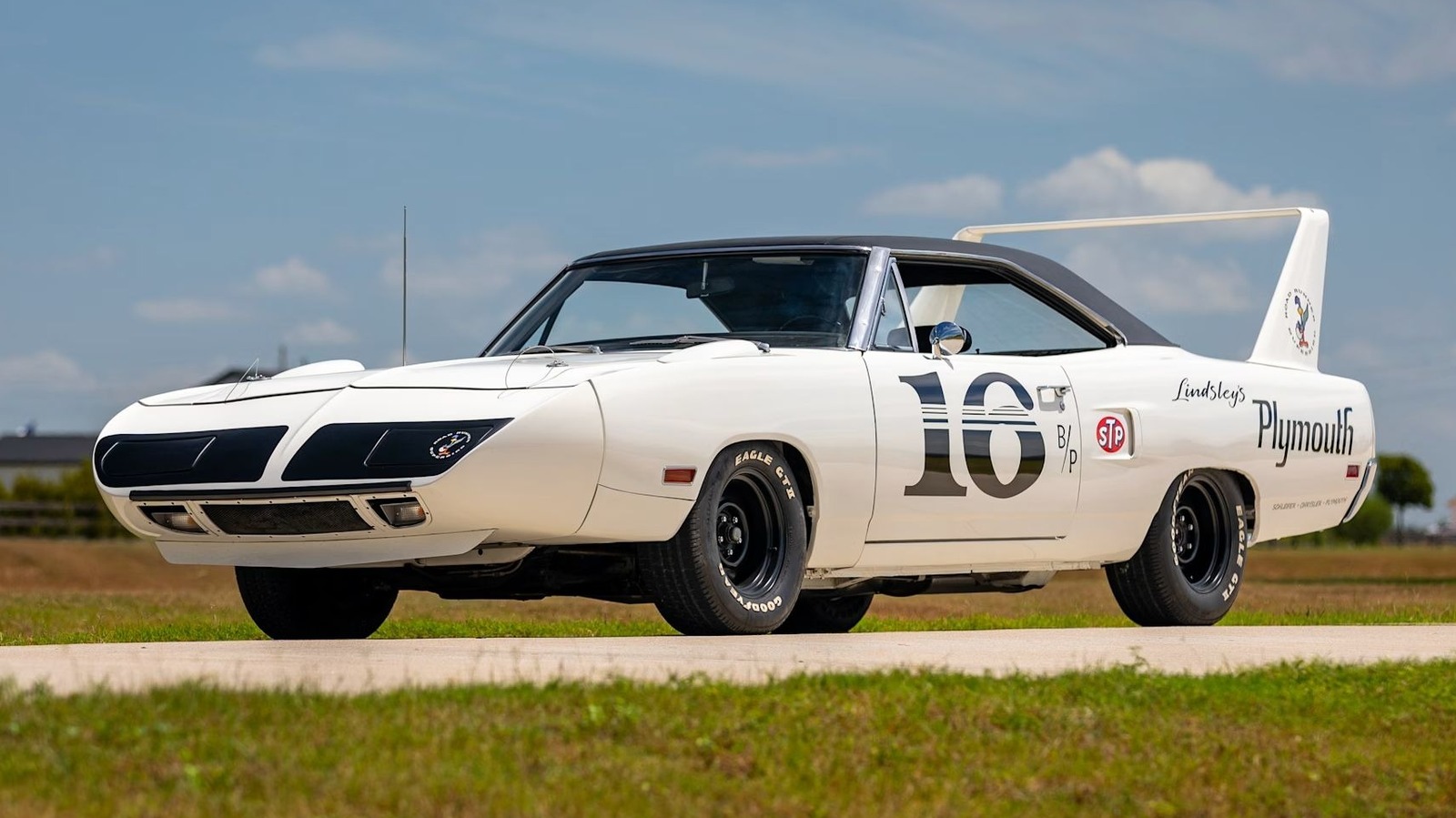


In 1975, a Plymouth Superbird ran 220 mph. That is faster than a Lamborghini Revuelto. It is faster than a Ferrari 849 Testarossa.
On January 15, that same car crosses the block at Mecum Auctions. It carries a racing résumé no other Hemi Superbird can match.
Plymouth built just 135 Superbirds with the original 426-cubic-inch Hemi V8. Good ones already trade for as much as $1.2 million. This one spent 18 years doing what most of its siblings only promised.
The Lindsley family bought it new. From 1970 to 1988, they ran it as a land speed car at the El Mirage dry lake bed and the Bonneville Salt Flats.
In 1971, Jim and Larry Lindsley became the first father-son team to break 200 mph, clocking a one-way run of 206 mph. Most families would have framed the timeslip and gone home.
The Lindsleys kept going. They swapped in race-prepped engines, kept chasing, and in 1975 cleared 220 mph.
For decades, people have mocked the Superbird’s towering rear wing as a cartoon. Plymouth built it to win on NASCAR’s high banks, then sold it to the public to satisfy homologation rules. On the salt, this car proved the thing worked.
Then the story turns, the way it does for nearly every race car that survives long enough to become valuable.
In 2000, long after its last run, the car got a full restoration. The original Hemi went back between the fenders. The race engines that pushed it past 220 mph did not stay.
Five years ago, it was restored a second time. It now wears the white livery from 1970 and 1971, the seasons of the 206-mph run, not the later 220-mph pass.
In 2023, it paced several NASCAR races at Houston Motorsports Park. A car that once hunted records led the field at parade speed.
In the photos, it looks good. The white paint is clean, and the chrome rear bumper and black wheels on Goodyear tires look sharp.
Inside, the black and white vinyl seats show their age, but not badly.
The odometer reads just over 14,500 miles. The listing doesn’t say whether that number belongs to the chassis or to the Hemi reinstalled in 2000.
For a car whose value rests on what it did with the throttle pinned, that’s a real gap. Serious bidders will want an answer before the gavel drops.
That’s the catch with this lot. Buyers pay for originality, and they pay for history. This Superbird offers both, just not at the same time.
The body that ran 220 mph is here. The engine in it now is the factory Hemi, the very one pulled out so the car could go faster.
The paint recalls the early runs. The pace car duty is the newest entry in the logbook.
None of it erases what the Lindsleys did. A father and son took a showroom Plymouth to the salt and outran cars that wouldn’t exist for another half century.
In January, Mecum will find out what a collector thinks that’s worth.
Share this Story