
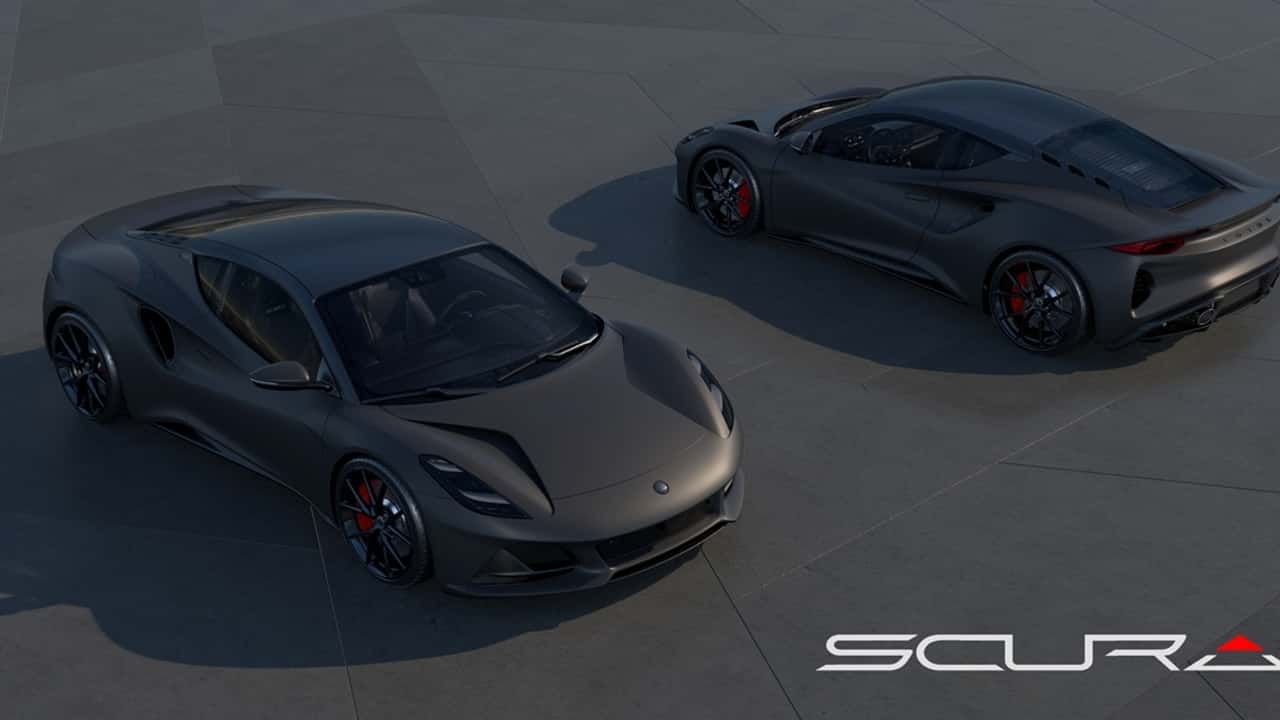


Sixty cars. That’s all North America gets of the Lotus Emira Scura, the first limited-edition variant of the brand’s mid-engined sports car. Production begins now, and the asking price buys you exactly what “Scura” — Italian for “darkness” — promises: a moody appearance package draped over a mechanically unchanged Emira.
No extra horsepower. No stiffer springs. No weight savings. Just paint and trim.
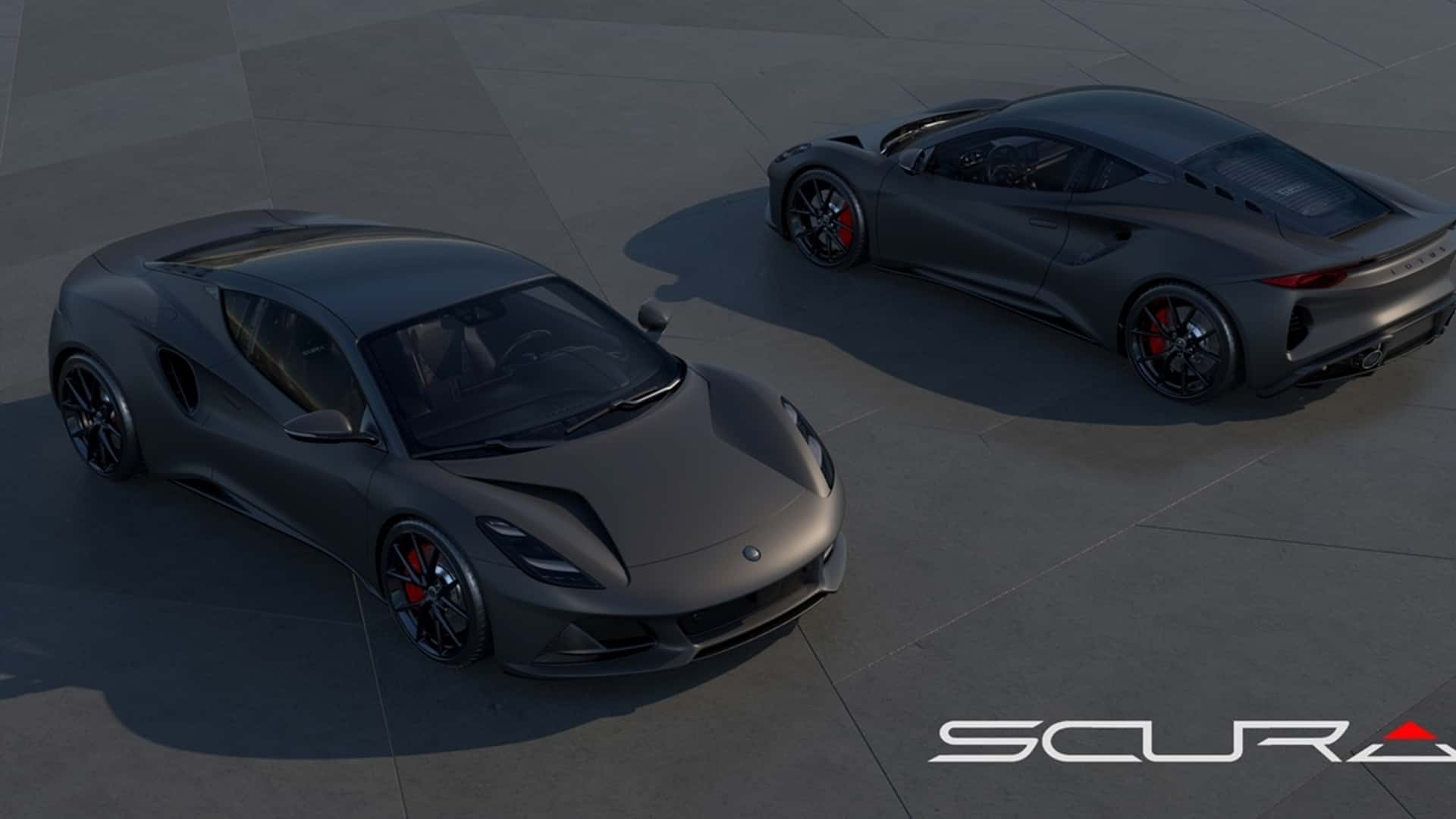
The Scura arrives wearing Satin Nebulous Grey matte paint, a gloss-black roof, black wheels, black exterior trim, smoked-looking lighting elements, and red brake calipers. Inside, black Alcantara with red stitching dominates the cabin, joined by a red steering wheel, red seat belts, Scura badging, and privacy glass. It sits on the Sport chassis with Michelin Pilot Sport Cup 2 tires, a KEF 10-speaker stereo, and the same suspension tune as any other Emira Sport.
The name is a callback, and a telling one. In 2009, Lotus rolled out the Exige Scura with matte black paint and dark accents — a cosmetic special that became a cult object among collectors. That the Emira gets the same treatment 17 years later signals Lotus knows exactly which lever it’s pulling.
The interesting omission is the engine. Lotus made no mention of whether the Scura is locked to the supercharged Toyota-sourced 3.5-liter V6 or the AMG-sourced turbocharged 2.0-liter inline-four. The V6 is the one purists want — it’s the only path to a manual gearbox, since the four-cylinder comes exclusively with a dual-clutch automatic.
If Lotus is letting buyers choose, the split will tell us a lot about where Emira customers actually stand on the stick-shift question.
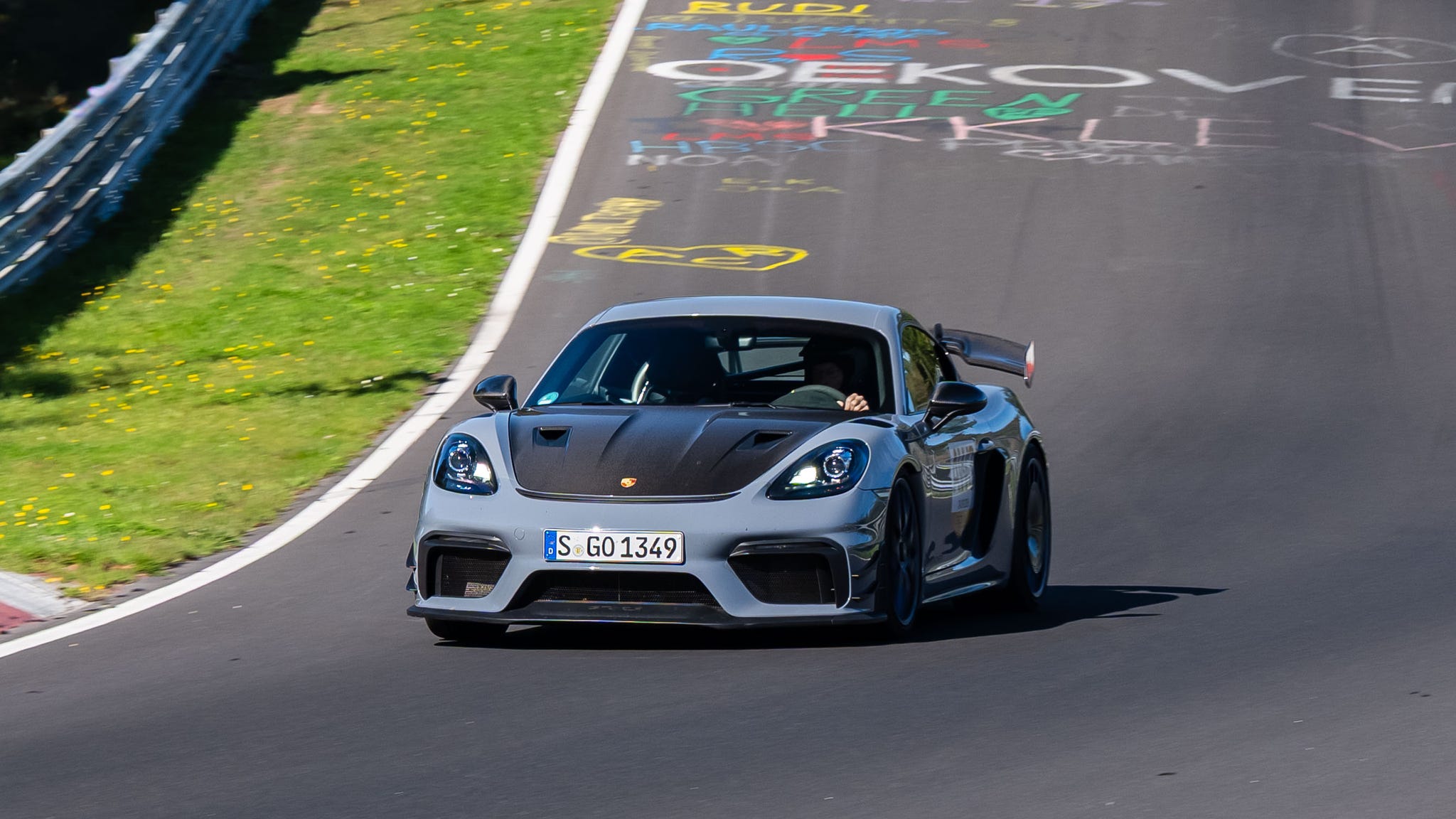
Lotus finds itself in a peculiar position. The Emira is the company’s last internal-combustion car, the final chapter before a full pivot to electric. It competes against the Porsche 718 Cayman, the Toyota GR Supra, and a thinning herd of analog-flavored sports cars. Every limited edition wrings a few more dollars and a few more headlines out of a platform that won’t be replaced with anything like it.
And that’s the real tension here. The Emira is genuinely good — sharp, communicative, rewarding in ways that increasingly few new cars manage. Yet Lotus is spending its creative energy on aesthetic packages rather than mechanical evolution. No lightweight track variant. No power bump. No stripped-out, caged special.
It’s a strategy borrowed from Porsche’s playbook, where paint-to-sample options and heritage editions print money without requiring engineering investment. Lotus, under Geely ownership and pouring capital into its Eletre SUV and electric future, clearly isn’t allocating development dollars to push the Emira’s mechanical envelope any further.
Sixty units will sell out quickly. Limited-run Lotuses always do. The Exige Scura now commands a five-figure premium over comparable models at auction. Speculators know the math.
But for buyers who actually drive their cars, the Scura is a $100,000-plus sports car distinguished from its showroom sibling by matte paint and stitching color. The chassis underneath remains one of the best in the segment. It deserved more than a costume change for its first special edition.

Share this Story