
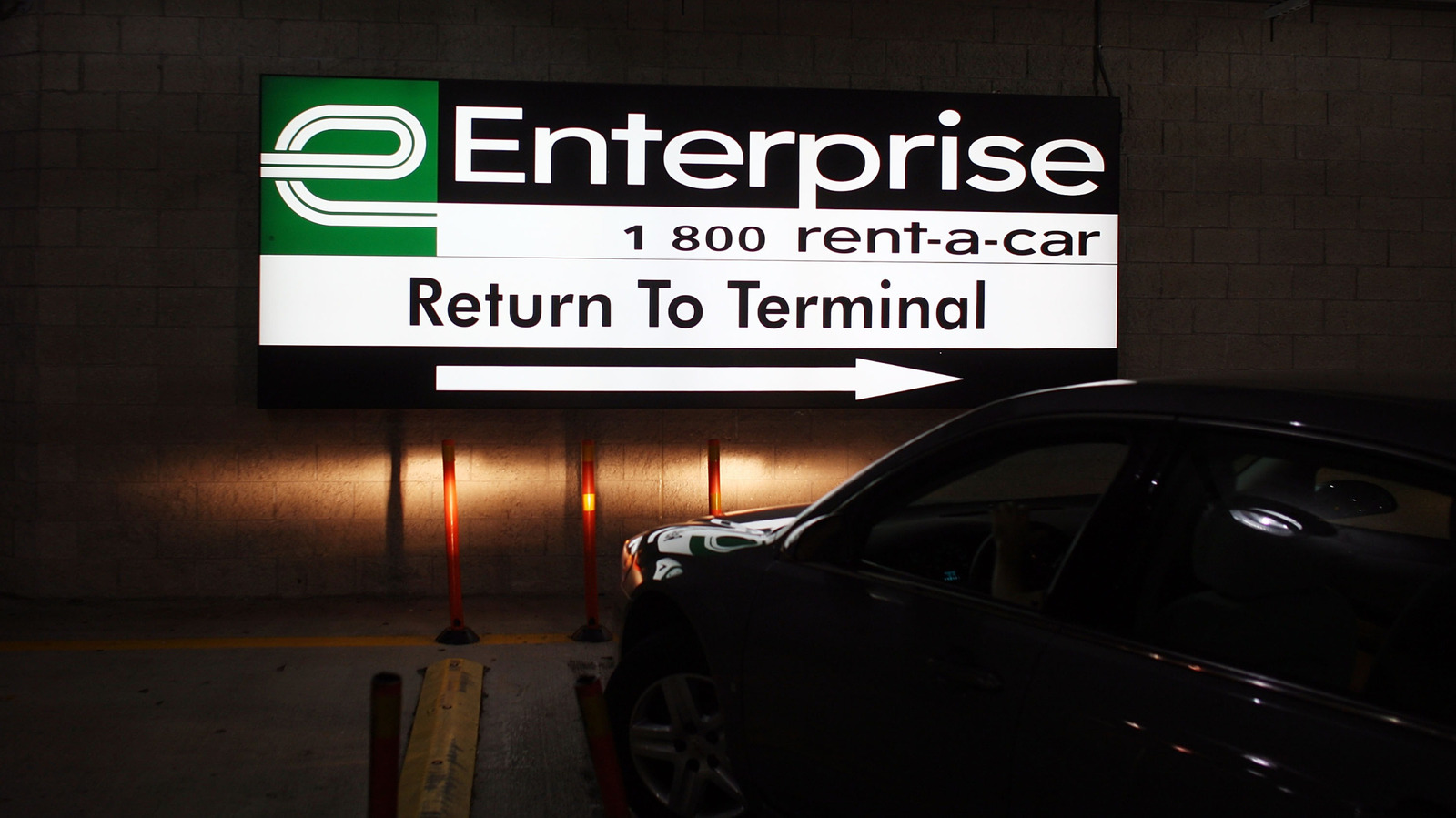


Kelly and Katherine Graves had been home a week from an uneventful trip around Edmonton, Alberta, when Enterprise told them they owed $9,500. The reason: diesel fuel had allegedly been found in the engine of their 2025 Dodge Durango rental. The SUV wouldn’t start, Enterprise said. Pay up or file an insurance claim.
The couple did neither. They fought back. And the evidence they assembled makes Enterprise look like it never bothered to investigate before sending the bill.
Start with the vehicle itself. The 2025 Durango uses a capless fuel system engineered specifically to reject a diesel nozzle. Diesel pump handles are wider than gasoline handles, and the filler neck on a gas-only vehicle physically won’t accommodate one. The Graves couldn’t have misfueled the Durango even if they’d tried.
Then there are the receipts. The couple stopped for gas on their way back to Edmonton International Airport, about 50 kilometers from the station. The pump cut off prematurely, forcing two separate transactions.
They kept both receipts, which show just over 48 liters of regular gasoline purchased. They also snapped a photo of the pump itself. It dispensed regular, mid-grade, and premium. No diesel option existed at that nozzle.
And the drive back? Smooth, Kelly Graves told CBC. No misfires, no rough idle, no sputtering.
A mechanic later confirmed that a Durango running on a tank of diesel wouldn’t have made it 50 kilometers without serious problems. Diesel is thicker than gasoline. It clogs injectors, fouls filters, and chokes fuel lines in an engine tuned for gas.
The couple returned the SUV to National Car Rental, an Enterprise subsidiary, at the airport. The vehicle was processed without issue. No flags, no notes, no damage report at the counter.
A week later, the email arrived. Five days after that, a follow-up. The Graves pushed back both times with their documentation, then heard nothing and thought it was over.
Nine months later, an actual bill for $9,500 landed in their mailbox. Kelly and Katherine turned their dining room into what amounted to a war room, assembling every receipt, photo, and record they had.
They hired lawyer Abu Khurana, who made the obvious point: Enterprise needed proof the couple caused the damage before demanding payment. “They can’t just issue an invoice and expect a payment without any evidence,” Khurana said.
Once CBC’s Go Public team and legal counsel started asking questions, Enterprise folded. The company dropped the claim, issuing a statement that it was “unable to verify additional details regarding the fuel source” due to the time elapsed since the incident.
Read that again. Enterprise pursued the Graves for nearly a year, then admitted it couldn’t verify where the diesel came from. That verification problem existed from day one, before the first email, before the nine-month gap, before the $9,500 demand letter.
The capless filler neck alone should have killed the claim in minutes. The receipts should have buried it. The photo of a pump that doesn’t even dispense diesel should have been the last nail.
Instead, a retired couple spent the better part of a year under financial threat from a company with $35 billion in annual revenue. They were defending themselves against an accusation that the laws of physics and basic automotive engineering had already disproven.
The Graves say they’ll rent from someone else next time. Hard to argue with that. But the deeper question is how many renters get a bill like this and just pay it, with no receipts, no photos, no lawyer, and no CBC investigation.
Enterprise’s willingness to pursue a claim this flimsy for this long suggests the Graves might not be an anomaly. They’re just the ones who kept the paperwork.





Share this Story