
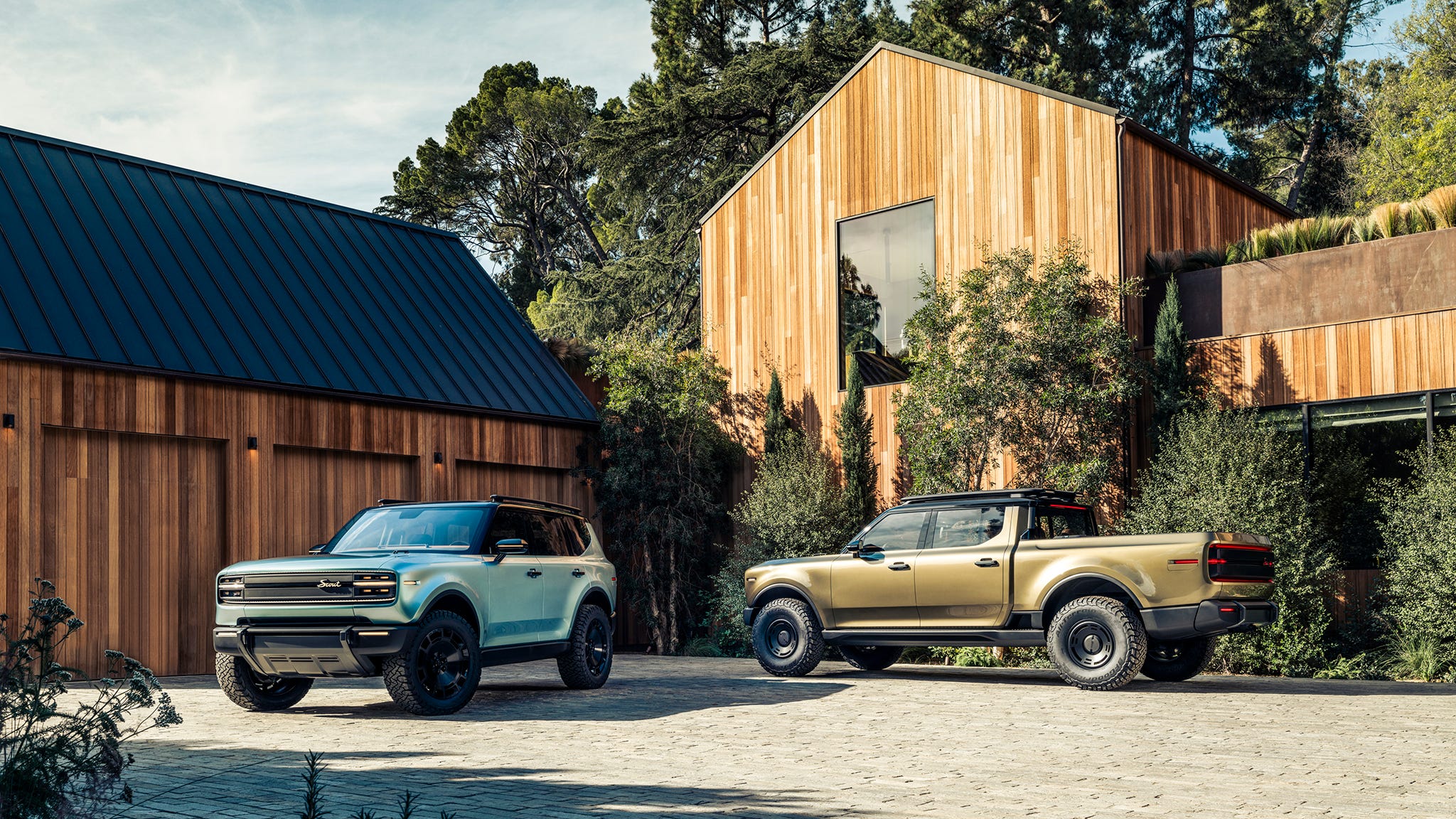


Scout Motors has 160,000 reservation holders. Nearly nine out of ten want the version with a gas engine.
That single data point, dropped by CEO Scott Keogh at an Automotive Press Association event, tells you everything about where the American truck and SUV buyer’s head is in 2025. The Volkswagen-backed startup built its identity around rugged electric capability, but the overwhelming demand is for the Harvester extended-range electric vehicle. That’s the one with a combustion engine onboard acting as a generator, a smaller 63-kWh battery good for roughly 150 miles of electric range, and a combined 500-mile reach.
Only 13 percent of those hand-raisers want the pure battery-electric version.
The split between vehicles is just as telling. Three-quarters of reservation holders want the Traveler SUV. One-quarter want the Terra pickup. Scout is not, at least in the eyes of its earliest would-be customers, a truck company.
But there’s a catch buried in these numbers that Keogh didn’t dwell on. The EREV Terra’s towing capacity drops from 10,000 pounds in pure BEV form to just 5,000 pounds. That’s a brutal haircut, and it’s happening on the variant that almost everyone wants. Whether those 160,000 hand-raisers understood that tradeoff when they clicked “reserve” is an open question nobody at Scout seems eager to answer directly.
The competitive landscape makes it sharper. Ram’s upcoming REV and the next-generation Ford F-150 Lightning EREV are both expected to tow roughly three times what Scout’s Harvester truck can manage. If you’re a buyer who wants an EREV truck that can actually work like a truck, Scout may have already priced itself out of the conversation before delivering a single unit.
Keogh used the APA appearance to manage expectations on launch timing, though specifics remained thin. He hinted at the engine choice for the Harvester’s range extender without confirming it, and whatever powerplant Scout selects will likely dictate how fast the brand can get to market. Building a vehicle from scratch is one thing. Building the supply chain for a bespoke powertrain configuration inside a startup structure, even one bankrolled by the world’s second-largest automaker, is something else entirely.
And then there’s the sales model. Scout is committed to selling direct to consumers, bypassing the traditional dealer franchise network. That fight is far from settled. Multiple legal challenges argue that Volkswagen Group’s corporate ownership should grandfather Scout into existing franchise laws, meaning the brand would be forced to sell through dealers like every other VW subsidiary.
Keogh’s confidence on this front is notable, but courtrooms have a way of humbling confident executives.
The irony of Scout’s position is hard to miss. A brand resurrected specifically to capture electric-truck enthusiasm is discovering that its customers mostly want the version that keeps a gas engine in the loop. The BEV models offer superior towing and presumably better performance metrics, yet the market is screaming for the compromise machine. It’s the one that soothes range anxiety even if it surrenders capability.
Scout is building a startup around an audience that doesn’t fully trust the core technology. That’s not fatal, but it shapes every decision from here forward. Which variant gets priority production allocation, how marketing dollars get spent, and whether the pure EV versions ever find a real constituency.
Keogh has 160,000 people watching. Most of them want a gas engine and an SUV. The question is whether Scout can deliver either one before Ram and Ford make the whole exercise academic.
Share this Story