


Ford Motor Co. sold 8.8% fewer vehicles in the first quarter of 2026 than it did a year ago. Its revenue climbed 6% to $43.3 billion. Net income hit $2.5 billion.
Adjusted earnings landed at 66 cents a share, crushing Wall Street’s 19-cent estimate. The math is simple: sell fewer vehicles, but make sure each one rolling off the lot carries a fatter margin. Ford is executing that playbook with real precision right now, even as fires, wars and tariffs conspire against it.
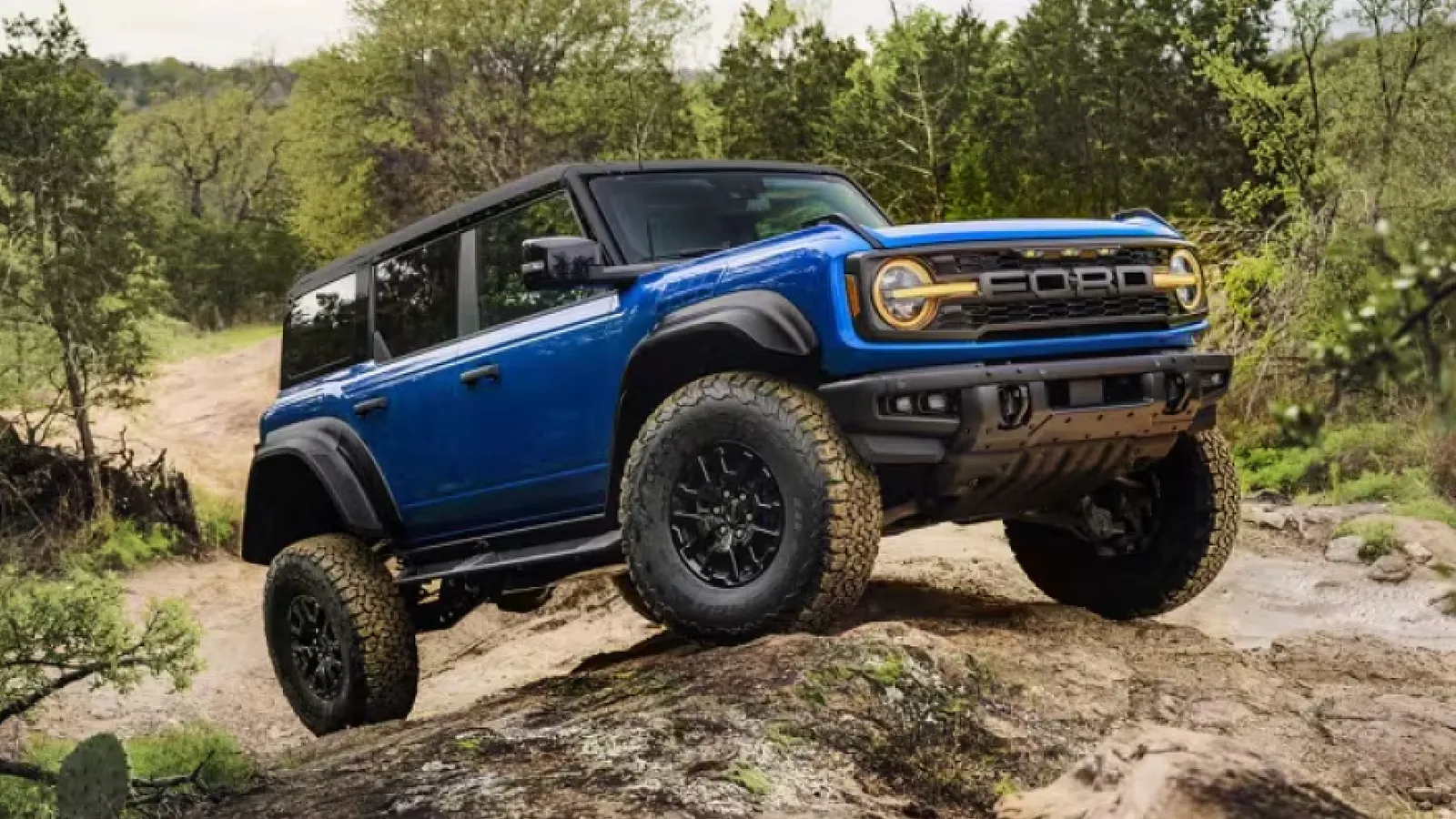
Combined sales of the Bronco, Explorer and Expedition jumped 17.9% year over year, the best first-quarter start for those nameplates since 2002. Expedition alone surged 30.2%. Explorer climbed 29.7%.
Off-road performance trims — Raptor, Tremor, FX4 — accounted for 23.5% of Bronco sales. Explorer Active and ST-line trims rose 36.8%. These aren’t base models destined for rental fleets.
These are $55,000-and-up trucks and SUVs with leather, tech packages, and margins that make the finance team smile.
Ford Blue, the traditional combustion and hybrid division, earned $1.94 billion in EBIT during Q1 — a staggering leap from $96 million in the year-earlier period. That single number tells you more about Ford’s pivot than any strategy deck.
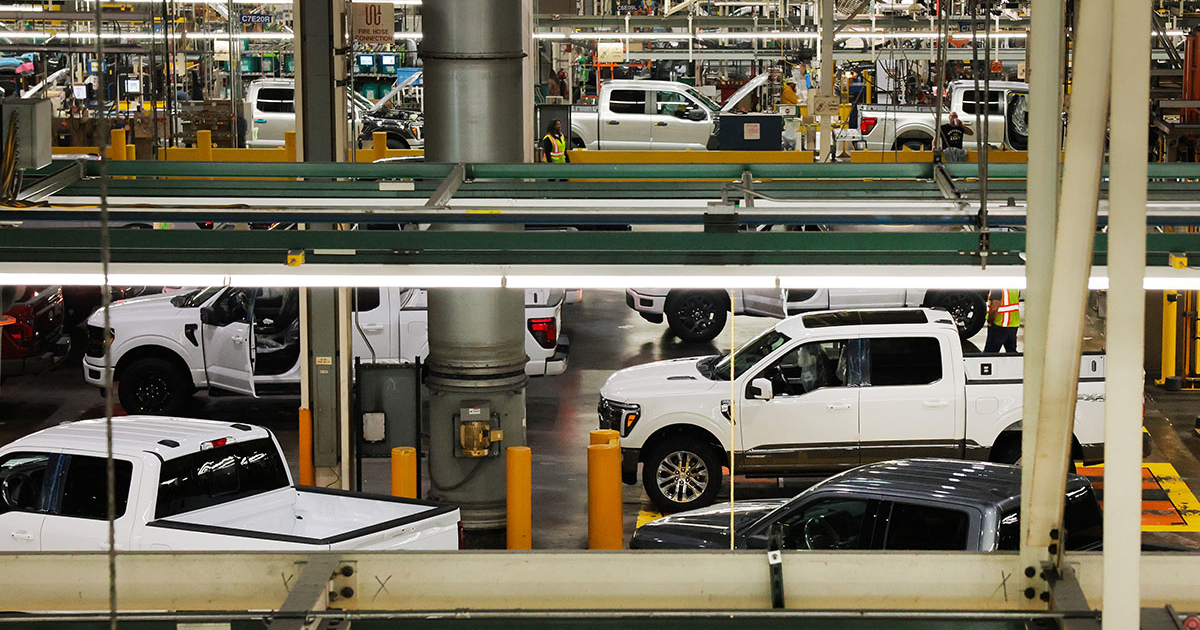
F-Series sales dropped 16% to 159,901 units, still enough to hold the best-selling truck crown but clearly constrained. The Novelis aluminum mill fire in New York continues to choke supply, and Ford doesn’t expect production to normalize until the second half. The company has been importing aluminum at tariff-inflated prices to keep lines moving.
CFO Sherry House said dealers are managing tight inventory by prioritizing high-demand trims.
Ford raised its full-year EBIT guidance by $500 million, now expecting $8.5 billion to $10.5 billion. But the raise was modest relative to the Q1 blowout, and the caution is deliberate.
Commodity costs — steel, aluminum — are now expected to strip $2 billion from earnings, double the previous estimate, driven partly by the Iran conflict that began in late February. Ford also flagged a $1 billion tariff hit for the year, even after the Supreme Court struck down several of President Trump’s levies. A $1.3 billion one-time benefit from that ruling landed in Q1 but won’t repeat.
The stock dropped 2% in after-hours trading despite the earnings beat. Investors read the fine print.
Ford Pro, the commercial arm, delivered $1.68 billion in EBIT on $14.7 billion in revenue, with paid software subscriptions hitting 879,000 — up 30%. Model e, the electric vehicle unit, lost $777 million, an improvement over last year’s $849 million loss but still a deep hole. U.S. EV sales cratered 70% after Ford killed the F-150 Lightning.
Doug Field, the top EV executive, departed this month. His responsibilities were absorbed by COO Kumar Galhotra.
CEO Jim Farley is betting the future on flexibility. He wants 90% of Ford’s global models to offer electrified powertrains — hybrids, extended-range EVs, full battery electrics — without multiplying nameplates. The Universal Electric Vehicle platform, developed by a skunk works team in California, is slated for 2027 production at Louisville Assembly.
It’s designed to handle multiple vehicle types, battery chemistries, and powertrain configurations on a single architecture. “We’re applying their advanced tools and physics-based cost modeling to the highest-volume internal combustion and hybrid lines,” Farley said. Translation: the lessons from EV development are being reverse-engineered into the trucks and SUVs that actually print money.
Ford burned $1.9 billion in adjusted free cash flow during the quarter, spending heavily on energy storage and a $30,000 electric pickup due next year. The company is simultaneously investing in its future and milking its present. That balancing act works only as long as Americans keep paying premium prices for Bronco Raptors and Platinum Expeditions.
Right now, they are. The question is whether war-driven inflation, cratering consumer sentiment, and tariff whiplash change that equation before Ford’s next chapter arrives.
Share this Story