
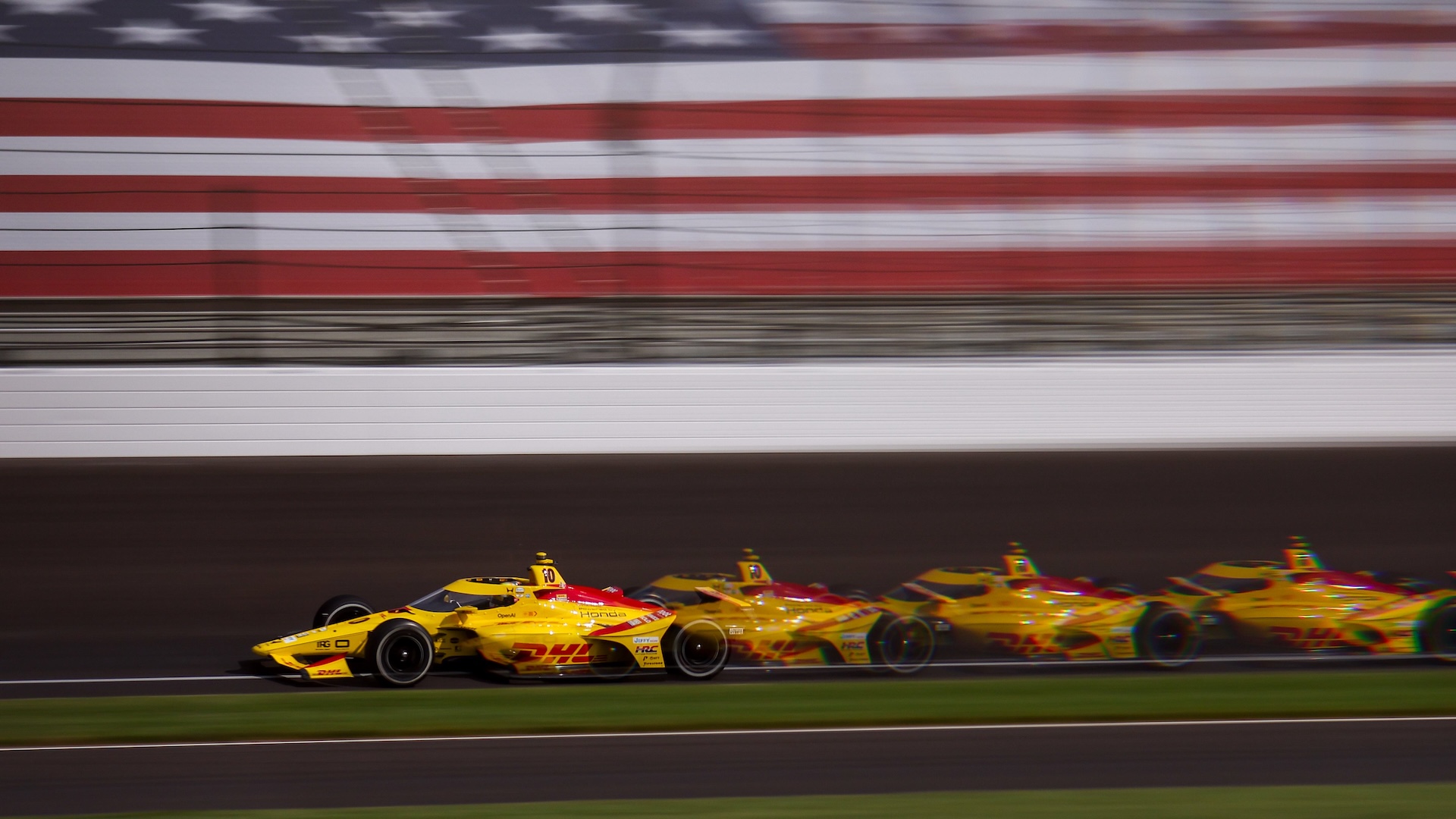


Alex Palou’s pole-winning run at Indianapolis Motor Speedway hit 242 mph on the main straight and 240 entering Turn 1. That’s faster than an Airbus A380 needs to lift off. Palou wasn’t lifting off. He was turning left.
Qualifying for the 2025 Indy 500 compressed into a single pressure-cooker Sunday after heavy rain wiped out the entire first day. The usual two-day format, with its built-in safety valve of do-over runs, was gone. Every driver got one shot. No mulligans. No second chances to chase better grip or calmer wind.
The consequences showed immediately. Two-time winner Takuma Sato managed only 13th. Four-time winner Helio Castroneves slotted into 16th. Seven former Indy 500 champions couldn’t crack the top 10. Experience, in a compressed format with gusty crosswinds, bought you almost nothing.
Palou made it look like a different sport entirely. His 850-horsepower Honda hybrid was banging the 12,000-rpm limiter through every inch of the 2.5-mile oval. His hands barely moved on the wheel — tiny, surgical inputs that looked almost lazy on camera but were managing a machine covering 352 feet per second.
That’s 1.17 football fields every tick of the clock. A top-fuel dragster is quicker, but only in a straight line and only for a heartbeat. Palou held that pace through four consecutive laps of left-hand turns, banking on downforce generated almost entirely by underbody aerodynamics. The superspeedway rear wings at Indy are essentially flat plates. They’re decorative.
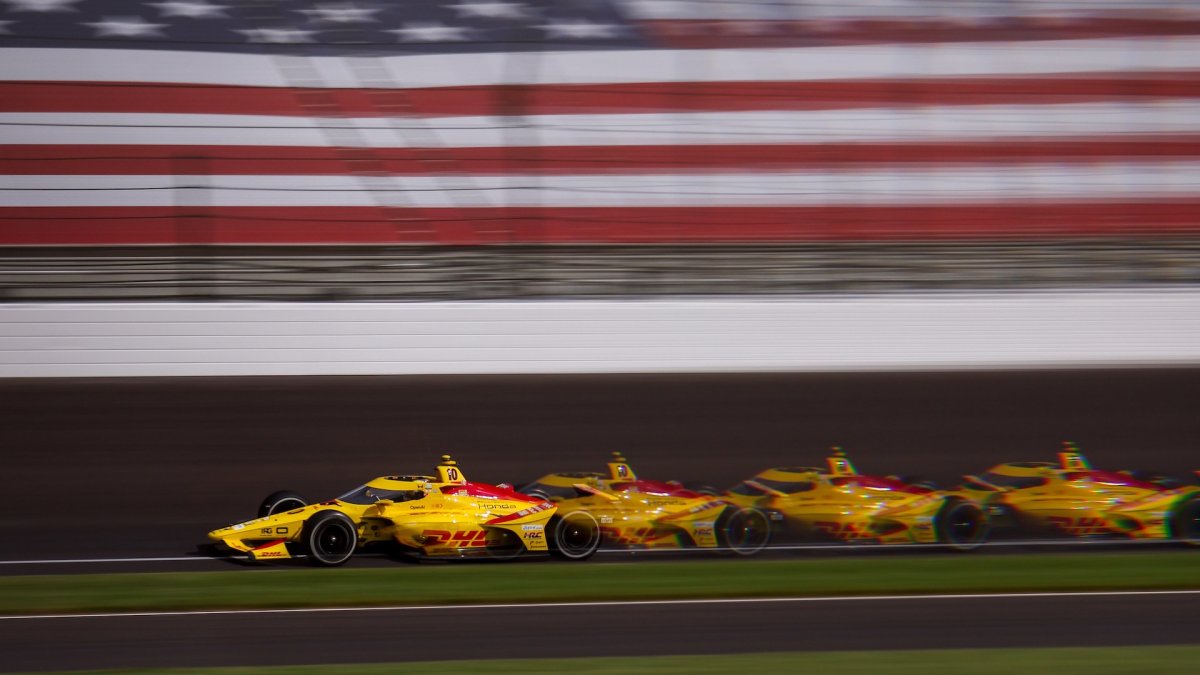
The revised format split qualifying into three rounds: all 33 cars ran once, the top 12 advanced to a second run, and the fastest six fought it out in a final shoot. Felix Rosenqvist put his Honda near the sharp end. Alex Rossi did the same with his Chevrolet. But Palou, the defending race winner, owned the day without a single sketchy moment.
Stand at the pit wall during an Indy qualifying run and you see something television cannot transmit. The car doesn’t look like it’s driving. It looks like it’s hovering — a red-and-yellow missile skimming the pavement with an almost imperceptible drift toward the outside wall before the nose rotates into the corner. There’s a fraction of a second where physics seems to pause, where the car appears to defy what concrete and rubber and air should allow.
That visual illusion is the product of engineering so precise, and driving so exact, that the margin between pole position and catastrophe is measured in millimeters of steering input and single digits of tire pressure. One gust at the wrong moment, one degree too much heat in a right-rear Firestone, and the narrative flips from triumph to disaster. The compressed schedule only sharpened that knife edge.
Indy qualifying has always carried a specific kind of dread. A lone car, no traffic to hide behind, four naked laps where the stopwatch and the laws of physics are the only opponents. This year stripped away even the procedural cushion. What remained was the rawest version of the exercise — a single attempt to be perfect at a speed that doesn’t forgive imperfection.
Palou was perfect. The veterans behind him were merely fast. At Indianapolis, that gap has always been the difference between the front row and the middle of the pack.
This year it was just more visible, more compressed, and more brutal than usual. The 500 itself will be run in traffic, with strategy and pit stops and the chaos of 33 cars fighting for space. But for one Sunday afternoon, the show belonged to one driver doing four laps alone, and making 240 mph into a corner look like the most natural thing in the world.
Share this Story