
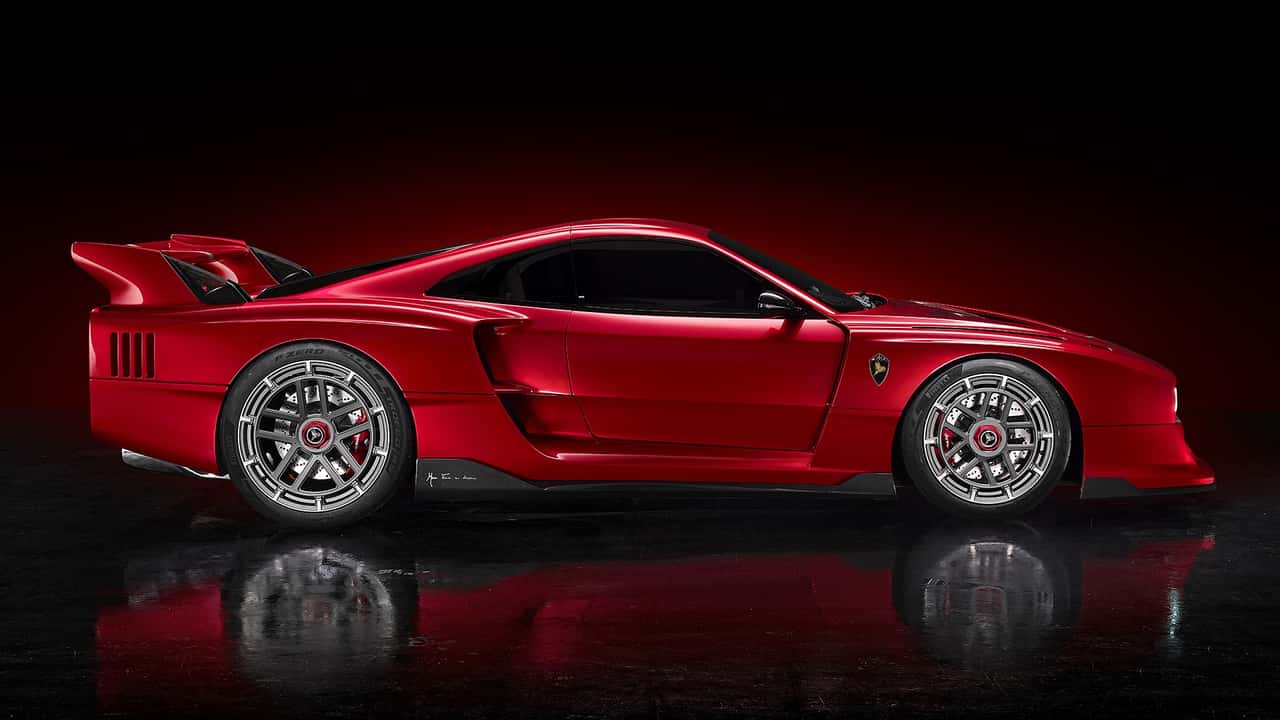


A tiny Italian coachbuilder best known for reimagining 1980s Lancia rally cars just showed up at Villa d’Este with a clean-sheet hypercar packing a Koenigsegg twin-turbo V8. That sentence alone should stop you cold.
Kimera Automobili unveiled the K39 on the shores of Lake Como, and the spec sheet reads like a fantasy garage door poster. The bespoke 5.0-liter V8, developed in partnership with Koenigsegg, makes 972 horsepower at 7,350 rpm and 885 pound-feet of torque at 5,500 rpm. The target curb weight sits just north of 2,400 pounds.
Do the math and you’re looking at roughly one horsepower for every 2.5 pounds of car.
Luca Betti’s Piedmont-based company built its reputation on the EVO37 and EVO38, gorgeous restomods that proved a small shop could deliver obsessive quality. The K39 is a different animal entirely. No donor car, no nostalgia crutch — this is Kimera trying to shoulder its way into the hypercar conversation alongside Pagani, Koenigsegg itself, and the other low-volume titans.
The bodywork pulls from 1980s World Sportscar Championship silhouettes — long hood, low roofline, wide haunches — but filtered through contemporary aerodynamic engineering. An S-duct up front manages airflow in a way those Group C prototypes never could. The rear wing and extraction surfaces nod to endurance racers of the era without becoming a costume.
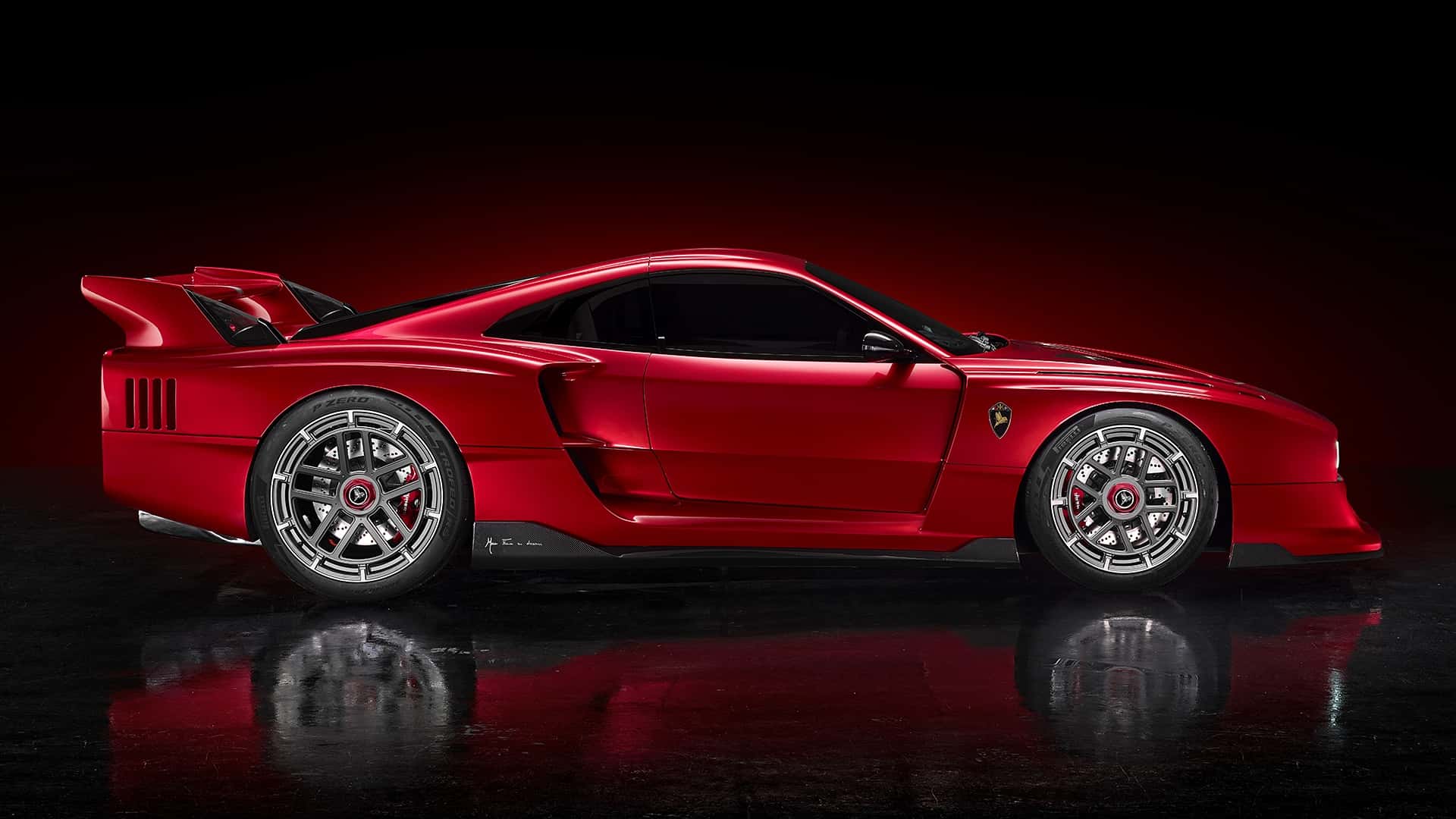
Kimera also showed a “Pikes Peak” variant alongside the standard car, loaded with additional aero and a track-tuned setup while somehow remaining street-legal. The first ten buyers get access to this configuration, which tells you everything about where Betti’s ambitions really lie.
The Koenigsegg partnership goes deeper than just bolting in a crate engine. The V8 was specifically retuned for the K39, with a lighter forced-induction system optimized for throttle response over peak output. It meets current emissions standards and connects to Koenigsegg’s cloud platform for over-the-air software updates.
That a car designed to evoke 1985 can receive wireless calibration changes is the kind of beautiful contradiction the hypercar world thrives on.
Then there’s Dallara. The Italian chassis and aero specialists from Parma are involved in a technical consulting and shared development role. When a company that builds Formula 2 and IndyCar chassis lends its engineering to your road car, you’re not playing around.
More than 20 examples have already been allocated to buyers, sight unseen until the Villa d’Este reveal. No pricing has been announced, but the constellation of partners and the exclusivity involved virtually guarantee a figure well north of two million dollars. This is not a volume play.
The K39 will tour through Goodwood, Monterey Car Week, Spa-Francorchamps, and Le Mans Classic in the coming months. At Le Mans, Betti himself plans to drive a period race car that inspired the K39 project — a theatrical touch, sure, but one that connects his company’s past to its most audacious bet yet.
What Kimera has assembled here is an Italian hypercar with a Swedish heart and motorsport-grade bones. The company has no racing heritage of its own to lean on, no decades-long dynasty like Ferrari or Lamborghini. It has a handful of brilliant restomods and a willingness to pick up the phone and call Koenigsegg and Dallara.
Whether the K39 delivers on the promise of that spec sheet remains to be seen. Development is still being finalized, and there’s a long road between a show car on the lawns of Lake Como and a validated production vehicle. But the ingredients are absurd, the ambition is real, and twenty-plus buyers have already written checks against the dream. In this corner of the market, that’s how empires begin — or how they flame out spectacularly.
Share this Story