
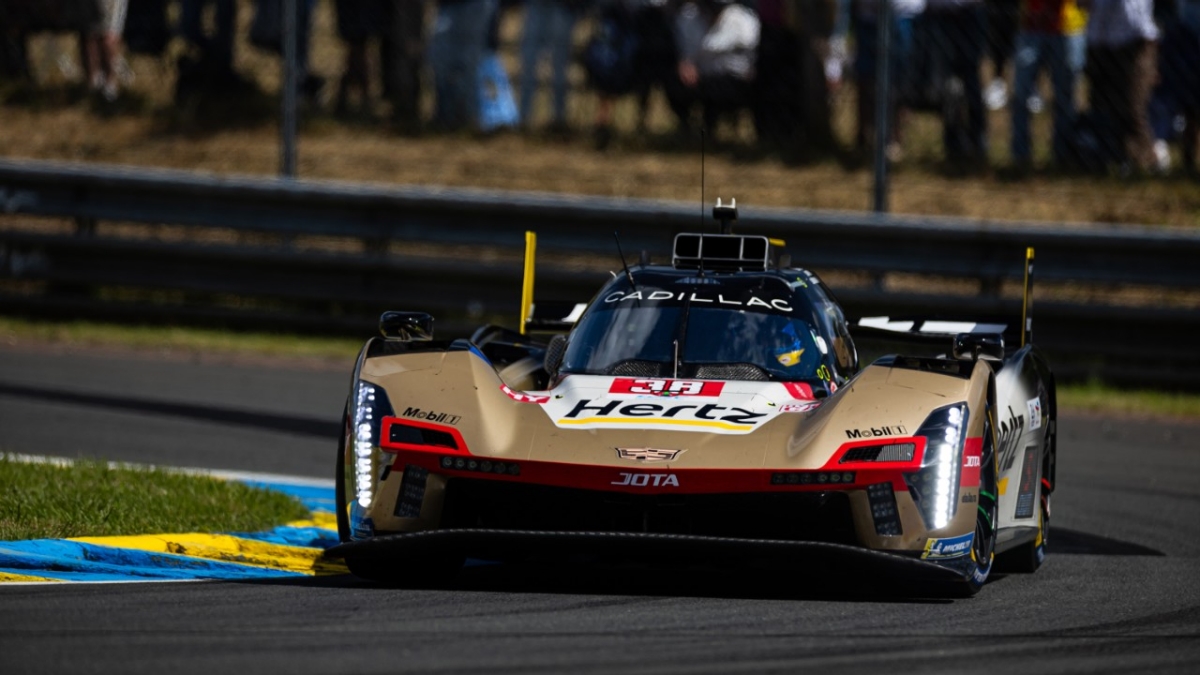


Sébastien Bourdais has started 18 editions of the 24 Hours of Le Mans. He has three second-place overall finishes. He has never won the thing outright. And this weekend, at 46 years old, the Frenchman who grew up within earshot of the Mulsanne braking zone lines up again in the No. 38 Cadillac Hertz Team Jota V-Series.R, chasing the one result that has eluded a career most drivers would kill for.
“Maybe it’s the year,” Bourdais said, with the careful optimism of a man who has been burned by 24-hour racing before.
The four-time Champ Car champion — 31 wins and poles across 73 starts in that series, a run of dominance he calls the defining stretch of his career — doesn’t need Le Mans to validate anything. But Le Mans is different. It’s personal. He watched glowing brake discs from the outside of the track when he was five.
His father, a racer himself, competed at the same event, and the two even raced the same year in different cars. The Bourdais family wasn’t wealthy. The kid from Le Mans only got to racing because his father’s network of friends pooled resources in an era when motorsport was still occasionally accessible to people without trust funds.
“I wouldn’t be here if my dad had not done everything he’s done for me,” Bourdais said. “He’s never raced go-karting or open-wheel so he wasn’t trying to tell me what to do but he always made sure I was getting what I needed.”
That lack of pretension runs through Bourdais like a crankshaft. Ask him how he prepares differently for Le Mans and he shrugs it off. The process is the same — Silverstone test, simulator work in Indianapolis, set-up optimization.
The 24-hour format just means more runtime, more qualifying sessions, more spare parts, more bodies on the crew. For the drivers, it’s less about peak physical performance and more about fatigue management. Hydration through the week, no last-minute heroics in the gym.
He’ll share the cockpit with Earl Bamber and Jack Aitken, running under the Cadillac banner that has made serious commitments to the Hypercar class. Cadillac’s V-Series.R program represents General Motors’ most ambitious sportscar racing effort in years. Having a driver with Bourdais’ institutional knowledge of La Sarthe is the kind of advantage no simulator can replicate.
Bourdais has contested Monaco, Indianapolis, Le Mans — the triple crown of motorsport’s most storied venues. He understands that what separates these races from everything else is weight. The weight of history, of names carved into the record books, of legacies that outlast careers.
Everybody wants to win because you want to be thought of that history of the sport that you love so much,” he said.
Three times he has finished second overall at his home race. Three times someone else’s name went on the trophy. In endurance racing, the gap between triumph and heartbreak is a mechanical failure at hour 22, a tire issue under darkness, a pit stop that costs four seconds too many.
The 2025 Le Mans field is stacked with factory-backed Hypercar entries from Toyota, Ferrari, Porsche, Peugeot, BMW, Lamborghini, and Alpine. Cadillac sits in that mix as both newcomer and serious contender. The team is backed by the engineering resources of General Motors and fielding drivers who know what it takes to be there at dawn on Sunday.
Bourdais doesn’t talk about destiny or fate. He talks about process, preparation, and the reality that you lose more than you win even in the best careers. But there’s something in the way he describes those childhood memories — the glowing discs, the darkness, the sound of prototypes hammering into Mulsanne — that tells you this isn’t just another race weekend.
It never has been.
Share this Story