
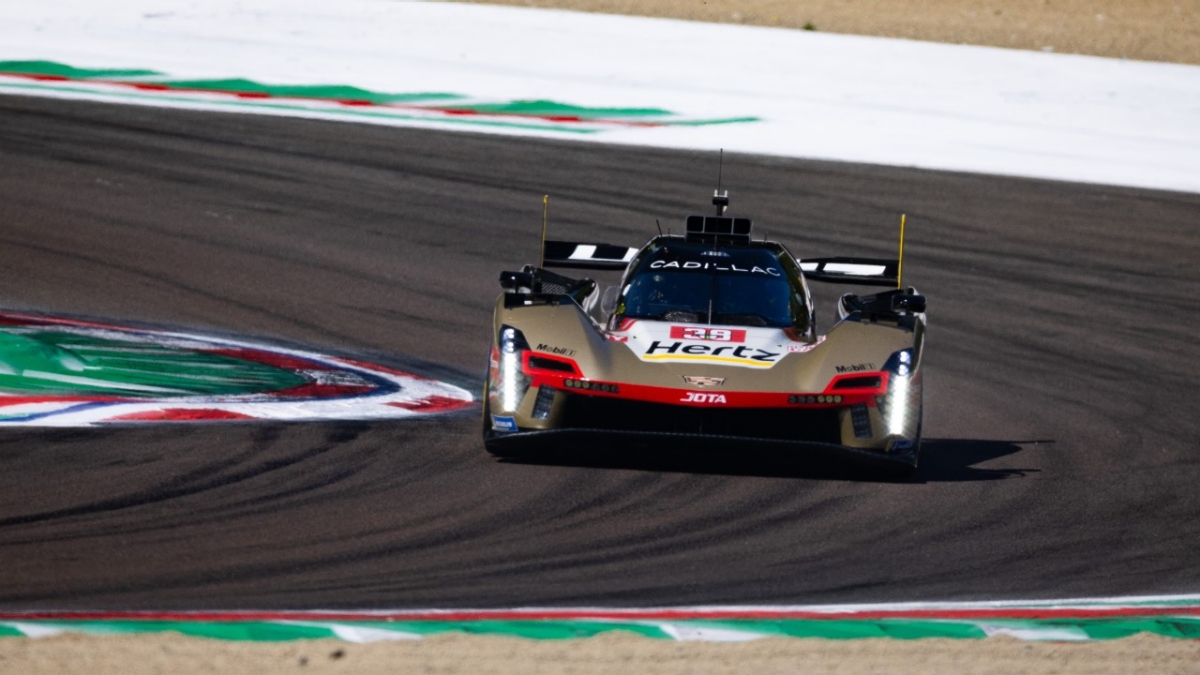


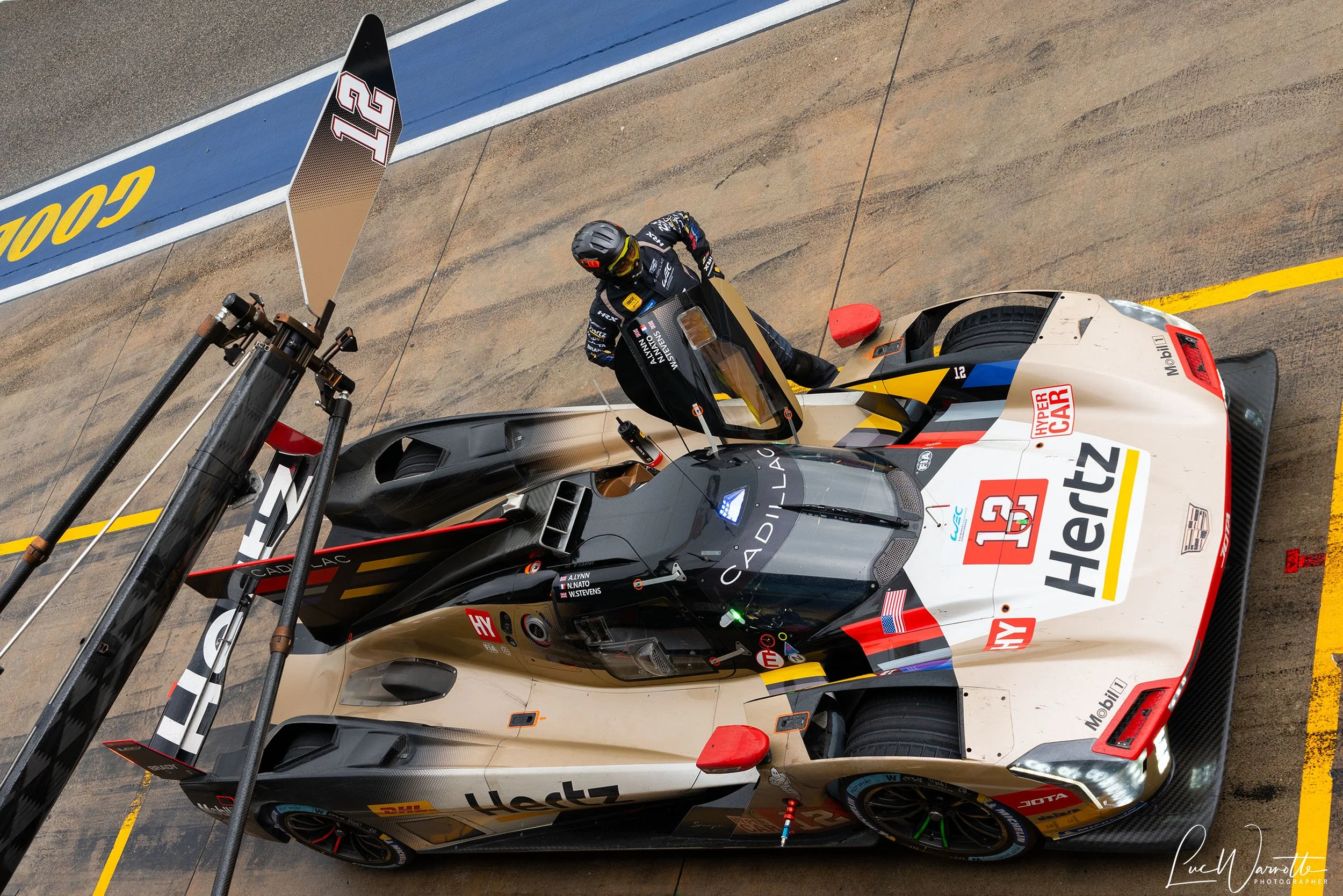
The No. 12 Cadillac Hertz Team JOTA V-Series.R was leading the 6 Hours of Imola on lap 72. By the checkered flag, it was 13th. A drive-through penalty for a yellow flag infringement obliterated what was shaping up to be the best result Cadillac Racing has produced in the FIA World Endurance Championship in some time.
Toyota, meanwhile, did what Toyota does. The No. 8 TR010 — the rebranded, retooled successor to the GR010 after the Gazoo Racing name was shelved this offseason — won by 13.352 seconds over the No. 51 Ferrari 499P of Antonio Giovinazzi. It was Toyota’s 50th WEC victory, a lifetime win rate of one in every two races entered.
That kind of consistency is not accidental. It is institutional.
Sebastien Buemi, Ryo Hirakawa, and Brendon Hartley controlled the second half of the race after a shrewd pit strategy — taking no tires while Ferrari took two — vaulted them to the front just before a virtual safety car compressed the field. They never looked back.
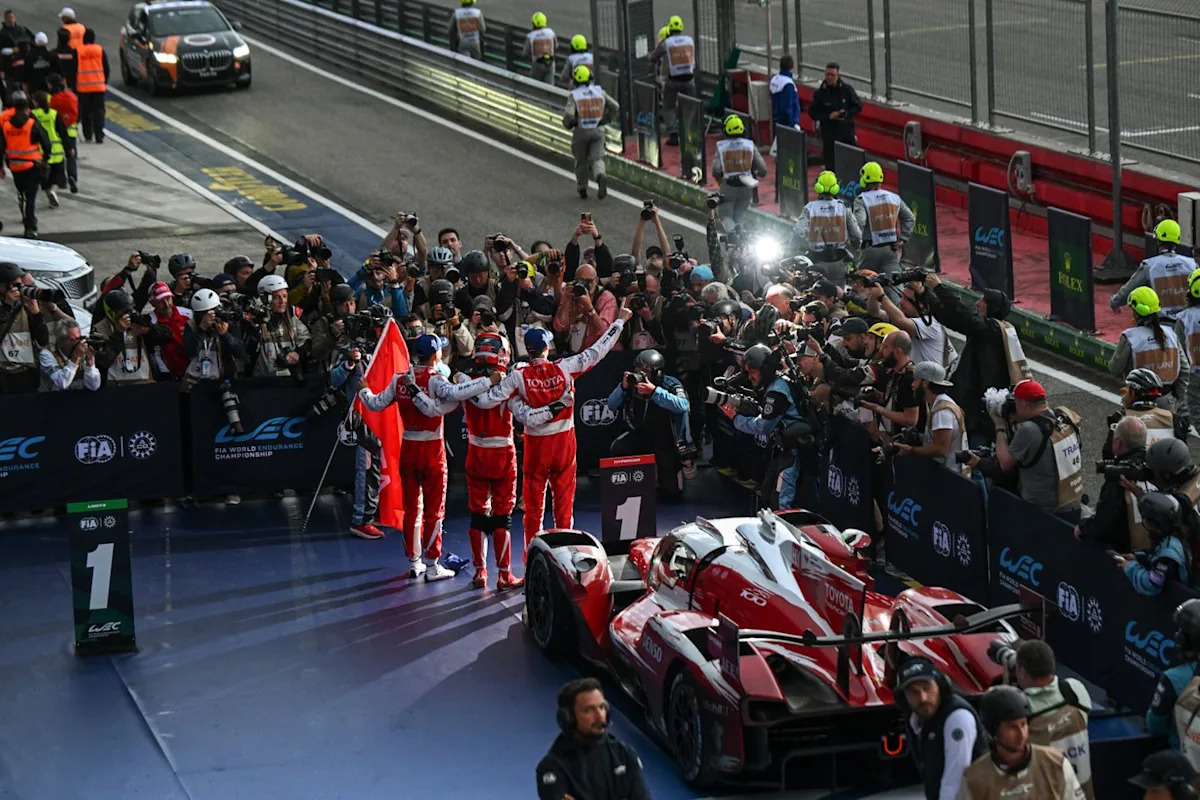
The No. 7 Toyota completed the podium in third, backing up its victory at last season’s Bahrain finale. Ferrari bookended the top positions with the No. 51 in second, though the No. 50 499P dropped to sixth after its own drive-through penalty. Alpine’s No. 35 A424 ran as high as third before settling for fourth, with Charles Milesi fending off Rene Rast’s No. 20 BMW M Hybrid V8 in a late scrap for position.
That’s the context Cadillac has to measure itself against. The frustrating part for the team is that the speed was clearly there.
Will Stevens started from P5 and drove the No. 12 car to the front in three strong stints. By the two-hour mark he was third. By lap 72 he led.
Then the penalty hit and the car dropped to 14th, eventually clawing back one spot to finish 13th — outside the points. “Obviously I’m frustrated with the penalty, because up to that point it had been a very positive race from our side,” Stevens said. “We worked our way to the front of the race. That’s what makes it frustrating.”
The sister No. 38 car, with Earl Bamber, Sebastien Bourdais, and the rest of the crew, had the opposite problem: no penalty, but no speed to advance either. Starting 13th, they were stuck in traffic on a circuit that punishes anyone trying to pass. Bourdais acknowledged as much.
“Even Earl, who is usually very strong in traffic, was getting trapped behind cars,” he said. They finished eighth. Four points. Not nothing, but not the result the car was capable of either.
Chief engineer Jeromy Moore struck an optimistic tone, noting a step forward from 2025 and pointing to Spa-Francorchamps on May 9 as the next chance to capitalize. That’s the right attitude for a program still learning a new aero kit and new tires, but at some point optimism has to convert into clean results. Leading a race and finishing 13th is worse than never leading at all — it means you had the car and fumbled the execution.
In LMGT3, the story was equally cruel. The No. 10 Garage 59 McLaren 720s GT3 Evo dominated before a blown alternator in the final 30 minutes sent it behind the wall. Daniel Harper’s No. 69 WRT BMW M4 GT3 EVO inherited the win, with Nicky Catsburg’s No. 33 Corvette second and the No. 92 Manthey Porsche third.
Imola rewarded discipline and punished mistakes. Toyota delivered the former. Cadillac delivered a painful example of the latter. The gap between those two outcomes is not measured in lap times — it’s measured in championships.
Share this Story