
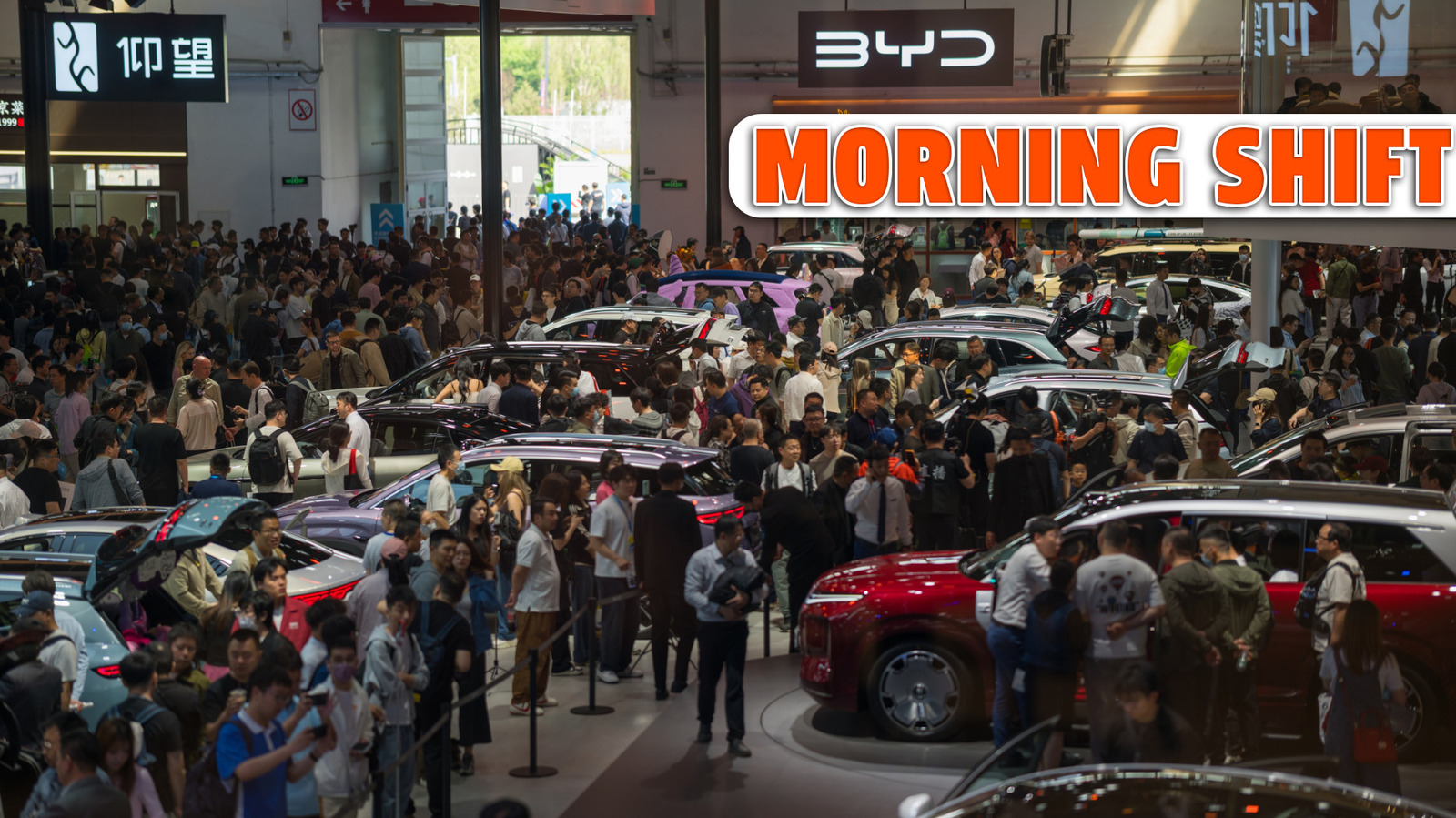


China’s passenger vehicle sales cratered 21.5 percent in April, dropping to 1.4 million units — the worst April since Covid lockdowns gutted the market in 2022. Internal combustion vehicle deliveries fell by a full third. Even new energy vehicles, the segment Beijing has bet its industrial future on, slid 6.8 percent.
The culprit is a collision of forces that no one fully anticipated. The U.S.-Israeli war on Iran sent oil prices skyward, crushing demand for gasoline cars in a country whose fleet is still overwhelmingly powered by internal combustion. At the same time, Beijing rolled back trade-in subsidies and reimposed a purchasing tax on EVs, choking off the one segment that might have absorbed displaced buyers.
The hit from higher oil prices has had a serious impact on the market,” said Cui Dongshu, general secretary of the China Passenger Car Association. He called the gasoline car plunge “relatively severe and surpassed our expectation.” The PCA had modeled the tax changes. It hadn’t modeled a war.
The numbers expose an uncomfortable reality: even the world’s most aggressive EV market can’t insulate itself from geopolitical oil shocks when the majority of cars on its roads still burn fuel. Rising gas prices should theoretically push buyers toward electric, but when affordability is already squeezed by new taxes and vanishing subsidies, consumers don’t trade up. They stop buying entirely.
Meanwhile, the rest of the world is making very different bets on how to handle the energy transition. European countries and Switzerland have committed nearly 200 billion euros — roughly $235 billion — into their EV ecosystem, according to data from New Automotive published Monday. The bulk, 109 billion euros, targets the battery supply chain as Europe tries to loosen China’s grip on cell production.
Another 60 billion euros went into converting legacy auto plants and building new EV-only facilities. Over one million public charging points are now deployed across the continent.
Europe now produces batteries for roughly one in three EVs sold domestically, and announced capacity could meet future demand if fully utilized. That’s a staggering pivot for a continent that five years ago had virtually no domestic cell production at scale.
Canada, too, is charting its own path. Geely shipped 18 Lotus Eletre electric crossovers from its Wuhan plant on May 7, making it the first Chinese automaker to export EVs to Canada under a new trans-Pacific trade deal struck in January. Ottawa agreed to allow up to 49,000 China-built EVs annually at a 6.1 percent tariff — a fraction of the prohibitive duties that previously shut the door.
The Eletre, starting at roughly $79,000 in China, is the first premium Chinese-built EV to pass Canadian motor vehicle safety certification. Eighteen cars is a trickle. But 49,000 units a year is a pipeline, and Geely getting there first with a premium Lotus rather than a budget brand tells you something about the strategy: establish legitimacy at the top, then flood the middle.
Back in the U.S., the automotive landscape looks increasingly disconnected from these global currents. Gas prices ticked down nearly four cents last week, a temporary reprieve that obscures the structural vulnerability laid bare by China’s April collapse. When war can vaporize a third of gasoline car demand in the world’s largest auto market overnight, the calculus on electrification shifts from ideology to arithmetic.
China’s April numbers aren’t just a bad month. They’re a stress test — and the fleet that showed up running on petroleum failed it.


Share this Story