
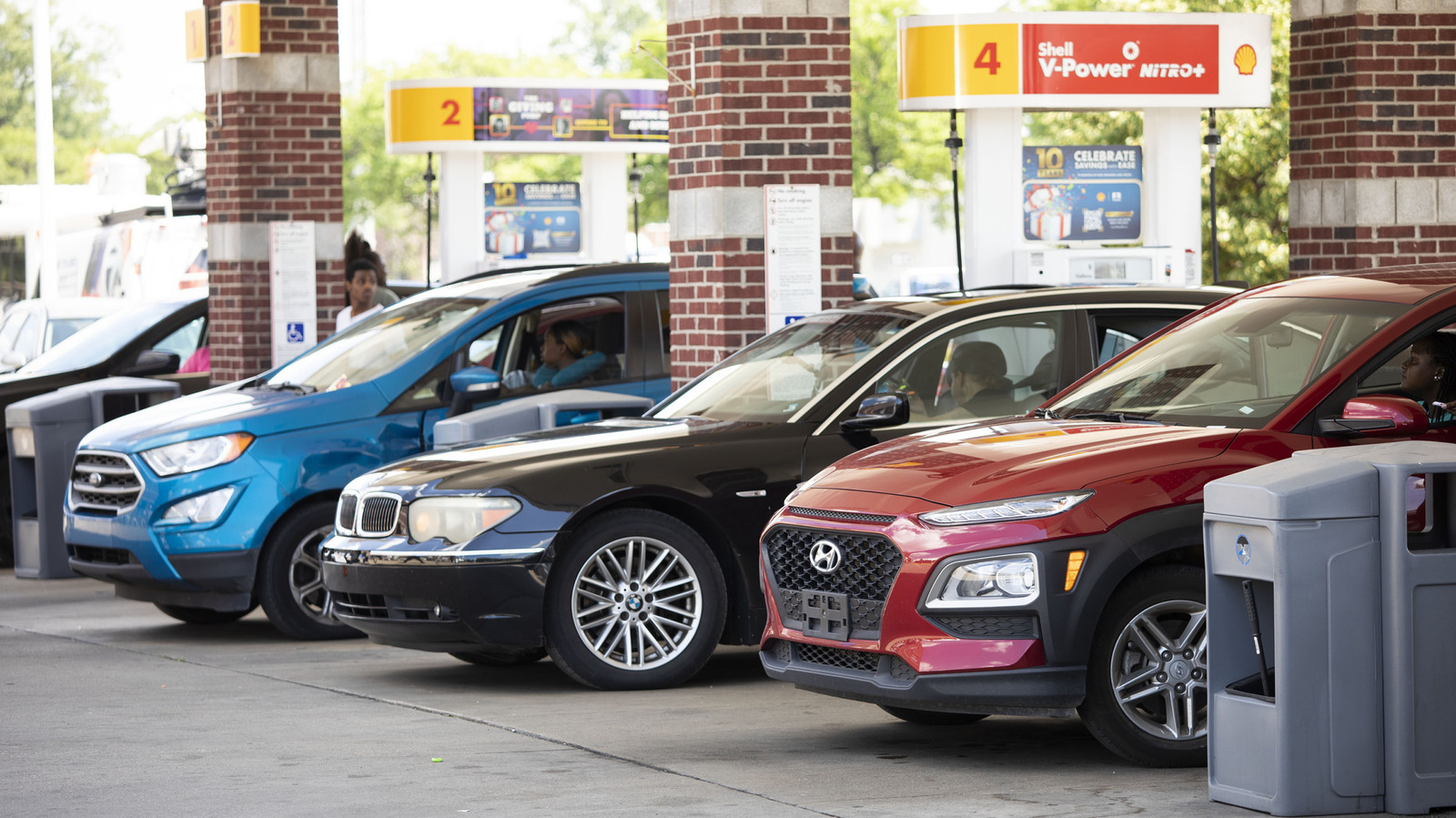


A dollar a gallon in seven days. That’s what Michigan drivers woke up to this week, with AAA reporting the statewide average for regular unleaded at $4.87. That 85-cent spike from the week prior ranks among the sharpest single-week increases the state has ever seen.
Two months ago, Michigan gas averaged $2.99. Now it costs $73 to fill a tank, $22 more than the highest price drivers paid last August. The trajectory is almost vertical.
The overnight jumps are the cruelest part. Lansing saw prices lurch 48 cents higher in a single night. Across the state, Monday morning brought a 28-cent-per-gallon gut punch that pushed the average to within shouting distance of $5.00.
Benton Harbor already sits at $4.94. Ann Arbor is at $4.92. Grand Rapids, $4.91. Michigan is running 41 cents above the national average of $4.45, and the reason isn’t what most people assume.
This isn’t primarily about the Strait of Hormuz, though the geopolitical mess there hasn’t helped anyone sleep better. The Midwest’s crisis is homegrown. BP’s massive Whiting, Indiana refinery, one of the region’s largest at 440,000 barrels a day, suffered heavy flaring last week that triggered a power outage and shut down a key processing unit.
The timing could not have been worse. A Phillips 66 refinery in Illinois, normally good for 356,000 barrels daily, was already offline for scheduled maintenance. So was a Marathon facility that isn’t expected back until later this month.
Three major refineries diminished or dark at the same time in a region already running lean on supply. Energy Information Administration data confirms the squeeze from both ends. National gasoline stocks dropped from 228.4 million barrels to 222.3 million.
Production slipped to an average of 9.8 million barrels per day. Demand, meanwhile, ticked up from 9.05 million barrels per day to 9.10 million. A classic supply-demand vise.
Michigan drivers are feeling the squeeze as gas prices spike 85 cents in one week,” said Adrienne Woodland, AAA spokesperson, in what qualifies as the understatement of the month. “Until oil prices ease and gasoline stocks rebuild, drivers may continue to feel pressure from higher prices at the pump.”
GasBuddy has offered a sliver of optimism, suggesting prices should ease once Whiting returns to full operation. That addresses the regional refinery bottleneck but does nothing about the broader supply picture, which remains hostage to whatever happens next in the Middle East.
The irony is thick enough to choke on. Michigan, the state that built the American automobile, the state whose identity is welded to the internal combustion engine, is paying more per gallon than almost anywhere else in the country. Not because of foreign oil politics, but because the refineries next door broke down at the worst possible moment.
Even the cheapest gas in the state, up in Marquette, sits at $4.65. Metro Detroit, the Motor City itself, averages $4.83. Flint, a city that has already endured more than its share of infrastructure failures, comes in at $4.82.
From $2.99 to $4.87 in sixty days. That’s a 63 percent increase hitting every commuter, every delivery truck, every family trying to stretch a paycheck through the summer. And if the Strait of Hormuz situation deteriorates further, what Michigan is living through right now won’t be an outlier — it’ll be a preview.




Share this Story