
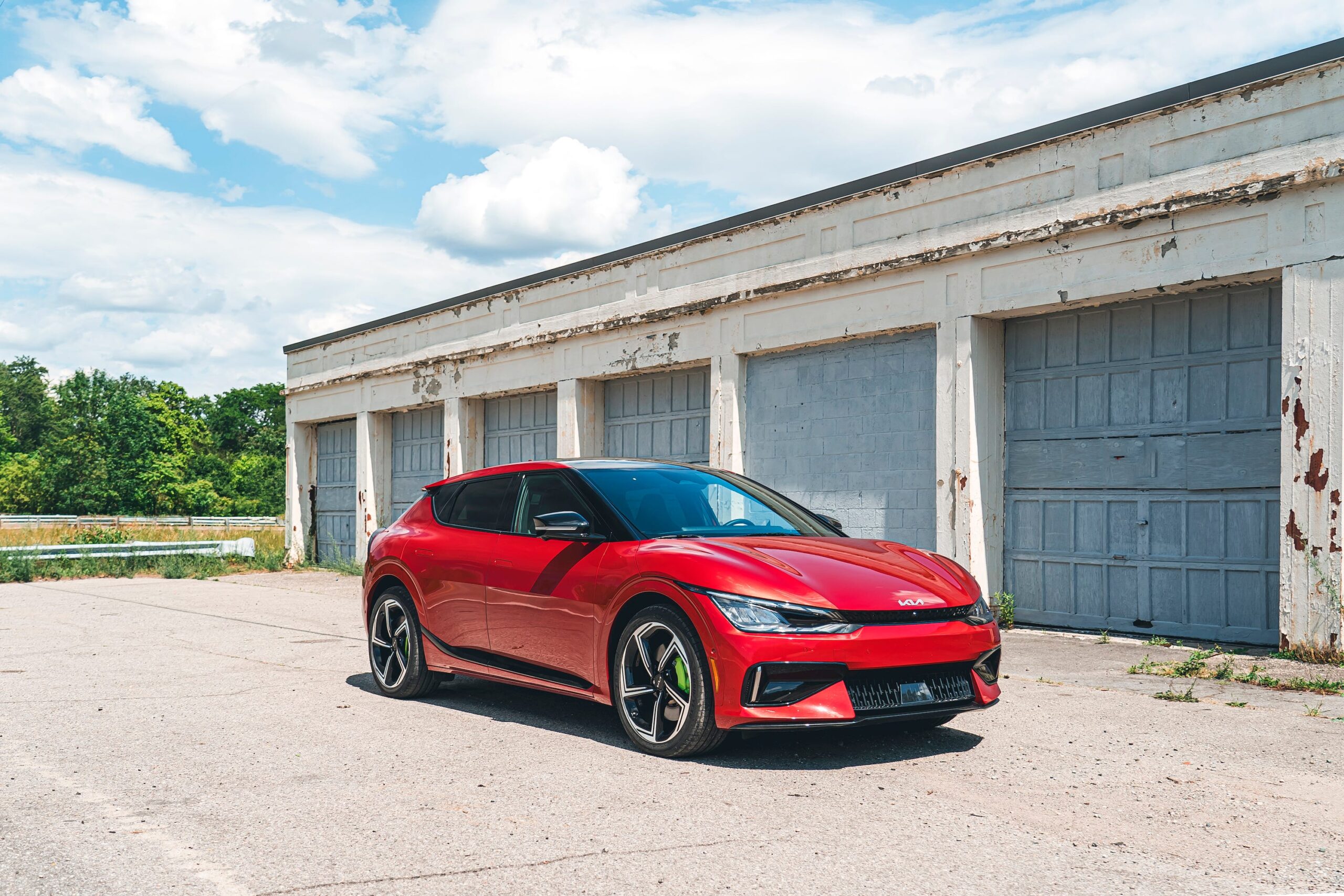


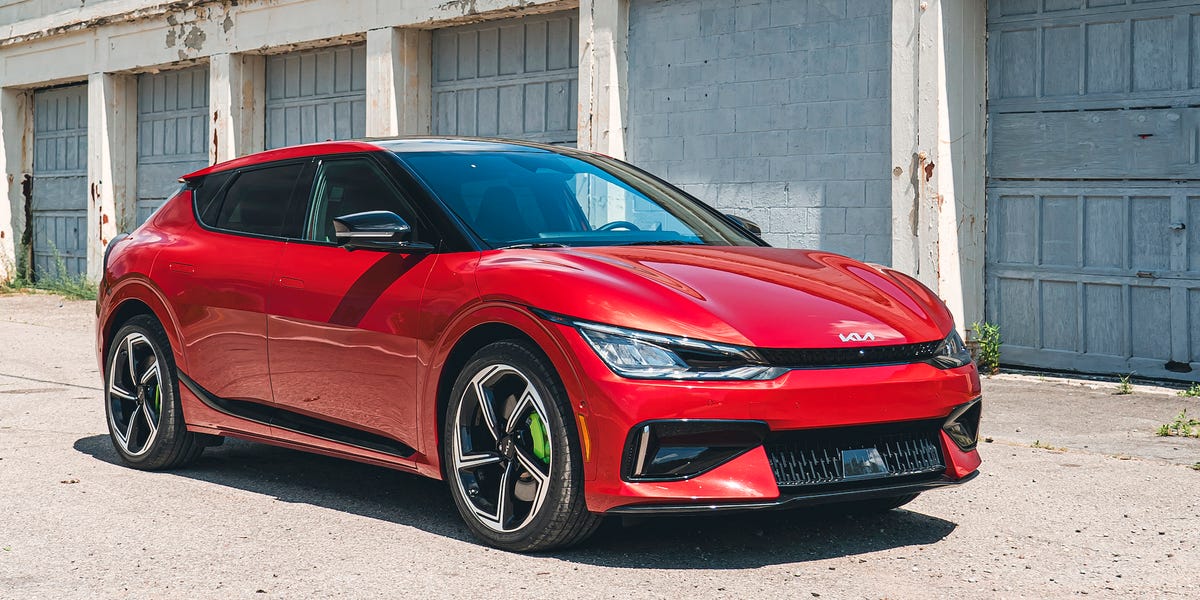
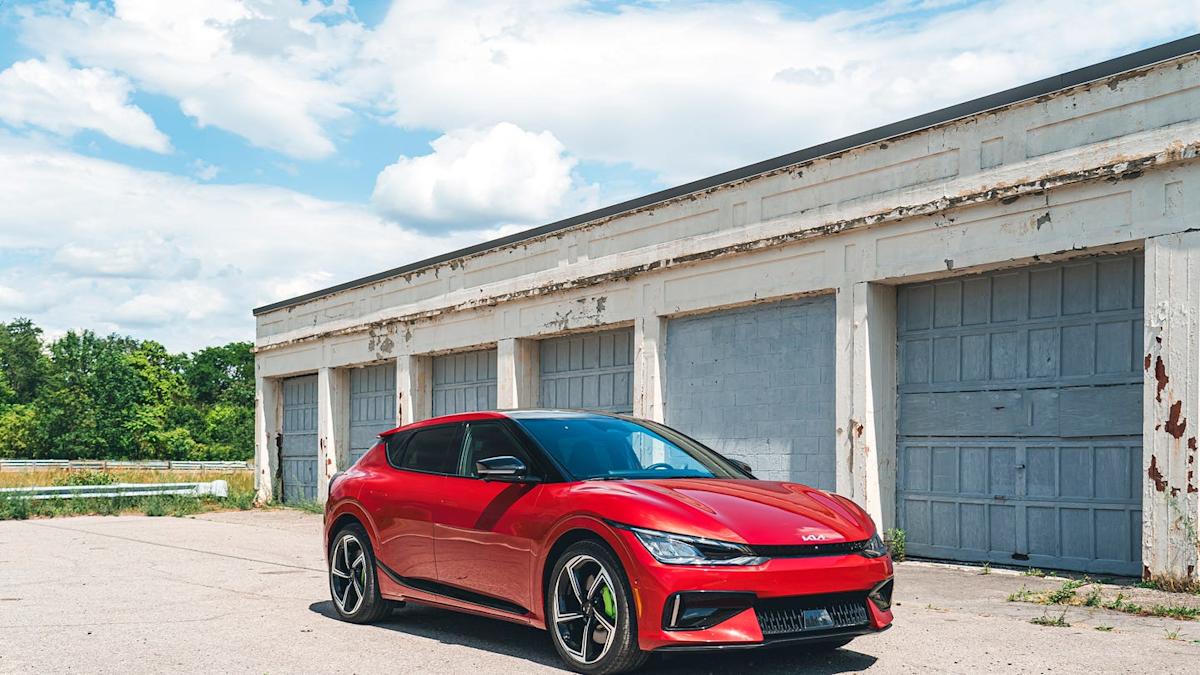
The Kia EV6 GT, a car good enough to win Road & Track’s Performance EV of the Year in the under-$100,000 category, is now gone from the American market. Kia confirmed it is delaying the 2026 model “until further notice,” a phrase that in today’s trade climate functions as a euphemism for indefinitely.
The EV6 GT isn’t alone. Kia is also shelving the EV4 sedan and EV3 hatchback, two compact models that were supposed to broaden the brand’s electric portfolio in the States. All three are built in South Korea, where a 25 percent import tariff now makes the math ugly.
Standard EV6 trims survive because they roll off the line in West Point, Georgia, where Kia and parent company Hyundai have poured billions into manufacturing and battery production. The GT, however, was still a Korean import. At its previous sticker of $65,295, slapping a quarter of the vehicle’s value on top would push it past $80,000 — territory where a Kia badge generates more sticker shock than brand loyalty.
Hyundai is retreating alongside its sibling. The Ioniq 6 sedan, once positioned as a sleek counterpoint to the boxy Ioniq 5, has cratered. February sales hit 229 units, a 77 percent nosedive from the same month last year.
For 2026, Hyundai is axing every Ioniq 6 trim except the upcoming Ioniq 6 N, which will arrive in extremely limited numbers. The refreshed standard model, unveiled in Korea last April, may never touch American soil.
The pattern is clear. Only EVs assembled domestically — the Ioniq 5, Ioniq 9, and EV9 — have confirmed futures in the U.S. lineup. Everything shipped from Korea is either paused, gutted, or in limbo. The Ioniq 5 actually posted a 33 percent sales increase in February, proving demand exists when the price is right and the supply chain is local.
Genesis, the group’s luxury arm, is bleeding too. Just 45 GV60s sold through February, down from 413 a year earlier. The Electrified GV70 managed 30 units. The Electrified G80 sedan was killed last August.
The broader EV market isn’t helping either. Federal tax credits vanished last fall, and the sales cliff that followed has been brutal across every brand. But the Korean trio faces a double hit: tariffs punishing imports on top of subsidy elimination crushing demand. Polestar has paused U.S. sales entirely. Audi delayed the A6 E-Tron.
Hyundai and Kia did more than most to prepare for this moment. The Georgia manufacturing complex was supposed to be the shield against exactly this kind of trade disruption. And for their volume sellers, it is working.
But the halo cars, the performance variants, the affordable compacts that were going to prove EVs could serve every segment — those are the casualties. The EV6 GT could do zero to 60 in about 3.4 seconds. It had genuine chassis talent and a dual-motor setup that made 576 horsepower feel accessible.
Losing it doesn’t just shrink Kia’s lineup. It removes one of the few affordable performance EVs that could genuinely compete with cars costing twice as much.
Whether these models return for 2027 depends on tariff rates that shift with the political winds. Automakers delaying imports aren’t making product decisions anymore. They’re making trade bets. And right now, no one at Hyundai Motor Group is willing to wager that rates are coming down anytime soon. The cars built in America stay. Everything else waits.


Share this Story