
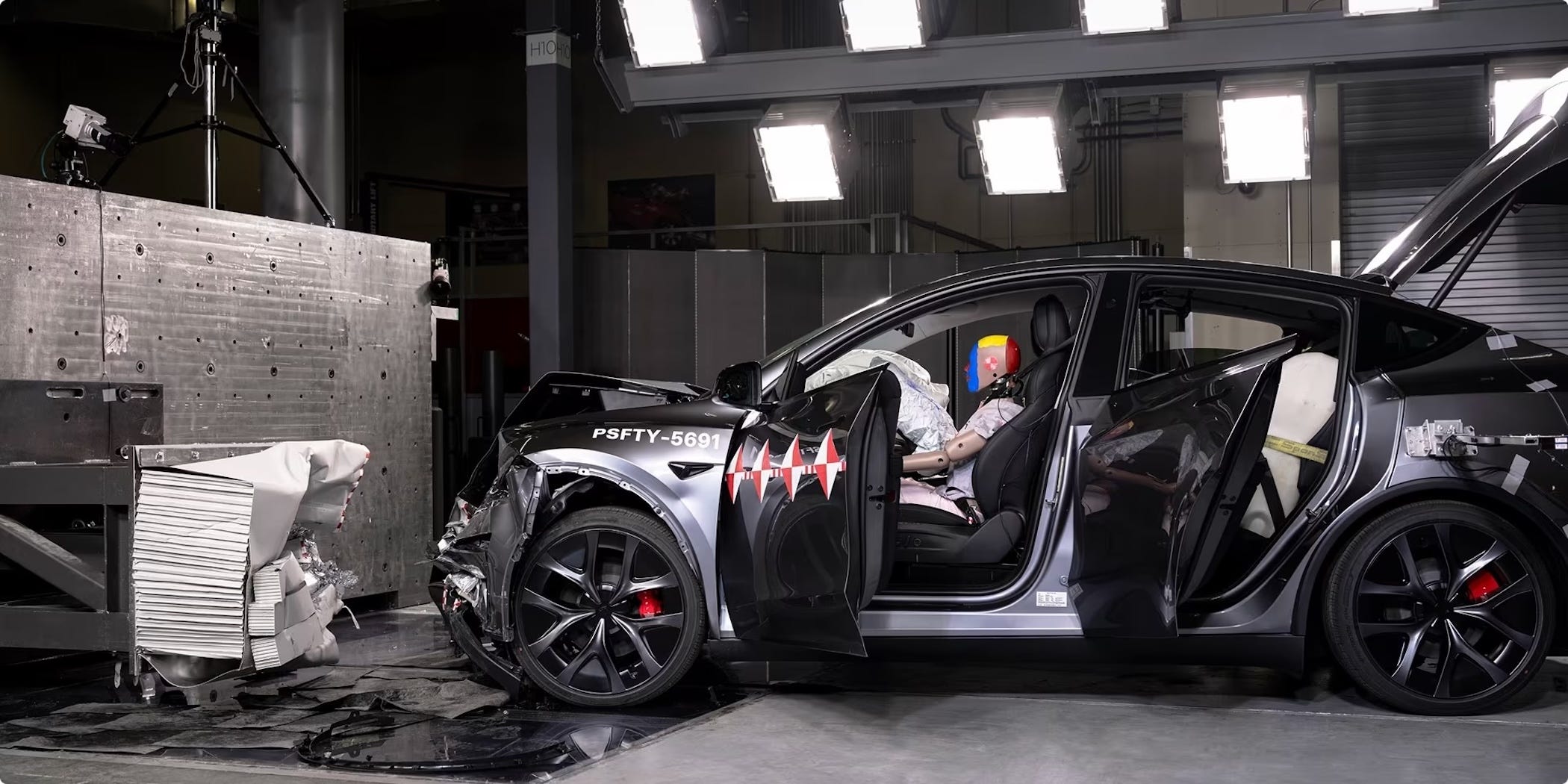


Seventy milliseconds. That’s the edge Tesla claims its new “Vision” software gives occupants before a crash, using the car’s existing external cameras to spot an imminent collision and fire the airbags before metal ever meets metal.
The automaker announced the system on X, describing a fundamentally different approach to crash protection. Traditional airbag systems rely on accelerometers and physical sensors embedded in bumpers and crumple zones. They react to a crash already in progress.
By the time they trigger, occupants are already in motion inside the cabin, heads and torsos pitching forward against inertia. Tesla’s system flips the sequence. Its cameras read the world outside the car and recognize that a collision is about to happen, not that one has begun.
That recognition buys time — enough, Tesla says, to begin inflating airbags and pre-tensioning seatbelts before the first point of contact.
Seventy milliseconds sounds trivial until you understand airbag physics. A typical frontal airbag takes roughly 30 to 40 milliseconds to fully inflate. In a conventional system, the bag is still deploying while the occupant’s body is already loading into it.
Starting the clock earlier means the cushion is closer to full inflation when it actually needs to catch a human being. The difference between an airbag that’s 60 percent inflated and one that’s 100 percent inflated at the moment of occupant contact is not academic. It’s the difference between a bruised sternum and a collapsed one.
The technology leans entirely on Tesla’s camera array, which means it only works on vehicles already running the company’s Vision hardware. Tesla says the update will ship free over the air to compatible vehicles and come standard on all new production going forward.
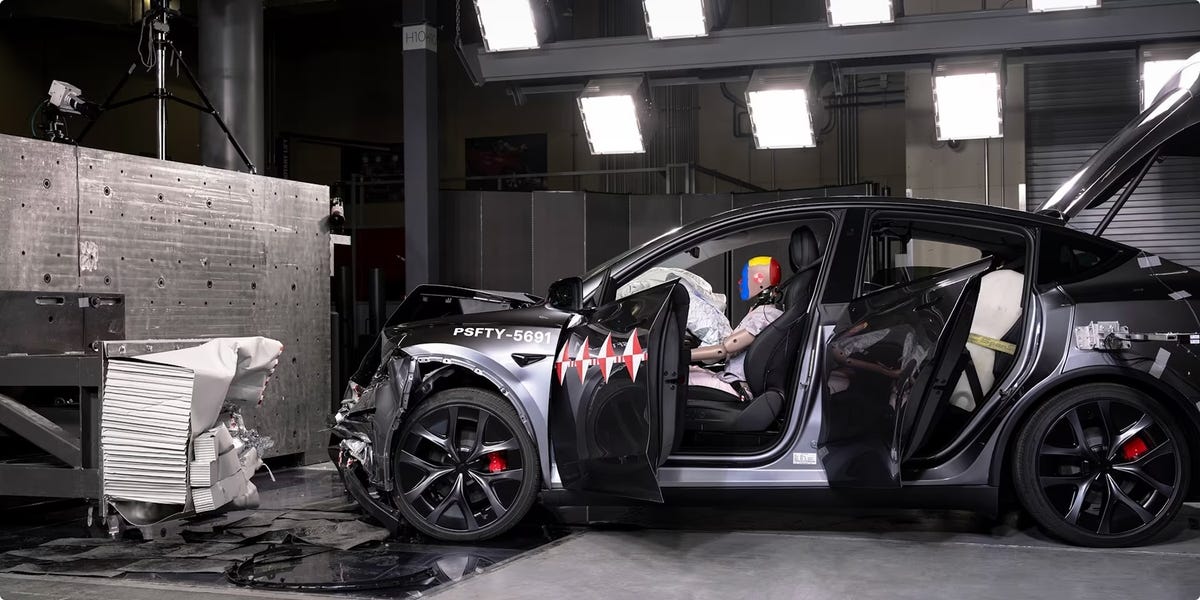
That’s a meaningful detail. Most automakers treat airbag calibration as locked-in hardware logic, not something you patch remotely. Tesla’s software-defined architecture allows it to layer new crash-response behaviors on top of existing sensor packages without a single wrench touching the car. No dealer visit, no recall, no cost to the owner.
There’s a caveat worth sitting with, though. Camera-based systems depend on visibility. Fog, blinding sun, heavy rain, a mud-caked lens — all of these degrade optical input.
Tesla hasn’t detailed what happens when the cameras can’t see clearly enough to predict an impact. Presumably the car falls back on conventional accelerometer-based deployment, but the company’s announcement didn’t address failure modes or edge cases.
It also raises a question about validation. Airbag deployment timing is heavily regulated and exhaustively tested. The National Highway Traffic Safety Administration has strict standards for how and when restraints fire.
Adding a predictive visual layer on top of a crash-sensing system isn’t just a software feature — it’s a safety-critical control change delivered over Wi-Fi. How NHTSA views that distinction could shape whether other automakers follow suit or wait for regulatory clarity.
Still, the core idea is sound and, frankly, overdue. Cars have had forward-facing cameras for years. Using that visual data to shave critical milliseconds off airbag response is a logical extension of hardware that was already bolted to the vehicle.
Tesla didn’t invent the camera. It just found another reason to point one at the road. The real test won’t be the press release — it’ll be the crash data six months from now.
Share this Story