
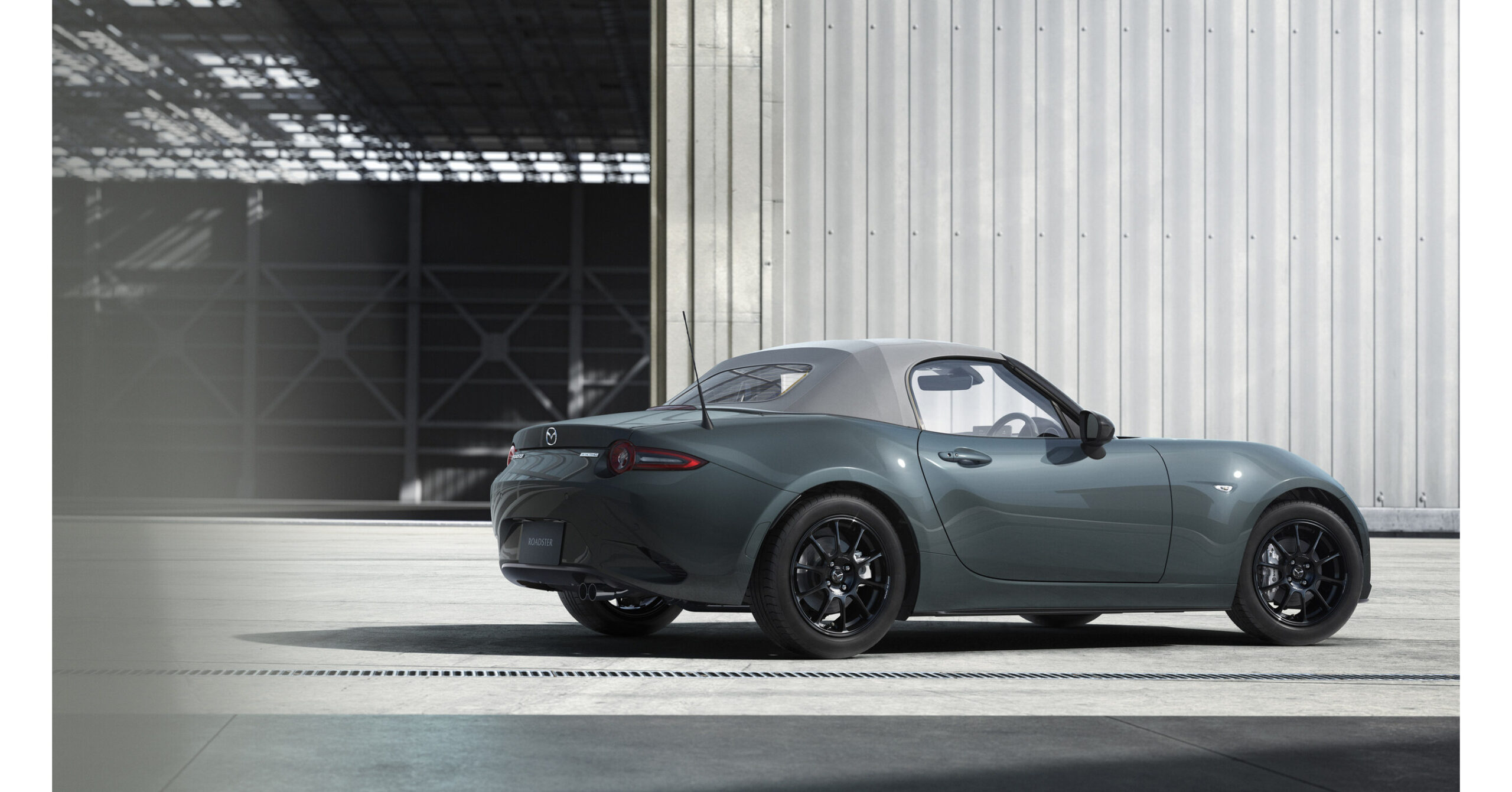


Mazda just unveiled Zinc Green, a new global color that debuted on the MX-5 Miata at the Karuizawa Fan Meeting in Japan on May 31 — one of the largest Miata gatherings on the planet and exactly the kind of stage a color like this deserves.
Green has been conspicuously absent from the fourth-generation Miata’s palette since the car launched in 2015. Every prior generation got one. The NA had its British Racing Green, the NB wore Emerald Mica, and the NC offered Highland Green.
For over a decade, ND owners who wanted green had to settle for aftermarket wraps or quiet resentment.
Mazda describes Zinc Green as a “lifestyle color” in the mold of Polymetal Gray Metallic, the chameleon-like hue that became a quiet hit across the lineup. In direct sunlight, Zinc Green pops with rich depth and tonal range. In overcast or low-light conditions, it retreats into something more muted, grayish, almost matte.
It’s the kind of paint that rewards a second look, which is very much Mazda’s design ethos these days.
The company also made clear this isn’t a Miata exclusive. Zinc Green is designed to work across the range, from the two-seat roadster to Mazda’s crossover SUVs. Polymetal Gray proved that a well-executed special color can quietly lift an entire showroom’s appeal without a single powertrain change.
Mazda leaned into its green heritage in the announcement, name-dropping the original Mazda Go three-wheeler’s green instrument panel, the legendary 787B’s orange-and-green Le Mans livery, and the Spirited Green Metallic Mazda2 from the 2000s. It’s a deliberate thread connecting a $30,000 roadster to a rotary-powered prototype that screamed through the Mulsanne Straight 35 years ago.
US availability hasn’t been confirmed yet. Mazda said more details for the American market will come later this year. That likely means a 2026 model year rollout or possibly a 2027 introduction depending on production timing.
In a market where every competitor is chasing electrification headlines and autonomous driving specs, Mazda is out here generating buzz with a paint color. It works because the company understands something most rivals forgot: enthusiasts notice details. They care about how light plays across a fender, they remember which generation got which shade, and they’ll argue about it online for years.
The Miata itself remains mechanically unchanged in this announcement — no new engine, no hybrid supplement, no added screen inches. Just a car that already does its job exceptionally well, now available in a color that finally fills a gap its fans have been pointing out since 2015.
There’s a lesson buried in here about brand management. Mazda sells fewer cars annually than Toyota moves in a quarter. It doesn’t have the budget for splashy Super Bowl ads or a Formula 1 team.
What it has is taste, and an almost obsessive commitment to the sensory experience of owning its cars. A new color, revealed at a fan event in a Japanese mountain resort town, covered like a product launch — that’s a company that knows exactly who it’s talking to.
Zinc Green won’t move the stock price. It won’t show up in quarterly earnings calls. But it will sell Miatas to people who were waiting for exactly this reason to finally pull the trigger, and in Mazda’s world, that’s the whole point.
Share this Story