


Chassis #028R rolled off McLaren’s line as the final F1 GTR ever produced, and Chris Harris just drove it. That alone would be enough. But the video he released captures something deeper — a raw, unfiltered encounter with a machine that represents the absolute peak of analog racing engineering.
The McLaren F1 GTR Longtail needs no mythology boost at this point. Its record speaks. Harris, who has logged seat time in both the road-going F1 and the race-spec GTR, brings a perspective almost nobody else on Earth can offer. He knows precisely what McLaren sharpened — and what it sacrificed — to turn Gordon Murray’s masterpiece into an FIA GT weapon.
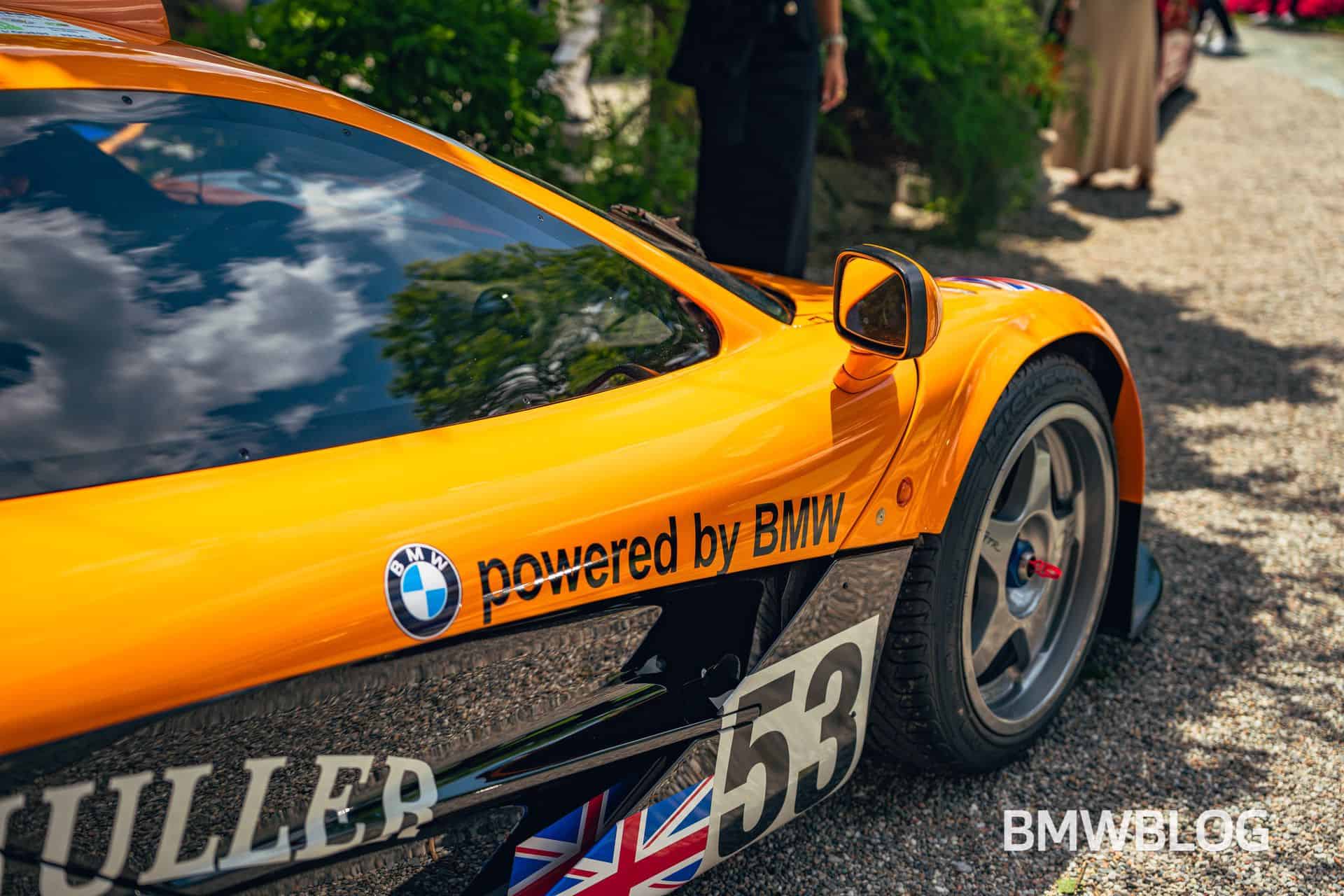
This particular car, #028R, entered competition midway through the 1997 season. Its first outing was the Nürburgring. It went on to contest eight FIA GT World Championship rounds — a legitimate racing résumé, not a trailer queen history.
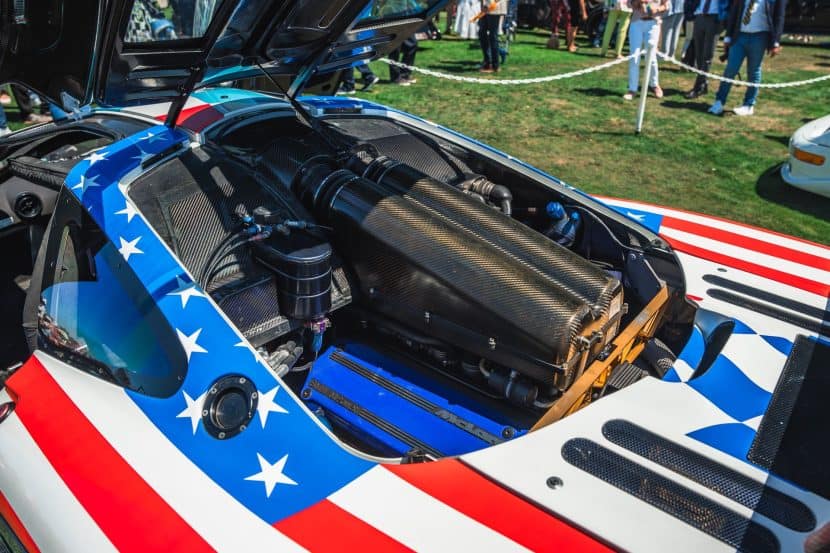
Under the elongated rear bodywork sits BMW Motorsport’s S70/2 V12, displacing 6.0 liters in Longtail specification, slightly down from the road car’s 6.1 liters. The reduction wasn’t about losing power. It sharpened throttle response and reportedly improved reliability across endurance stints.
Output still lands around 600 horsepower, which in a car this light and aerodynamically committed is more than enough to rearrange your internal organs. Harris made a small slip calling it a 6.1-liter unit, but nobody’s grading him on displacement figures when the car is spitting literal flames on upshifts.
The cockpit walkthrough tells you everything about priorities. Toggle switches, exposed mechanical linkages, a carbon fiber tub stripped of anything that doesn’t serve the driver. The Alcantara-wrapped steering wheel carries “GTR” in a typeface that screams mid-1990s endurance racing, and Harris called the interior “sexy,” though reportedly in saltier language the camera cleaned up for public consumption.
What makes the driving footage exceptional isn’t heroics. It’s honesty. Harris describes high-effort steering, mechanical inputs with satisfying clicks, and that unmistakable cocktail of V12 howl layered over straight-cut gear whine.
No traction control algorithms interpreting your intentions. No drive modes. Just a driver, a gearbox, and 600 horsepower from Munich’s greatest engineering department negotiating a conversation through three pedals and a sequential lever.
The sound alone justifies the video’s existence. The S70/2 at full cry remains one of motorsport’s most distinctive signatures — a high-revving, naturally aspirated V12 wail that modern turbocharged power units can only dream of replicating.
Harris himself seemed genuinely rattled by the experience, dropping an unguarded “am I really doing this?” that felt less like performance and more like a man processing the absurdity of his professional life. Fair enough. He was piloting the last of a bloodline that includes an overall victory at Le Mans against prototype machinery that should have buried it.
Cars like #028R don’t come around twice. They exist at the intersection of competitive purpose and mechanical artistry, built in an era when racing regulations still permitted engineers to chase solutions rather than compliance. The Longtail’s massive rear wing, louvered bodywork, and extended tail weren’t styled by a marketing department — they were answers to aerodynamic questions asked at 200 miles per hour.
BMW Motorsport’s fingerprints are all over this machine’s soul. The S70/2 wasn’t a contracted engine supply deal — it was a full partnership that produced arguably the most successful naturally aspirated racing V12 of the 1990s. That Harris gets to demonstrate its character to a modern audience, unfiltered and at speed, is a gift to anyone who cares about what cars used to demand of their drivers.

Share this Story