
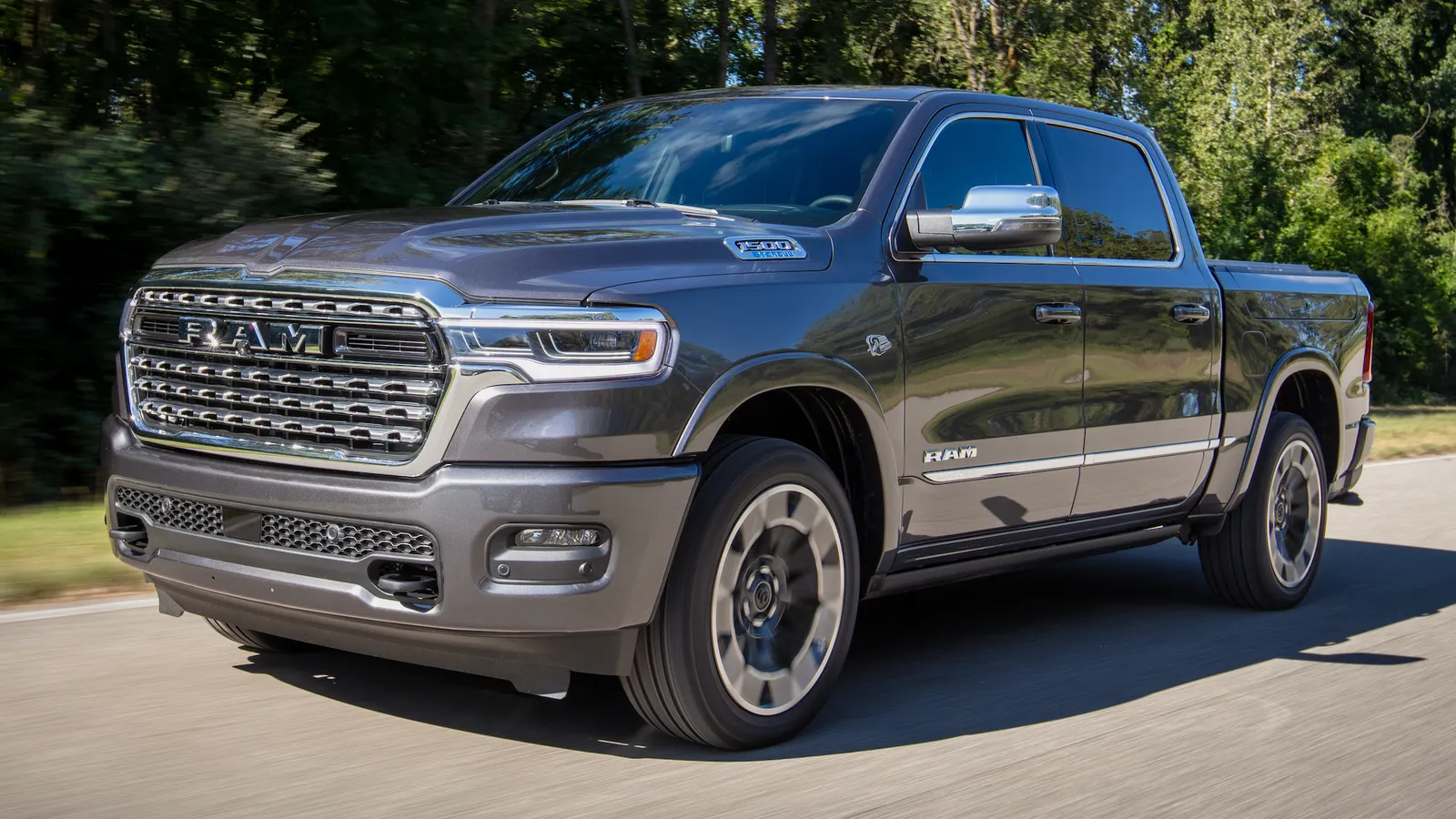


Stellantis moved an estimated 1.6 million vehicles globally in the second quarter of 2026, a 10% year-over-year jump. Strip away the headline number and the story is simpler than it looks: North America carried everything.
Shipments to North America climbed roughly 122,000 units, a 38% surge powered almost entirely by fresh metal. The Ram 1500 HEMI V8, the resurrected Ram 1500 TRX SRT, and refreshed versions of the Jeep Grand Wagoneer, Grand Cherokee, and Chrysler Pacifica did the heavy lifting. Stellantis also noted that production ramp-ups of the new Jeep Cherokee and the two- and four-door Dodge Charger Sixpack padded the numbers ahead of a planned summer factory shutdown.
That’s the kind of growth you get when you finally replace aging product in your most profitable market. Stellantis spent the better part of two years watching North American dealers starve for inventory while competitors refreshed their lineups. The Q2 numbers suggest the drought is breaking, but they also reveal how dangerously dependent the company remains on one region.
Europe offered a modest assist. Shipments in the Enlarged Europe region rose about 39,000 units, or 5%, with battery-electric vehicles leading the way. The company’s Smart Car platform — the Citroën C3 and C3 Aircross, Opel/Vauxhall Frontera, and Fiat Grande Panda — contributed roughly 41,000 additional units, a 51% jump. The new Jeep Compass added another 8,000.
But the European picture isn’t as clean as it appears. Legacy B-segment SUVs including the Jeep Avenger, Fiat 600, Opel/Vauxhall Mokka, and Peugeot 2008 shed approximately 28,000 units. New products are cannibalizing old ones rather than expanding the pie.
Leapmotor, Stellantis’ Chinese EV partner, shipped 33,000 vehicles in Europe — up 25,000 units — driven by the T03 and B10. That’s real traction, though the volumes remain small relative to the company’s legacy brands.
Everywhere else, the report reads like a damage assessment. South America declined 3%, or about 7,000 units. Brazil was strong, adding 21,000 vehicles, but Argentina collapsed by 25,000 units.
Middle East and Africa fell 3%, with Gulf Cooperation Council countries down roughly 50% and Türkiye shedding 8,000 units on weak market conditions. Algeria’s Fiat Doblo ramp-up and better Moroccan volumes weren’t enough to offset those losses. Asia Pacific was flat at 16,000 vehicles — a rounding error for a company this size.
The pattern is unmistakable. Stellantis is a two-market company right now. North America and Europe account for virtually all the momentum, and the rest of the global footprint is either shrinking or irrelevant to the quarterly math.
Carlos Tavares spent years preaching the gospel of global diversification. His successor and the current leadership team unveiled a $70 billion investment plan in May and teased bargain-basement European EVs by 2028. Those are long-horizon bets, and the near-term reality is that Stellantis lives and dies on whether Americans keep buying Rams and Jeeps.
A 38% North American surge looks spectacular on paper. It also looks like what happens when a company finally does what it should have done 18 months earlier. The question isn’t whether Stellantis can sell new trucks and SUVs in a hungry market. It’s whether the rest of the empire can contribute anything beyond drag. So far, Q2 2026 answers that question with uncomfortable clarity.


Share this Story