


Rolls-Royce showed up to Monterey Car Week 2026 without a new production model, without a public display stand, and without any interest in letting the general public get close. Instead, the marque rented a private villa on a Pacific bluff and used it to hand over two one-of-one commissions to a pair of North American buyers whose names will never be published.
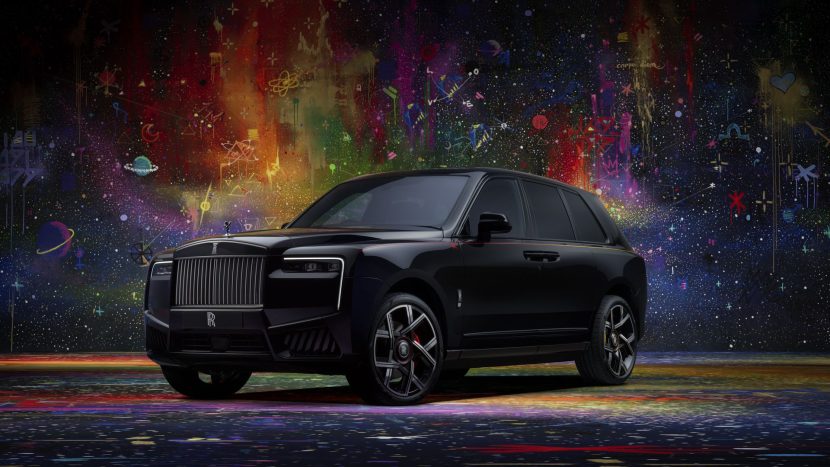
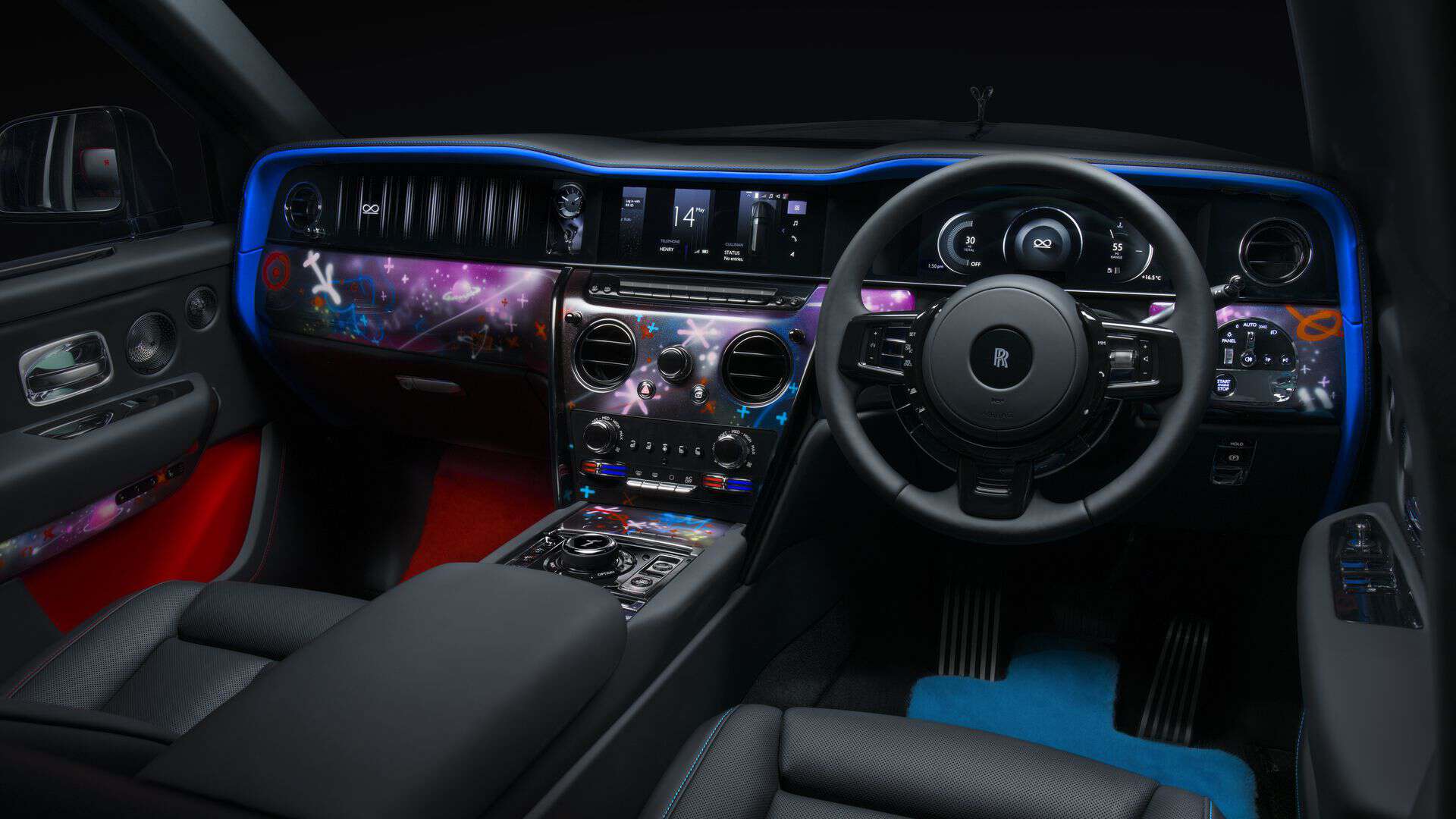
The first is a Black Badge Cullinan Series II hand-painted by Cyril Kongo, a French graffiti artist who crossed into the gallery world years ago. Rolls-Royce treated the SUV’s entire body as a canvas, layering dynamic colors across the panels in collaboration with Kongo and the Goodwood Bespoke Collective team. The interior follows suit with custom color treatments designed to blur the line between luxury vehicle and mobile installation.
The second car is louder in a different register. A Black Badge Ghost called “Golden Era” wears Gold Crystal over black paint infused with actual gold. A hand-painted “V12” coachline stretches the length of the body, with gold bonnet wakelines and gold bumper inserts finishing the exterior.
Inside, the obsession deepens. The seats, door pockets, and rear center armrest carry embroidered V12 artwork. A technical illustration of the twin-turbo 6.75-liter V12’s internal architecture is stitched into the rear interior panel, a first for the brand.
Technical Fiber veneer flecked with microscopic gold, engraved eyeball vents, a gold-inlaid ashtray, a Starlight Headliner with gold shooting stars. Every surface got the treatment.
Rolls-Royce frames the Ghost as a tribute to more than a century of V12 use, though the current twin-turbo unit shares almost nothing with the inline-sixes and V12s that started that lineage. The sentiment matters more than the engineering genealogy here. This is a car built to celebrate an engine format that has an expiration date, even if Rolls-Royce hasn’t publicly stamped one on it yet.
Neither car carries a disclosed price. Neither will appear on a dealer lot. Both were revealed inside the Villa, where clients had private access to designers, Bespoke specialists, and Nick Keen, President and CEO of Rolls-Royce Motor Cars North America.
The Villa itself tells the story Rolls-Royce wants told. No hospitality tent, no velvet ropes with a queue of phone-wielding spectators. Design consultations happen alongside the car handovers, which means the real business at Monterey isn’t showing off finished products but selling the next commission to someone standing three feet from the last one.
This is Rolls-Royce pushing Bespoke beyond the options configurator and into commissioned art territory. The graffiti Cullinan and the gold-drenched Ghost are not exercises in taste. They are exercises in access, in proving that the factory will build whatever a client can dream up if the check clears.
Rolls-Royce says it is seeing more of this from newer clients, buyers who want the car to function as an art object first and transportation second. That is a convenient narrative for a brand whose electric future under Spectre still needs time to mature. While the powertrains evolve, the Bespoke division keeps the ultra-high-net-worth crowd occupied with projects no configurator could spit out.
The question is whether this strategy scales or whether it simply keeps the villa full for one week a year on the California coast.
Share this Story