


Toyota CEO Koji Sato stood before reporters wearing two hats — maybe three. As head of Toyota, chairman of the Japanese Automobile Manufacturers Association, and Toyota’s self-styled “Chief Industry Officer,” he delivered a message that would have been heresy a decade ago. Japanese automakers need to start sharing parts with each other, not just within their own lineups, but across the entire industry.
“We have a strong sense of crisis that the Japanese auto industry is in a massive period of transition,” Sato said. The word “crisis” doesn’t get thrown around lightly in Japanese corporate culture.
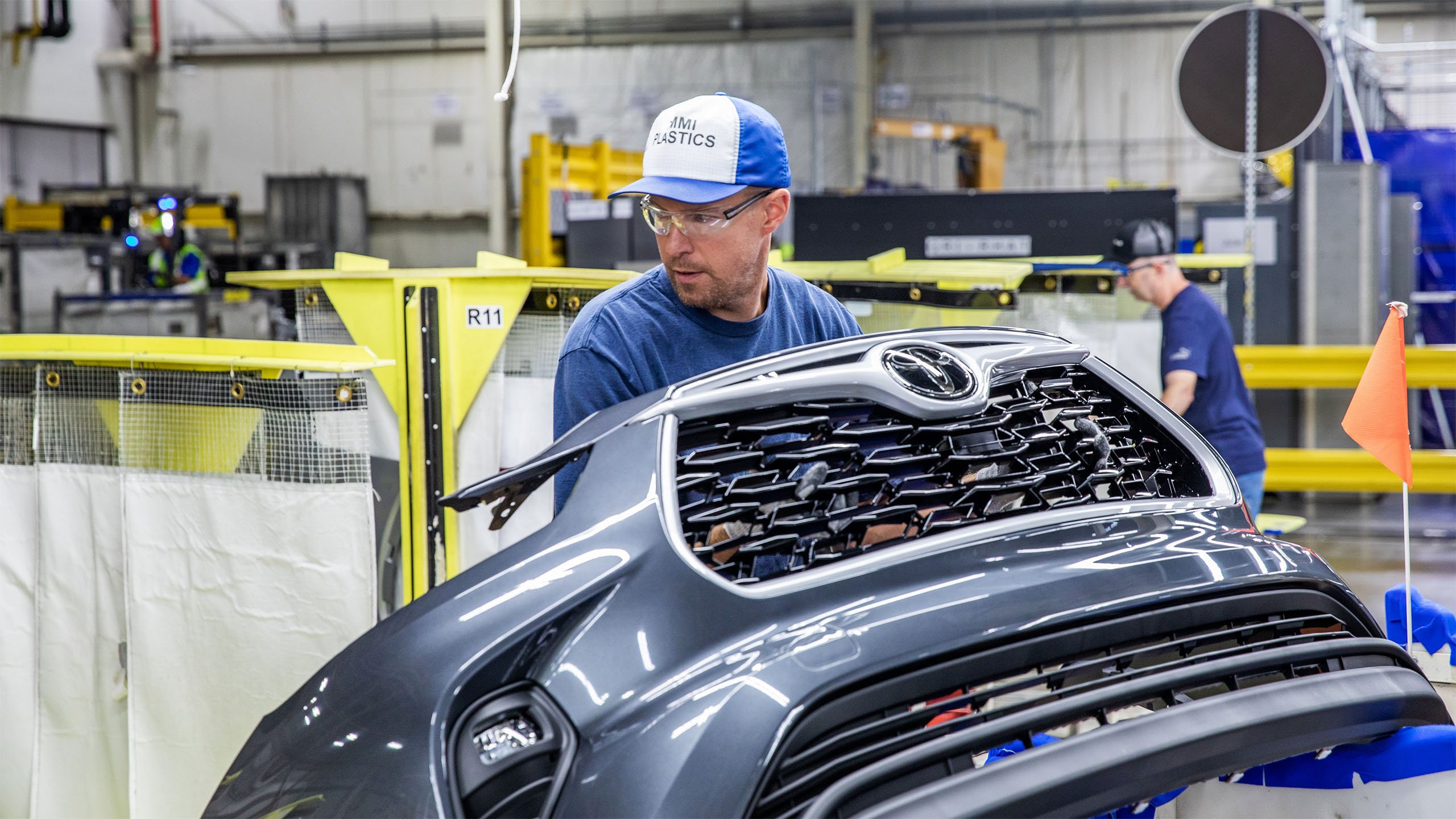
The proposal, reported by Automotive News, would see Toyota, Honda, Nissan, Mazda, Subaru, Mitsubishi, and Suzuki standardize unseen components like wiring harnesses and fluid hoses. Not platforms. Not body panels. The guts nobody photographs at auto shows.
Nissan CEO Ivan Espinosa, standing alongside Sato, was blunter about the motivation. “We do see that other industries in other countries or other parts of the world are better organized than us,” he said. Read between those lines and you’ll find China’s auto sector staring back.
Parts-sharing within corporate families is ancient history. Volkswagen Group built an empire on its MQB platform architecture, spreading it across VW, Audi, Skoda, SEAT, and others throughout the 2010s. Toyota itself underpins nearly everything it builds with variations of TNGA.
Cross-brand joint ventures happen too — BMW and Toyota split the work on the Z4 and Supra, and Mazda rebadged an MX-5 for Fiat’s 124 Spider revival. But an entire national industry agreeing to use the same wiring harnesses? That’s new territory.
The logic is straightforward. Every engineer hour spent designing a proprietary coolant hose is an engineer hour not spent on fast-charging EV architecture, better software, or advanced driver-assistance systems. Those are the technologies where Japanese automakers are losing ground.
There’s precedent for cross-manufacturer collaboration producing mixed results. Ford and GM jointly developed their 10-speed automatic transmissions but engineered them separately, and the two gearboxes performed very differently in customer hands. Cooperation doesn’t guarantee uniformity — and it doesn’t guarantee quality either.
The real question is whether seven fiercely competitive companies can agree on anything meaningful without a formal merger forcing the issue. JAMA is a trade association, not a holding company. It can recommend but it cannot mandate.
Still, Sato’s language carried urgency that trade association boilerplate typically lacks. When the CEO of the world’s largest automaker says his industry faces a crisis, the suppliers pay attention. Japanese automakers collectively sold roughly 23 million vehicles globally last year. Standardizing even mundane components across that volume would generate enormous purchasing leverage and manufacturing efficiency.
For consumers, the near-term impact would be invisible — literally. Nobody buys a Mazda3 over a Corolla because of the wiring harness. Longer term, cheaper behind-the-scenes components could free up budget for the things buyers do notice, or they could simply pad margins.
What Sato is really orchestrating is a defensive formation. Seven companies, historically proud of their independence, circling up because the competitive math has changed. China’s BYD doesn’t need a trade association to move fast. It just moves. Japan’s answer, apparently, is to stop reinventing the hose clamp seven different ways and get on with the fight that actually matters.


Share this Story